






Gaza's Coastal Area Becomes Make-Shift Home for Many Families
A harsh winter is looming over the dilapidated tents of displaced families along Gaza's coastline, where conditions are becoming increasingly dire.
Gaza's coastal area has become a makeshift home for many families, including Anas al-Shami's, who are struggling to survive in dilapidated tents.
The beachside tent, situated near the al-Qarara port, offers little protection from harsh winter conditions, with wind and rain seeping into the family's belongings. The threat of flooding is also looming large as sea levels rise during this time of year.
Al-Shami's family was displaced from their home in Bani Suheila, east of Khan Younis in southern Gaza, when it fell within Israel's "Yellow Zone", an area where Palestinians are restricted from entering.
The search for a safer place to live proved futile due to overcrowding and high rental costs in displacement areas. Al-Shami was left with no choice but to pitch his tent on the beach, despite knowing it poses dangers to his family.
As winter approaches, anxiety is growing within these makeshift communities about the possibility of flooding similar to last year's devastating experience.
The living conditions on Gaza's coastline are becoming increasingly dire as winter approaches. Families who have been displaced from their homes and forced to live in makeshift tents on the beach are bracing themselves for another harsh winter.
For families like Al-Shami's, last year's experience is still fresh in their minds. Seawater and rain flooded their tent while they were asleep, leaving them struggling to stay dry and warm. The repeated exposure to water, cold, and damp caused serious illness that threatened the lives of his children.
Conditions along this stretch of coastline are particularly dire. Families who have been displaced from eastern Khan Younis are sharing cramped and dilapidated tents with little protection from the elements.
Ibrahim Abu Tair's family is one example of those struggling to cope. He shares a small tent with seven of his children on the port's shoreline, where they lack even basic necessities like warm clothing or dry mattresses to sleep on.
Families struggling to cope with the harsh winter conditions on Gaza's beachfront have devised a makeshift solution to protect themselves from encroaching seawater.
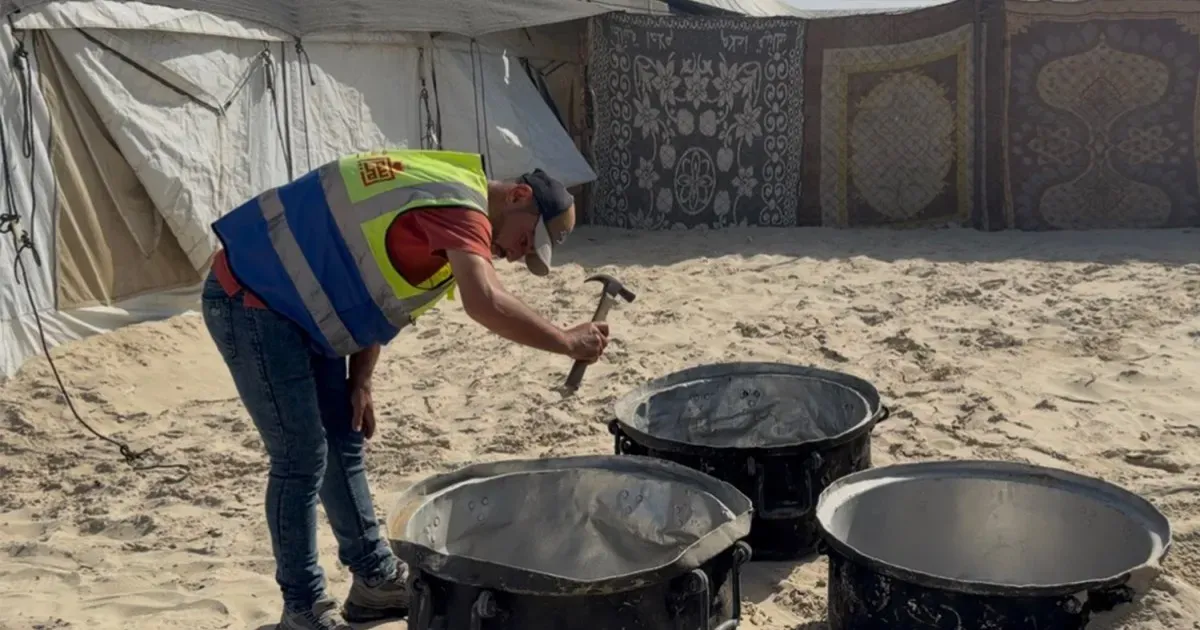
Some families have been filling damaged cooking pots with earth to create barriers against the incoming water and prevent waves from reaching their shelters.
The Mayasem Association, which works in cooperation with World Central Kitchen, has taken notice of this innovation and is now producing these pot-barriers for families in areas like al-Qarara port.
These makeshift barriers are made by reusing large pots that have been rendered unusable due to repeated exposure to flames, corrosion, and holes.
The association's emergency response coordinator notes that the initiative initially aimed to protect their own safe space from flooding, but later expanded to help displaced families along the coastal strip.
The pot-barriers stand at approximately 150 centimetres in height when three pots are stacked on top of each other, providing some level of protection against the rising water levels.
The situation in Gaza is becoming increasingly dire as the winter months approach. The destruction of essential operational equipment by Israeli forces has left municipalities severely hampered in their ability to respond to emergencies, including floods and rescue operations.
Tens of thousands of people are being forced to live in dilapidated tents on the beach, with many more at risk of displacement due to the fragile state of buildings that could collapse. The fuel crisis is exacerbating the situation, threatening to shut down machinery and generators that provide vital services.
The humanitarian needs of those affected by the conflict are becoming increasingly pressing, with a range of essential supplies urgently required to keep families safe and warm over the coming months.
Facts based on reporting originally published by Al Jazeera.
You may republish this story, in full or in part, if you credit Noti Group and link to it (licence CC BY 4.0). Photos are not included.