





El Niño Event Impacts Banana Producers in Latin America
Banana producers in Latin America are facing significant challenges due to extreme weather conditions associated with this year's super El Niño event, which is affecting Colombia, Peru, and the Dominican Republic.
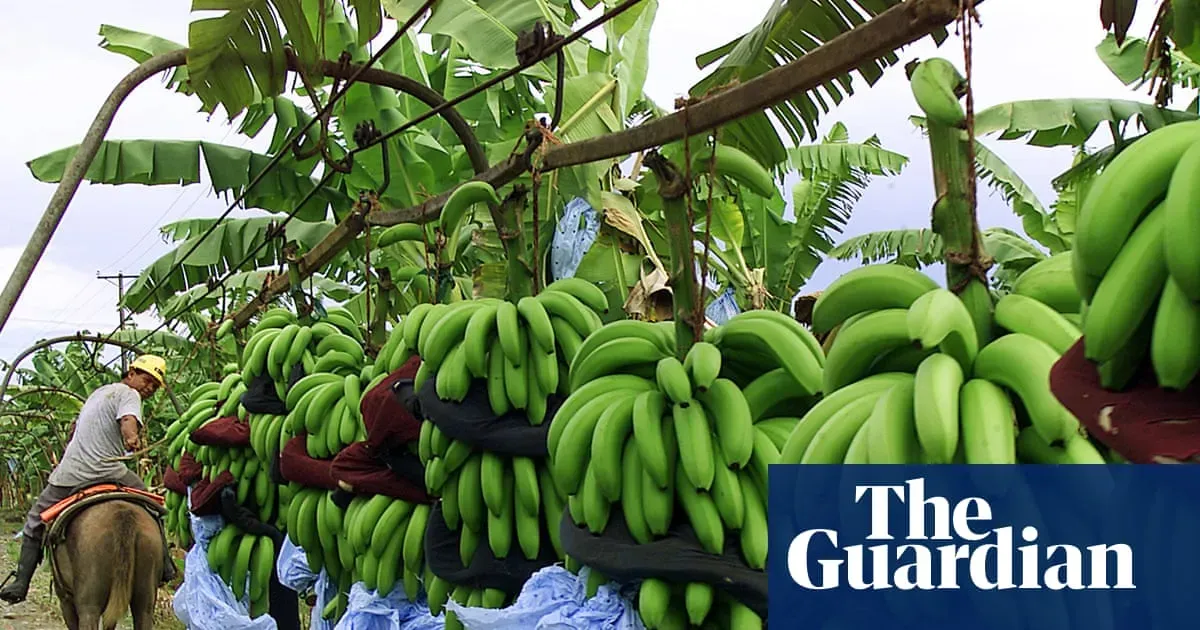
Banana producers in Latin America are facing significant challenges due to the extreme weather conditions associated with this year's super El Niño event.
The region is experiencing high winds in Colombia, a major supplier to the UK market, which is expected to suffer from droughts in some areas. In contrast, Peru and Ecuador are dealing with heavy rainfall that is already affecting banana production. The Dominican Republic is also bracing itself for drought conditions, with forecasts indicating drier and warmer than usual weather.
According to Fairtrade research, the previous El Niño cycle had a devastating impact on productivity across its farmers and workers. In the Dominican Republic, productivity dropped by 13%, while in Ecuador it fell by 22%. Peru's producers also suffered, with a 6% decrease in productivity compared to the previous year.
The effects of the 1983 El Niño event, one of the strongest ever recorded, were particularly severe on Ecuador's banana industry. The disaster affected 15% of the country's total planted banana area and led to a 36% reduction in exports.
The effects of El Niño are expected to worsen, according to climate experts. This season's extreme weather is forecasted to include heavy rainfall and strong winds, making it even more challenging for banana producers in Latin America.
Exports from the Colombian Caribbean region have already taken a hit, with a 32% decline in earnings between July and September this year. The Association of Banana Growers of Magdalena and La Guajira reported that shipments were down by nearly half in just one month, September saw a 42% drop in exports compared to the same period last year.
The financial impact is significant, with earnings from exports plummeting to $40m in September alone. This is a stark contrast to the previous year's earnings of $70m for the same month.
Climate-related productivity losses and declining export earnings are taking a toll on the industry, according to the Association of Banana Growers. They attribute these losses to currency issues, which have further exacerbated the problem.
Colombian banana worker Ever Antonio Flores Muños shares his concerns about the changing climate. He notes that over the past decade, temperatures have risen sharply, leading to more frequent and intense weather events such as flooding and strong winds.
Fairtrade is advocating for legislation in the UK to combat unfair trading practices that hinder banana producers' ability to invest in their crops' resilience to severe weather conditions.
These unfair practices include low or delayed payments and contracts that shift risk down the supply chain, ultimately affecting worker health due to more extreme weather events. To mitigate these issues, Fairtrade is pushing for a legislative framework that prioritizes fair prices, climate resilience, and decent work.
Several major UK retailers have already taken voluntary steps by sourcing only Fairtrade bananas, which guarantee a minimum price. However, Fairtrade argues that there is still much work to be done to ensure that producers can adapt to the changing climate.
The organization emphasizes that the resources needed for climate adaptation are directly linked to fair prices and decent work. Producers struggling with rising costs for fertilizers, fuel, and labor are finding it increasingly difficult to maintain their livelihoods despite stagnant supermarket prices.
Fyffes, a large supplier of bananas, has also highlighted the need for supermarkets to recognize the true cost of production, including labor, environmental management, and investment in climate adaptation.
Research has revealed that nearly two-thirds of banana suppliers in 2026 were not receiving prices that covered their basic production costs, highlighting a pressing need for better compensation to ensure sustainability.
The potential impact on land suitable for banana cultivation is alarming, with projections suggesting it could shrink by as much as 61% across Latin America and the Caribbean by 2050.
Facts based on reporting originally published by The Guardian Business.
You may republish this story, in full or in part, if you credit Noti Group and link to it (licence CC BY 4.0). Photos are not included.