






Adobe Unveils Experimental AI-Generated Character Development Tools
The company's Project Screen Test allows users to interact with virtual characters in an audition-like environment to refine their personality, voice, and traits.
Adobe has unveiled a series of experimental features at its Max conference, showcasing cutting-edge tech that is still in development. One of these innovative tools is designed to make AI-generated characters easier to develop and use for video content.
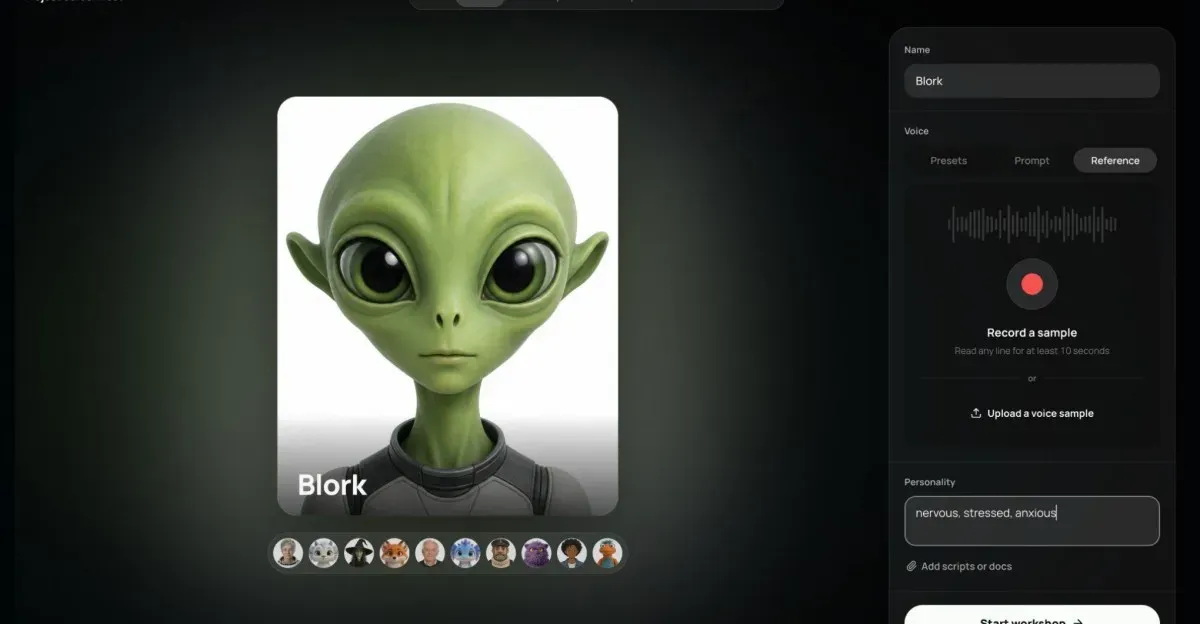
Project Screen Test allows users to interact with their virtual characters in an audition-like environment, rather than relying on text prompts to describe how they should sound and behave. This hands-on approach enables creators to refine the character's personality, voice, and traits through conversation.
The process begins by defining a base set of characteristics for the character, such as "anxious, shy, awkward, and assigning it a voice using pre-sets or uploaded audio samples. Users can then delve deeper into the character's persona by discussing its backstory, temperament, goals, flaws, fears, and movement quirks in a simulated conversation.
By describing an environment or scenario, users can also generate animated screen tests featuring their virtual character, allowing them to visualize the character's behavior and interactions in various settings.
Adobe's AI experiments have been pushing the boundaries of digital creativity, allowing users to immerse themselves in virtual environments and interact with their characters in new ways.
One such experiment is the Personality tab, which lets users manually adjust traits generated for their character through conversation. This feature provides a more nuanced approach to character development, giving users greater control over their creation's personality. The results are often surprisingly lifelike, even if they don't quite match traditional animated characters.
The lack of creative control in AI video generation is a major concern for many artists and designers. Adobe's experiments aim to bridge this gap by providing more intuitive tools that allow users to shape the personalities and behaviors of their virtual characters. By doing so, they hope to create more engaging and believable digital entities.
Project Sight Span takes a different approach, transforming photographs into 3D environments that can be navigated and repositioned at will. The generated space includes new objects and backgrounds that seamlessly integrate with the original image, creating a sense of depth and immersion that's hard to resist.
Sight Span technology can work its magic on any flat image, whether it's a photo, painting, or illustration. The system is capable of preserving and replicating the artistic style, even when objects are moved around within the generated space. This means that repositioned tattoos and facial features in photographs remain surprisingly recognizable and true to their original reference.
The level of creative freedom offered by Sight Span is quite high, allowing users to reposition objects more aggressively than ever before. However, this also raises questions about what constitutes a photograph in the first place. When you can manipulate an image so extensively, it starts to feel less like a photo and more like something entirely new.
Project Sound Bender is another AI-powered feature that's been developed in conjunction with Sight Span. This audio mixing tool lets users customize sound effects by selecting from a range of options on a virtual color wheel. The system then generates sound effects and synchronizes them automatically with the video being played.
The Sound Bender canvas provides an interactive interface for adjusting and customizing the sound effects in real time. Each corner of the canvas is assigned a relevant AI-generated sound, such as gurgling water or crackling fire, which can be manipulated by dragging the cursor around the canvas.
Adobe's Project Rinse Repeat allows users to copy edits made on one object and automatically apply them to similar objects in the same photo. This feature is particularly useful for tasks such as airbrushing out blemishes or adding shadows to products in marketing graphics.
The tool adapts specific changes to other subjects, even if they are different shapes and sizes, making it a valuable asset for users who need to make repetitive edits. Additionally, the edits applied using Rinse Repeat remain fully editable because they are recreated with native Photoshop tools, giving users complete control over their work.
Project Rinse Repeat is built around Photoshop, and its capabilities are part of Adobe's broader efforts to integrate generative AI into its Creative Cloud apps and Firefly platform. While these sneaks" are tech previews and not guaranteed to become available features, the company's commitment to AI-driven growth suggests that some of these experiments will eventually see an official launch.
As a showcase for Adobe's generative AI developments, Project Rinse Repeat is just one example of how AI tools are becoming increasingly central to the company's strategy. These AI-powered experiments demonstrate the potential for automation and efficiency in creative workflows, and their impact on the industry may be significant.
These AI-powered experiments demonstrate the potential for automation and efficiency in creative workflows, and their impact on the industry may be significant. The goal is to make complex tasks feel more accessible and intuitive, turning them into interactive experiences that are easy to use.
In some cases, these features border on being playful, but they also enable practical changes to creative projects. This shift towards interactivity could potentially replace traditional tools and stock libraries used by professionals, who may be divided in their feelings about the role of AI in their work.
By making interactions more intuitive, experienced creatives can exercise greater control over their projects, applying their judgment to refine results directly.
Facts based on reporting originally published by The Verge.
You may republish this story, in full or in part, if you credit Noti Group and link to it (licence CC BY 4.0). Photos are not included.