







Venture capital firms capture majority of VC dollars through first three quarters
Established venture capital firms have dominated fundraising efforts in the US so far this year, capturing 88.2% of VC dollars through the first three quarters.
Venture capital has always been a challenging industry to break into, but it's especially tough for first-time fund managers right now.
According to recent data from PitchBook, established venture capital firms have dominated fundraising efforts in the US so far this year, capturing 88.2% of VC dollars through the first three quarters. This leaves just 4.5% of the market share for new entrants, with a paltry 81 first-time funds closing in the first nine months of 2026.
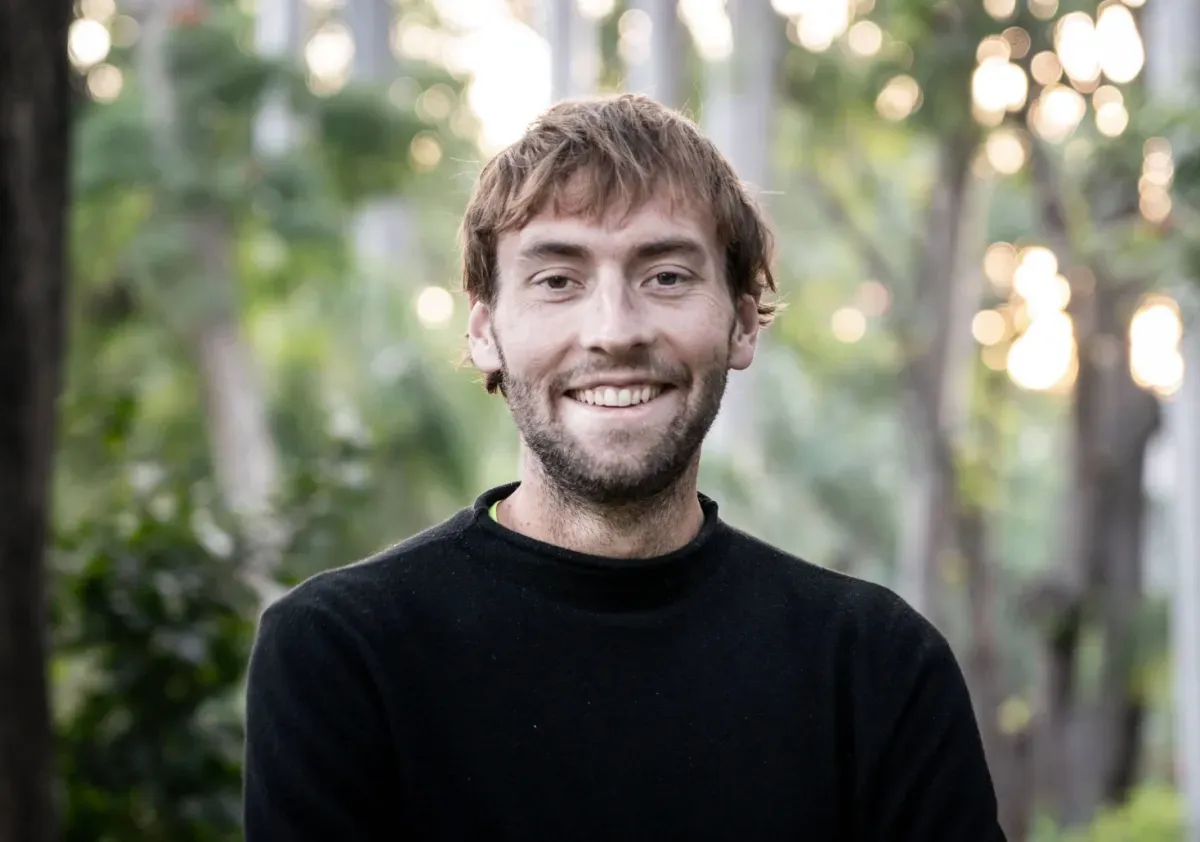
Despite these daunting statistics, Olaf Sakkers is bucking the trend with his fund RedBlue Capital. Founded in 2021, it has already closed its first fund with around $5 million in capital commitments in 2023 and is now seeking to raise at least $50 million for a second fund.
Sakkers' background may be an unusual one for a venture capitalist: he was raised in South Africa, studied anthropology at Princeton, focusing on global health and health policy. His thesis explored the impact of HIV in his home country.
He moved to Israel after graduating, where he served in the military before becoming interested in autonomous vehicles, a sector that could potentially be a key area for investment for RedBlue Capital's second fund.
Sakkers' foray into venture investing was facilitated by an introduction to Michael Granoff, founder of Maniv Mobility and early backer of Better Place. This connection led to Sakkers being hired on the spot by Granoff, who had investment capital available.
The duo's fund was essentially built from scratch as they navigated the process together. As neither had prior experience in venture investing, they learned as they went along, with Sakkers taking a hands-on approach to managing the investment process. He focused on backing Israeli founders who were integrating cybersecurity expertise into the automotive sector, later expanding his scope to other markets.
Over time, Sakkers evolved from being a junior partner to an equal one in Maniv's economics. However, he sought more formal and scalable structures for his investments. This led him to depart from Maniv and strike out on his own, establishing RedBlue Capital in 2021.
The new venture capital firm closed its first fund with approximately $5 million in commitments in 2023. RedBlue Capital focuses on the "real economy, encompassing sectors such as robotics, logistics, manufacturing, and energy.
Securing institutional backing has proven to be a challenge for Sakkers. He notes that these limited partners are hesitant due to the relatively small size of his checks compared to their enormous funds. Additionally, their risk models tend to favor established brands over newer entities, aiming to avoid zero returns at all costs.
Founders who have previously founded successful companies often find it easier to secure funding for their new ventures, as they are perceived as inevitable successes. In contrast, first-time founders struggle against the gravity of perception," where a more established brand can influence how people view a newer one.
Sakkers believes that building trust and demonstrating performance over time is key in overcoming this perception. By letting results speak for themselves, he aims to establish RedBlue as a reliable investment partner.
The second fund has seen an expansion of its investor base, drawing from both family offices and institutions. This diversification allows RedBlue to tap into different pools of capital.
RedBlue's approach involves making small investments of $50,000 to $100,000, often joining deals led by other investors rather than taking the lead.
Public records confirm that several startups backed by RedBlue have achieved significant milestones in recent months. HappyRobot, for instance, secured a substantial investment of $150 million in its Series C round, valuing the company at $1.2 billion. The funding boost came just weeks after Westmag, another startup that received early support from Sakkers and Nat Friedman, successfully raised an $11 million seed round led by Andreessen Horowitz.
This trend is also evident in other startups backed by RedBlue, such as Flai, which has transitioned from a 2025 seed funding to a more substantial Series A investment of $27 million. Humble Robotics, a driverless-truck startup that participated in RedBlue's $24 million seed round, has recently announced a new funding milestone with a $51 million Series A led by Obvious Ventures.
According to Sakkers, the key differentiator for RedBlue lies in its disciplined approach. To facilitate this discipline, the firm publishes detailed thesis essays on various topics, including robotics. Additionally, it utilizes a custom-built database to track relationships, meeting notes, and introductions.
This database is a result of collaboration between Sakkers and Claude Code, enabling the team to work efficiently even when they are not physically present in the same location. The use of this system is rooted in Sakkers' conviction that AI agents can only be truly effective if they have access to accurate data and context.
Sakkers also downplays concerns about long exit timelines for physical-world companies, pointing out that even smaller funds like RedBlue's $50 million to $100 million investment vehicle can sell stakes on the secondary market.
Smaller venture capital funds are bucking a trend of underperformance compared to larger funds in recent years.
According to data from Carta, a software outfit that tracks fund performance, smaller VC funds with between $1 million and $10 million in investment consistently outperform larger funds worth $100 million or more at the top end of net TVPI (total value to paid-in capital).
Sakkers' approach focuses on building relationships and making connections between disparate parties. He is actively engaging with various stakeholders, including reporters like this one.
In his interactions, Sakkers emphasizes his commitment to his work, highlighting that he never considered a safer job.
Olaf Sakkers is betting he can beat the emerging-manager squeeze by taking calculated risks and prioritizing his own vision for the company.
His approach has proven successful so far, as the firm's revenue continues to grow despite the challenges of navigating the market. By focusing on innovation and staying ahead of industry trends, Sakkers aims to maintain a competitive edge and secure the future of his business. This bold strategy is already paying off in the form of increased growth and a strong reputation within the sector.
Facts based on reporting originally published by TechCrunch.
You may republish this story, in full or in part, if you credit Noti Group and link to it (licence CC BY 4.0). Photos are not included.