




Shopify Unveils New Tool Called Canvas for Building Online Stores with AI Agent
Shopify has introduced Canvas, a tool that enables merchants to build online stores through conversations with an artificial intelligence agent called Sidekick.
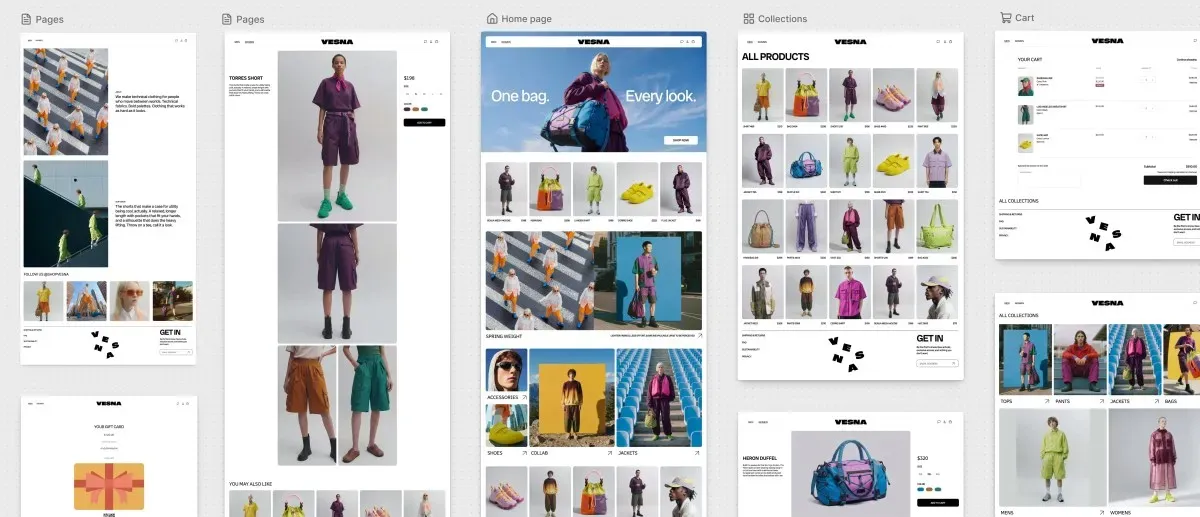
Shopify has unveiled a new tool called Canvas that enables merchants to build their online stores through conversations with an artificial intelligence (AI) agent.
The company's existing site-building capabilities already allow users to create and customize their Shopify store without needing to write code, but this process involved selecting a theme and rearranging modular sections. However, deeper customizations required editing the underlying code or bringing in a developer for more complex changes. This new tool aims to bridge that gap by providing an alternative approach.
With Canvas, merchants can interact with Shopify's AI agent, called Sidekick, to create their site through natural language conversations. As the AI makes adjustments, the tool displays the results in real-time, allowing users to see how their store will look and feel as it takes shape or zoom in on specific details.
Notably, this is not a static preview but rather the actual code behind the store being rendered, giving merchants a true representation of how their site will function across different screen sizes. Sidekick also captures screenshots of the work-in-progress so that users can view the same experience as they see it, ensuring a seamless and immersive design process.
Merchants can interact with Sidekick in a chat to make changes to their store's design and layout without having to click on individual elements. This conversational interface allows users to communicate their design preferences and requirements in a more intuitive way.
Sidekick is not a new tool; it has already been used by merchants for various tasks such as writing code, building apps, customizing themes, and making other edits. However, its capabilities have now been integrated into the Canvas platform, enabling users to build online stores entirely through chat.
To facilitate this integration, Shopify gave Sidekick the ability to directly interact with theme files, simplifying the theme architecture in the process. This allows Sidekick to understand and modify a store's structure, logic, and design more efficiently.
While Canvas is still in its early stages, there are areas where it will need to expand and improve before it can become a fully-fledged platform. Initially, third-party theme support, app blocks and extensions, marketplaces, translations, rollouts, and theme updates are not part of the launch, but Shopify plans to address these limitations over time.
In the future, as Canvas becomes more robust, it could potentially democratize online selling by making it accessible to those who cannot afford developers and designers or lack the time to learn coding skills.
Canvas is Shopify's latest innovation, designed to make building online stores more accessible through a conversational AI interface.
The platform uses natural language processing (NLP) technology to guide users through the process of creating an e-commerce site, eliminating the need for coding skills or extensive technical knowledge. This approach aims to democratize online selling by making it easier for individuals and small businesses to establish themselves in the digital marketplace.
With Canvas, Shopify is targeting a broader audience than traditional e-commerce solutions, which often require significant investment and technical expertise. The platform's focus on ease of use could potentially open up new opportunities for entrepreneurs and small business owners who may not have had access to online selling tools before.
By leveraging AI technology, Canvas has the potential to revolutionize the way people build and manage their online stores, making it a significant development in the e-commerce landscape.
Facts based on reporting originally published by TechCrunch.
You may republish this story, in full or in part, if you credit Noti Group and link to it (licence CC BY 4.0). Photos are not included.