





Nintendo Switch 2 Security Features Bypassed
A security researcher has successfully bypassed key security features on Nintendo's Switch 2 console.
A security researcher has successfully bypassed key security features on Nintendo's Switch 2 console, allowing users to run unauthorized software and access various system functions.
The hack relies on an unusual combination of tools: the original version of SmileBasic 4, a programming environment developed for Nintendo hardware, and a JavaScript package that requires access to a computer running macOS or Linux. This "tethered approach means the Switch 2 must be connected to the same network as a PC to enable the hack.
According to the researcher, who has been working on this exploit for several weeks, the key discovery was a vulnerability in SmileBasic's language interpreter. By using OpenAI's Codex and a custom harness, they identified a 32-bit integer overflow that occurs when removing items from an array in the programming environment.
This error allows access to an array pointer, which in turn provides read and write access to certain areas of system memory. The researcher notes that this userland access enables various capabilities, including running homebrew software, reverse-engineering games, backing up save files, and accessing peripherals through a specific interface called MMIO.
The hack's success has significant implications for the Switch 2's security profile, but it remains to be seen how Nintendo will respond to this development. The researcher's findings highlight the ongoing cat-and-mouse game between console manufacturers and hackers seeking to exploit vulnerabilities in their systems.
The researcher's findings highlight the ongoing cat-and-mouse game between console manufacturers and hackers seeking to exploit vulnerabilities in their systems.
Poking around for a way into the Switch 2's internal sysmodules, Hajhamid discovered a buffer overflow in the FileSystem services module that exposed a cached data pointer. This allowed him to execute privileged filesystem actions and achieve native code execution through a faked filesystem process.
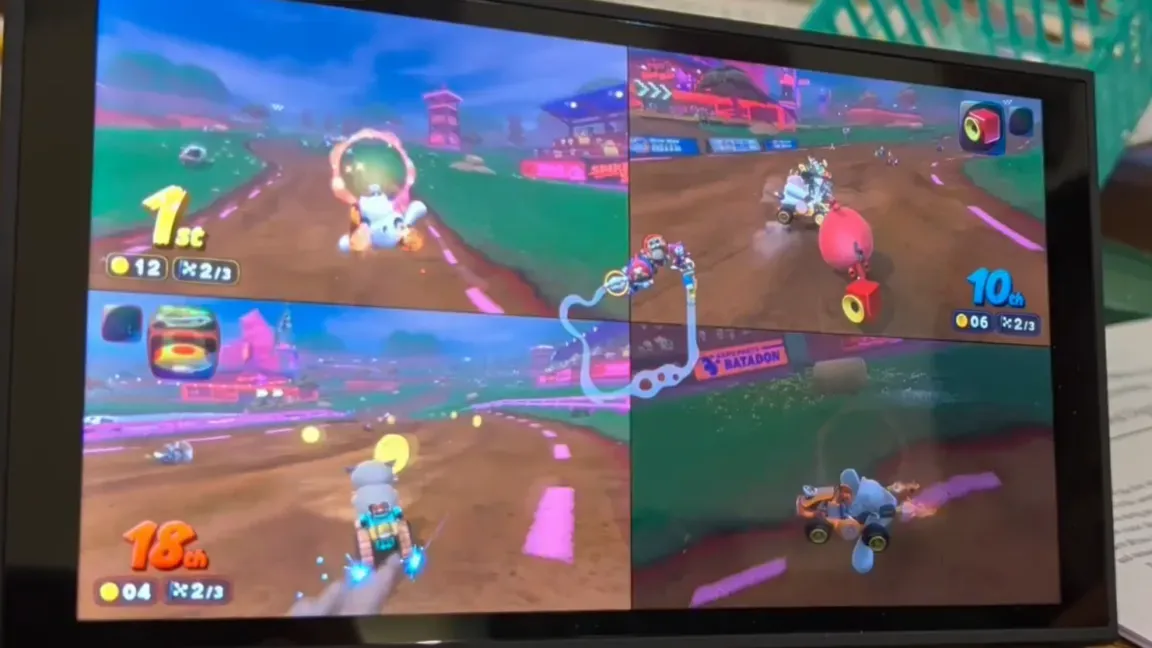
The findings have already been put to use by hackers, who are showcasing their exploits with new modded characters in Mario Kart World as well as simple demos and in-progress developer tools running on exploited hardware. These early demonstrations of the exploit's capabilities suggest that homebrew developers will soon be able to tap into a wider range of Switch 2 features.
However, despite these advances, the current userland exploit remains limited by its inability to provide kernel-level access, which would grant full control over the hardware. This means that hackers are still working within a relatively small sandbox, unable to fully leverage the capabilities of the Switch 2.
SmileBasic, a development tool used in a previous Nintendo hack, has also been implicated in this latest exploit. The company removed SmileBasic from its eShop shortly after the hack became public, and it remains unclear whether future versions will be vulnerable to similar exploits.
The removal of SmileBasic from the eShop may have slowed down the spread of this exploit among Switch 2 owners who haven't purchased or downloaded the game yet. However, some hackers in the Switch 2 community are already hinting at similar exploits that appear to work using other games.
These new exploits seem to be built on top of existing vulnerabilities and could potentially lead to more widespread hacking on the console. The current exploit is known to affect the latest Switch 2 firmware version (23.0.1), but it's likely that Nintendo will patch out this vulnerability in upcoming firmware releases, which are required for continued access to various services and future game releases.
The fact that Switch 2 hackers have managed to crack the system just over a year after its release is concerning for Nintendo's overall security measures. This exploit may not be as severe as the unpatchable" original Switch hack from 2018, but it still highlights the cat-and-mouse game between console hackers and hardware makers.
The ongoing battle between hackers and console manufacturers will likely continue indefinitely, with each side pushing to outsmart the other. Despite Nintendo's efforts to secure its system software, the company will need to remain vigilant to prevent further exploits from emerging.
Facts based on reporting originally published by Ars Technica.
You may republish this story, in full or in part, if you credit Noti Group and link to it (licence CC BY 4.0). Photos are not included.