





Senegal Reinstated as 2025 Africa Cup of Nations Winners
The Court of Arbitration for Sport has overturned a previous ruling that had stripped Senegal of their title due to their actions during a chaotic final match against host nation Morocco in January.
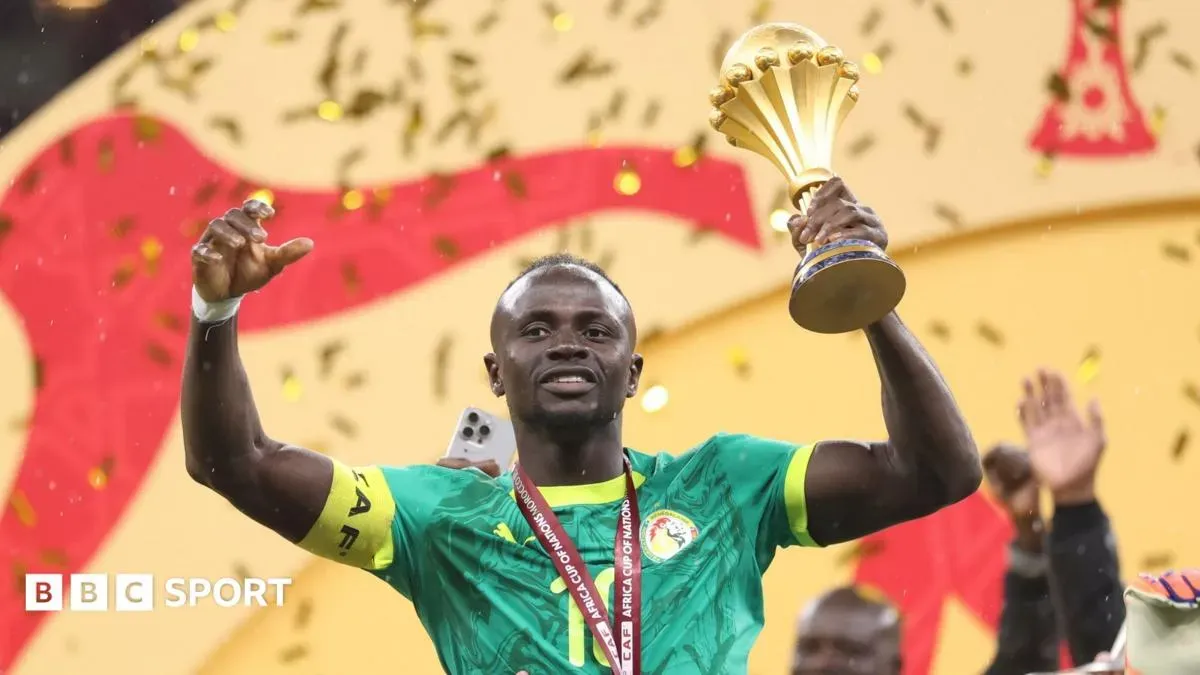
Senegal has been reinstated as the winner of the 2025 Africa Cup of Nations after a ruling by the Court of Arbitration for Sport. The court's decision overturns a previous ruling that had stripped Senegal of their title due to their actions during a chaotic final match against host nation Morocco in January.
The controversy surrounding the game began when Senegal left the field in protest after a penalty was awarded against them, with the score tied and extra time looming. The match was delayed for over 15 minutes before Morocco's Brahim Diaz had his spot-kick saved, but Senegal eventually emerged victorious with a 1-0 win in extra time.
However, almost two months later, the Confederation of African Football (Caf) appeals board overturned the result, citing Senegal's breach of competition regulations. The decision was based on their actions when they left the field after the penalty was awarded, which the board deemed to be a major infraction.
Undeterred, Senegal's football federation (FSF) took the case to the Court of Arbitration for Sport (Cas), with a three-man panel hearing their appeal behind closed doors in Lausanne on October 8. The panel has now delivered its verdict, effectively backing the decision by referee Jean-Jacques Ndala to restart the game after Senegal returned to the field.
The Cas statement emphasized that the referee's decision was within his authority, and that both teams were willing to resume play when they blew their whistles. This key point is crucial in understanding why the court has reinstated Senegal as winners of the tournament.
The result of the final match stands, with Pape Gueye scoring the winner for Senegal in extra time. The team's reinstatement as champions is a significant development in African football, and will likely have far-reaching implications for the sport on the continent.
The decision by the Court of Arbitration for Sport (Cas) has been met with a mix of reactions from African football stakeholders.
Morocco's football federation expressed surprise at the ruling and announced that it will pursue all available legal avenues to challenge the decision.
This move suggests that Morocco is not willing to accept the outcome, despite Cas's reputation as a respected authority in sports dispute resolution.
Meanwhile, Senegal's Football Federation (FSF) welcomed the ruling with satisfaction, hailing it as a triumph of sporting fairness and a reaffirmation of the principle that match outcomes are determined solely on the field of play.
The FSF also acknowledged the importance of adhering to sports law, which provides a framework for resolving disputes in a fair and transparent manner.
The controversy surrounding Senegal's win at the Africa Cup of Nations (Afcon) continued to unfold as details emerged about the disputed final moments of the match.
Referee Ndala's decisions in the second half stoppage time sparked heated debate, with one particularly contentious call denying Senegal a goal. The Congolese official blew his whistle for a challenge by Abdoulaye Seck on Morocco's Achraf Hakimi just as Ismaila Sarr was about to nod in.
The free-kick awarded to Morocco seemed soft to many observers, but unfortunately the video assistant referee (VAR) couldn't intervene because Ndala had made the call before the ball crossed the line. This left Senegal's players frustrated and questioning the fairness of the game.
In the aftermath of this incident, tensions flared up in the Senegal box when El Hadji Malick Diouf was accused of tugging Morocco playmaker Diaz back while heading a corner clear. Diaz vehemently claimed a penalty, which Ndala eventually awarded after consulting his pitchside monitor with the VAR's guidance.
The decision sparked outrage from Senegal coach Pape Thiaw, who called his players over to the touchline in protest and subsequently headed down the tunnel to the changing room, accompanied by several of his team members. This dramatic display of dissent highlighted the high stakes involved in this closely contested final.
The game ultimately went into extra time, with midfielder Gueye scoring the decisive goal that settled the contest in Senegal's favour. However, the celebrations were short-lived as Morocco lodged an appeal with Caf, claiming their opponents had breached Article 82 of Afcon regulations covering withdrawals.
The continental governing body's disciplinary board had swiftly rejected the FRMF's appeal after the final, imposing sanctions on those found guilty of unsporting conduct during the match and handing out fines as well.
However, a few weeks later, in March, a Caf appeals board made a significant ruling that Senegal had forfeited the match against Morocco, awarding them a 3-0 victory instead. This decision was met with outrage from the FSF, who described it as "unfair, unprecedented and unacceptable".
The FSF wasted no time in lodging their case with the Switzerland-based Court of Arbitration for Sport (Cas), which would ultimately hear the appeal. Cas officials have promised to conduct arbitration proceedings as swiftly as possible.
A panel was formed at Cas to hear the case, comprising three members with extensive expertise in sports law and international arbitration. Frenchman Gerald Simon, a 23-year veteran of the court, took the lead on the panel.
The FRMF and FSF each nominated an arbitrator to join the panel, bringing their own unique perspectives to the proceedings. Italian professor Luigi Fumagalli was chosen by the FRMF, while Hamburg-based attorney Ulrich Haas represented the FSF.
After a thorough hearing, Cas would eventually render its verdict, but not before six weeks of deliberation and over 10 months since the Afcon 2025 final came to an end.
Cas maintained that referee Ndala's decision to resume the match and allow it to conclude with a sporting result could not be reviewed under the 'field of play' doctrine.
This doctrine is a long-standing practice at Cas, where it generally refrains from reviewing decisions made by referees on the field unless there is evidence that those rules were applied arbitrarily or in bad faith.
The Moroccan federation countered this argument, claiming that the referee's decision did not fall under the field of play doctrine since Senegal should have faced disciplinary action for walking off the pitch.
According to Afcon tournament rules, the referee should have brought the match to an early conclusion if one team withdraws from the game, and the Moroccan federation argued that Ndala "erred in law by not doing so.
The panel examined the evidence presented by both parties and concluded that the referee's decisions were limited to the pitch, with no external factors influencing his judgment.
The arbitration process has been marred by allegations of unauthorized communication between a member of the panel and an interested party.
Haas's alleged telephone call with FSF president Abdoulaye Fall on Sunday is at the center of the controversy, with Fall categorically denying that any such phone call ever took place. The FRMF views this as a serious breach of Cas regulations if proven true.
The consequences for breaching these regulations would be severe, with the FRMF demanding that appropriate legal consequences be applied to actions that compromise the integrity and credibility of the arbitration process". If the allegations are substantiated, it could have far-reaching implications for the credibility of the arbitration system.
The Moroccans may still appeal against the ruling by taking the case to the Swiss Federal Tribunal, which has the power to set Cas' judgement aside. If this happens, a new panel would likely be convened at Cas to hear the case again, following precedent in another high-profile sports dispute.
Facts based on reporting originally published by BBC Sport.
You may republish this story, in full or in part, if you credit Noti Group and link to it (licence CC BY 4.0). Photos are not included.