





Northern Ireland's Mourne Mountains Inspiration Behind CS Lewis's Narnia
The rugged landscapes of Northern Ireland are being hailed as the inspiration behind CS Lewis's magical kingdom of Narnia.
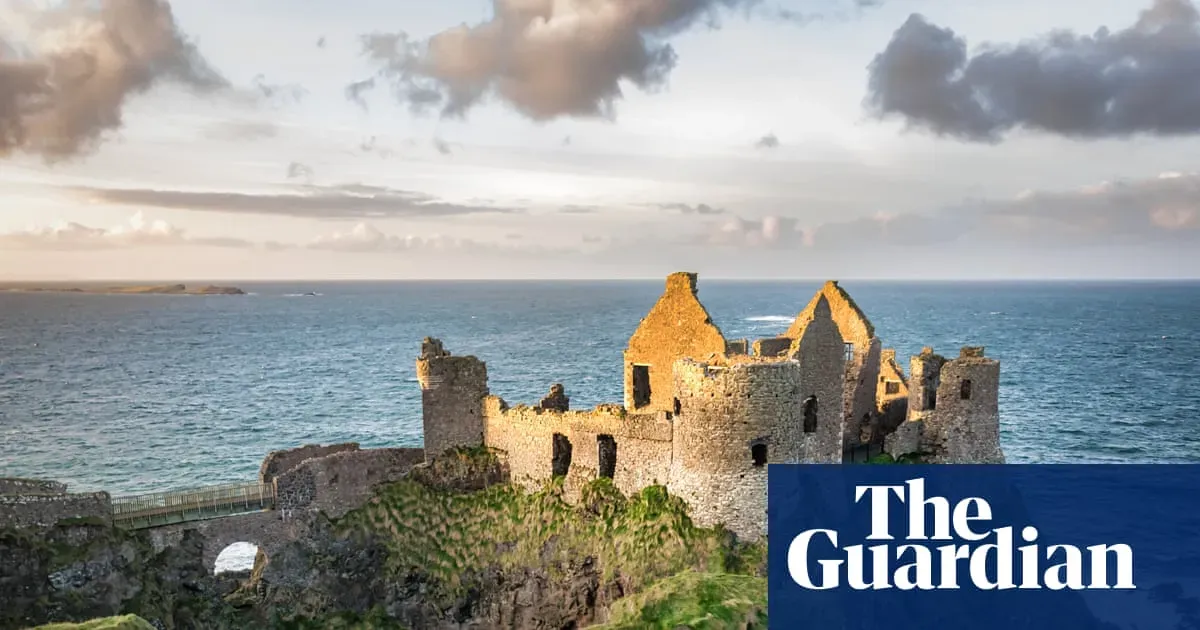
In a fascinating connection between Northern Ireland's rich heritage and one of literature's most beloved fantasies, the rugged landscapes of the Mourne Mountains are being hailed as the inspiration behind CS Lewis's magical kingdom of Narnia.
The author, born in Belfast in 1898, is said to have drawn inspiration from the region's breathtaking scenery. The rolling hills, crystal-clear lakes, and windswept mountains that dominate the landscape of Northern Ireland are a far cry from the urban backdrop of his childhood in east Belfast.
In a nod to Lewis's connection to the city, CS Lewis Square has been established in the Holywood Arches neighbourhood. This charming public space features a short walking trail lined with metal sculptures of beloved Narnia characters, including Mr and Mrs Beaver and Mr Tumnus. A striking centrepiece is a massive Aslan, towering over the area from atop a circular mound.
The nearby St Mark's church on the Holywood Road has become an important pilgrimage site for fans of The Chronicles of Narnia. According to local lore, the church may have played a role in shaping Lewis's creation of Aslan, with some speculating that the majestic lion was inspired by a brass doorknob adorned with a lion's head at the rectory where his grandfather once lived.
The original doorknob has been safely removed for preservation, but an exact replica remains in place, attracting thousands of visitors each year who come to pay their respects to the author and his enduring legacy.
The Lewis family's move to Little Lea in 1905 marked a significant change for the children. The large redbrick house on Leafy Circular Road was initially situated on the outskirts of Belfast, but as the town expanded, it became increasingly surrounded by other prosperous homes.
In his autobiography, Surprised By Joy, CS Lewis vividly described Little Lea as a place that sparked his imagination. He recalled feeling like a child who had stumbled upon a vast and wondrous city within its walls, with empty rooms and corridors waiting to be explored.
Little Lea has a special connection to the magical world of Narnia. The house appears in the opening scenes of two books: The Magician's Nephew and The Lion, the Witch and the Wardrobe. In both stories, the threshold between the ordinary world and the fantastical realm is eerily close.
The proximity of Little Lea to Belfast's industrial heartland was striking, yet just a short walk away, the family had access to rolling hills, fields, and woodland glens that seemed like an endless adventure playground. As children, CS Lewis and his brother Warnie would often venture into these surroundings, trekking for hours through the countryside.
The freedom to roam that CS Lewis and his brother enjoyed has become a distant memory for many modern children. Yet, traveling through the hills between Belfast and Strangford Lough today still evokes a sense of enchantment and escapism, much like it did for the young author and his brother all those years ago.
The Belmont Road winds its way up from Belfast, offering breathtaking views of the surrounding countryside. As you climb higher, the landscape unfolds like a canvas of rolling hills and majestic mountains. This expansive high ground stretches towards Bangor and Newtownards, providing an unparalleled panorama of Northern Ireland's natural beauty.
A keen observer might notice that Lewis didn't pinpoint the exact spot where he drew inspiration for his vivid descriptions of the views. However, visitors to the Whitespots country park on the hill above Newtownards may feel a sense of déjà vu as they take in the craggy scenery. This spot bears an uncanny resemblance to Lewis's written accounts of the stone table where Aslan was sacrificed.
Lewis's words paint a picture of a world beyond the ordinary, a realm that beckons with its beauty and mystery. In "Surprised By Joy," he writes about gazing southwards with a hint of east in his view, revealing a different world altogether. This enchanting vista, which stretches across the plain of Down to the Mourne Mountains, is an experience that's hard to put into words.
One spot where Lewis often gazed out at this breathtaking panorama was from the Mournes above Rostrevor. Looking down over Carlingford Lough, he declared that this view was his idea of Narnia. Today, visitors to Kilbroney forest park can sit on a bench with this statement etched into it, surrounded by the majesty of Northern Ireland's natural landscape.
As you stand at this viewpoint, it's easy to imagine that a giant might raise its head over the next ridge, as Lewis later wrote in an essay. The sense of wonder and awe that pervades this place is palpable, making it simple to see why Lewis was so inspired by these surroundings.
The rugged coastline of Northern Ireland has been a source of inspiration for many artists and writers over the years. Rostrevor, located just an hour's drive south of Belfast, boasts breathtaking scenery that is reminiscent of the fantastical landscapes found in CS Lewis's Chronicles of Narnia.
The debate among Lewis scholars and fans continues to rage on about whether Dunluce Castle or Downhill Demesne was the true inspiration behind Cair Paravel, the castle capital of Narnia. While both locations have their own unique charm, many argue that Downhill Demesne is a more likely candidate due to its striking architecture.
The ruins of Dunluce Castle perch precariously on the coast east of Portrush, but it's the iconic Mussenden Temple at Downhill Demesne that bears a striking resemblance to Cair Paravel. This picturesque temple, which was once part of the old Downhill House, seems to defy gravity as it appears to be floating above the shore.
As Lewis worked on his memoir and the Chronicles of Narnia simultaneously, it's likely that the experiences and landscapes he drew upon for his writing bled into each other. The idyllic scenes from Narnia may seem familiar even to those who haven't read the books or seen the adaptations, particularly in areas like east Belfast where murals depicting wholesome images coexist with others glorifying terrorism.
In this unusual setting, where the boundaries between good and evil are often blurred, it's hard not to feel a sense of optimism that good will ultimately prevail. The sense of wonder and awe that pervades these landscapes is palpable, making them a fitting tribute to CS Lewis's imagination and creative genius.
The highly anticipated film adaptation of The Chronicles Of Narnia is set to arrive on screens in the coming years. Narnia: The Magician's Nephew will hit cinemas on 12 February 2027 and later stream on Netflix from 2 April.
This new installment marks the beginning of a series that promises to bring CS Lewis's beloved fantasy world to life for a new generation.
Facts based on reporting originally published by The Guardian Life and Style.
You may republish this story, in full or in part, if you credit Noti Group and link to it (licence CC BY 4.0). Photos are not included.