



Nikon Contest Winner Accused of Using Artificial Intelligence
A video submitted by Dr Ning Xu to the Small World In Motion contest, sponsored by Nikon, has been questioned for its authenticity.
A scientific photography competition has been rocked by controversy after allegations that a winning entry was created using artificial intelligence.
The Small World In Motion contest, sponsored by Nikon, is an annual event that showcases images and videos captured using powerful microscopes. The competition has been running for 15 years, attracting entries from researchers worldwide who use advanced microscopy techniques to capture stunning visuals of tiny structures and cells.
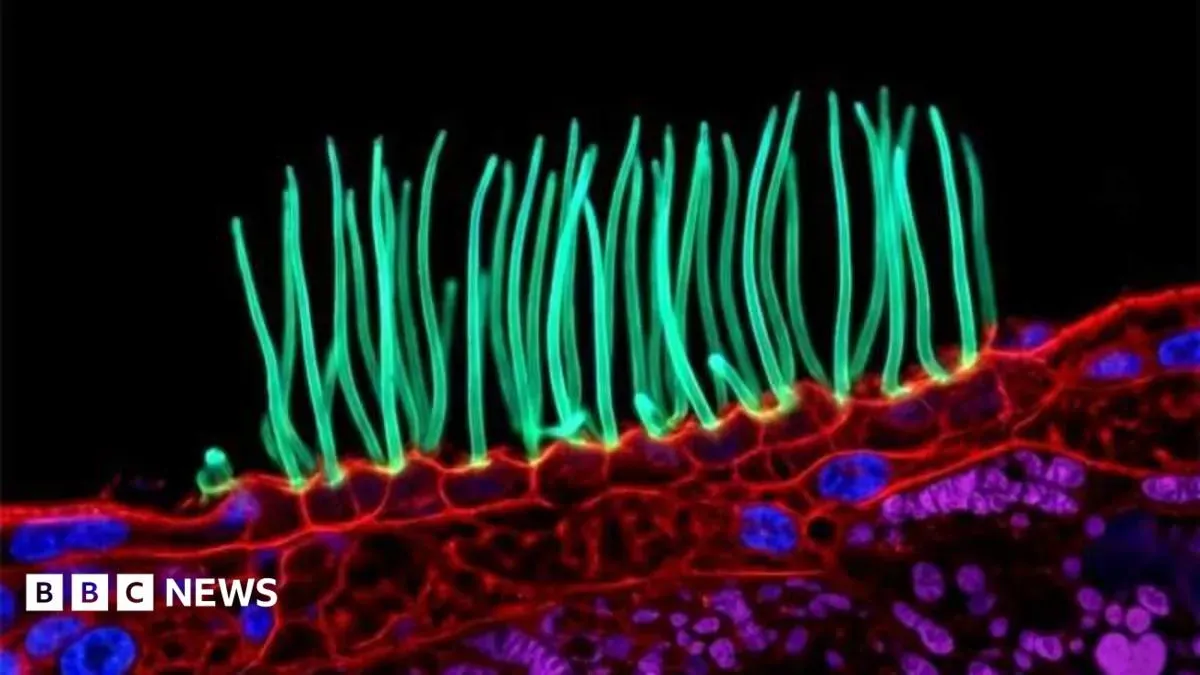
This year's winner was a short video submitted by Dr Ning Xu, a researcher at Tsinghua University in China. According to the entry, the footage shows cilia - hair-like structures - moving inside the airways of a child with a rare disease. The video has been viewed thousands of times online.
Dr Xu initially denied using AI to create his winning entry, but later clarified that he did use artificial intelligence for image processing, which is permitted in the contest. However, some critics have questioned whether this constitutes a breach of competition rules, leading to calls for the entry to be re-evaluated.
The use of artificial intelligence (AI) in creating microscopic images has raised questions about authenticity, particularly in the context of scientific competitions. Some scientists have scrutinized the winning image in Nikon's photo contest, pointing out anomalies that challenge its credibility.
Critics argue that the video contains features and movements not typical of normal cell structures or behaviors. Specifically, they note that the cilia appear too large and seem to emerge from nowhere. These concerns are echoed by Edward Phelps, an associate professor at Florida University, who observed some structures "pop in and out of existence" on Nikon's social media post.
PhD student Ian Donovan from UT Southwestern Medical Centre has also expressed doubts about the image's authenticity. He claims that a distinctive watermark appears to be embedded in the source image, suggesting it was generated by AI. This assertion is backed by two former competition judges who have raised similar concerns about the image's validity.
The controversy surrounding the winning image has sparked debate about the role of AI in scientific competitions and the need for stricter verification processes. Meanwhile, Dr Patrick Hickey, a former Small World contest participant, reflects on the value of recognition in such competitions, which goes beyond monetary rewards.
The controversy surrounding Nikon's photo contest continues as concerns about the use of artificial intelligence (AI) in creating images come to light.
Several experts have expressed their reservations about the winning video's authenticity, with some speculating that it may have been altered using generative AI. This would be a clear breach of the contest rules, which explicitly prohibit the use of such technology.
The issue has sparked debate about the intersection of science and art in image creation, with some arguing that the lines between these two fields are becoming increasingly blurred. Others point out that the use of AI in this context can result in images that are both aesthetically pleasing and scientifically accurate.
Nikon's response to the allegations is that it has followed its standard procedures and does not see any evidence of rule-breaking, but a statement from the company notes that an update on the matter will be forthcoming.
Facts based on reporting originally published by BBC News Technology.
You may republish this story, in full or in part, if you credit Noti Group and link to it (licence CC BY 4.0). Photos are not included.