




Nationwide US Air Traffic Control Outage Lifted
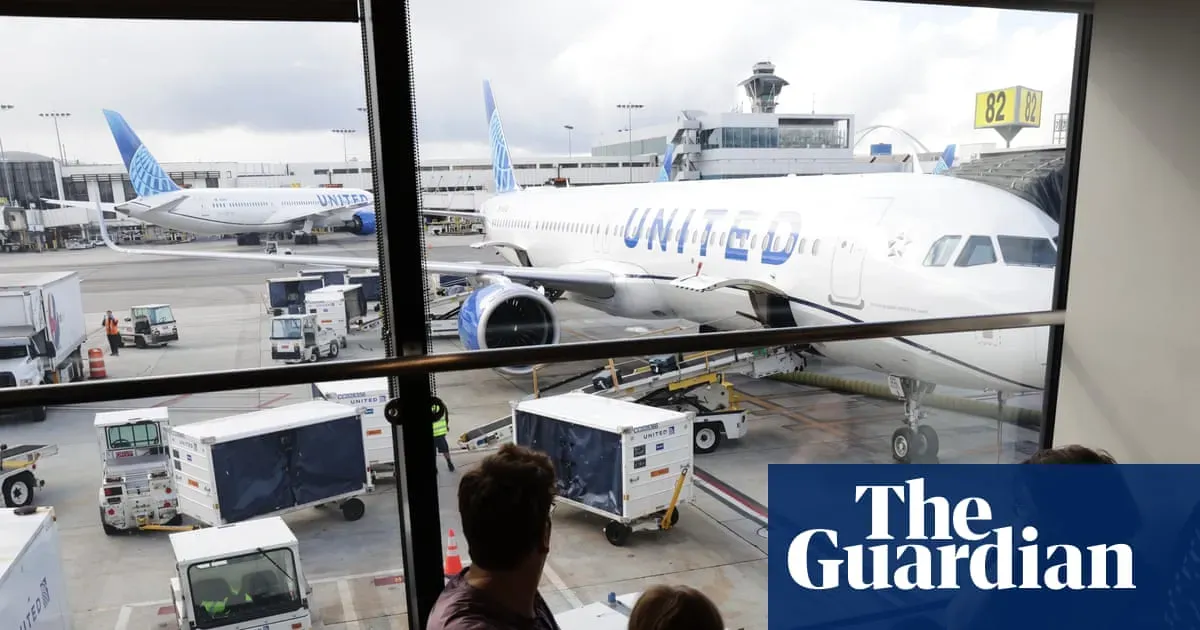
US aviation authorities have lifted a nationwide ground stop after a major communications outage caused chaos at airports across the country.
US aviation authorities have lifted a nationwide ground stop after a major communications outage caused chaos at airports across the country.
Flights in the US were grounded for several hours on Friday afternoon due to technical issues with air traffic control systems, leading to widespread disruptions and delays that affected over 11,000 flights, according to tracking data from FlightAware.
The Federal Aviation Administration (FAA) declared a nationwide ground stop after experiencing instability in radar and communications systems, which caused air traffic control centres to malfunction at 3.36pm on Friday afternoon.
US Transportation Secretary Sean Duffy confirmed the FAA had identified the problem that led to the outage and stated that the air traffic control system was operational again, allowing flights to slowly resume.
The sudden grounding of all US flights caught passengers off guard and brought airport operations to a standstill, with many travellers seeing their travel plans disrupted or cancelled.
The Federal Aviation Administration's outdated air traffic control system has been pinpointed as the culprit behind the nationwide ground stop that brought US flights to a standstill.
According to officials, the system's routers became overwhelmed by an influx of data, causing inconsistencies in the information they provided, which ultimately led to the shutdown.
In a bid to address these long-standing issues, homeland security secretary Markwayne Mullin appealed to Congress during a briefing on Friday evening for additional funding to support the development of a brand new air traffic control system from scratch.
The FAA had initially cited "extraordinary circumstances" and safety concerns as the reasons behind the ground stop, which affected over 3,500 airplanes that were already in flight at the time it was issued.
Preliminary investigations into the incident have so far failed to suggest any malicious intent or nefarious attack, with officials instead attributing the cause of the outage to a telecommunications problem.
The sudden grounding of flights sent shockwaves through airports across the country, with footage from terminals showing packed gates and planes waiting on taxiways as passengers struggled to come to terms with their disrupted travel plans.
The sudden grounding of flights led to a flurry of activity on social media as officials scrambled to provide clarity to stranded passengers. California Governor Gavin Newsom took to X to express his frustration with the Trump administration's handling of the situation.
Newsom's post highlighted the desperation and confusion among travelers, who were left in limbo without clear answers or a plan for safe return to their destinations. He criticized the administration's focus on correcting reporters' terminology over providing vital information to those affected by the ground stoppage. Newsom's statement was laced with sarcasm as he questioned the seriousness of those in charge.
US Congressman Ro Khanna echoed similar sentiments during an interview on CNN, emphasizing the need for more public-facing communications from the transportation secretary. He expressed concern that the lack of transparency and clear updates was causing undue stress among passengers. The congressman's comments highlighted the urgency for a swift resolution to the crisis.
The technical issues behind the ground stoppage are believed to have originated at Chicago Midway international airport, according to reports. Router malfunctions caused the disruptions, which then spread across the US, crippling air travel nationwide.
The Federal Aviation Administration (FAA) took a cautious approach before clearing flights to resume, thoroughly testing their systems to confirm stability and reliability.
Airports were informed of the resumption of flights through social media posts, with San Francisco International Airport announcing that departures for Hawaii and Asia had been cleared.
Travelers were advised by John F Kennedy airport to verify flight status with their airlines before heading to the airport, a sensible precaution in light of the disruptions.
US carriers including United, Delta, Southwest, and American Airlines announced plans to resume flights on Friday night after the ground stop was lifted, but some operations remained uncertain.
British Airways canceled a flight from Heathrow bound for New York, while Manchester airport's spokesperson indicated that several US-bound Virgin Atlantic flights scheduled for Saturday morning were likely to be affected.
As flights gradually resume across the US, it marks a third instance of nationwide ground stops in recent years. The first major disruption occurred on 11 September 2011, while another pause was seen just last January when a pilot notification system malfunction caused a brief halt to all domestic departures.
With over 14,000 air traffic controllers handling more than 44,000 daily flights, the FAA's complex system relies heavily on its personnel and technology. The agency has been modernizing its infrastructure with digital upgrades, including new control towers in Alaska and Florida that aim to streamline operations and reduce delays.
The recent request by the FAA and White House for an additional $30.1bn to address various issues comes after last year's approval of $12.5bn to fix the aging communications system, part of a broader effort to improve air traffic management and reduce disruptions like those seen over the past weekend.
Facts based on reporting originally published by The Guardian Business.
You may republish this story, in full or in part, if you credit Noti Group and link to it (licence CC BY 4.0). Photos are not included.