







Martian Moons eXploration Mission Launched
Japan has launched a five-year mission to bring back samples from its Martian moon Phobos, which could provide valuable insights into the formation of our Solar System.
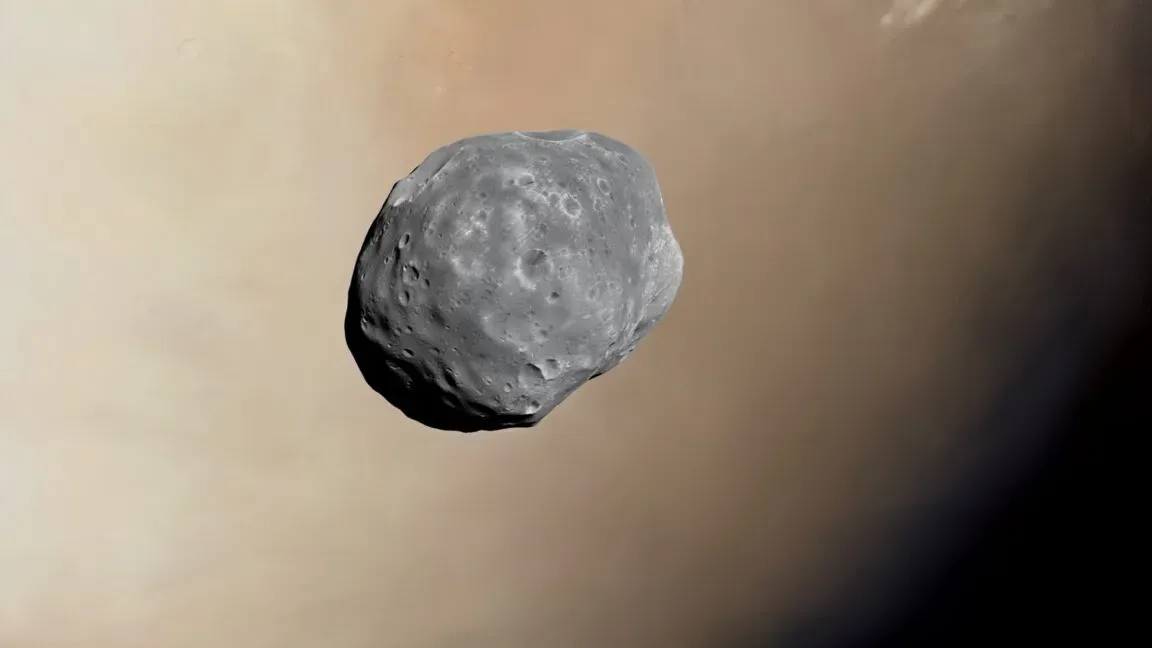
Japan has embarked on a ambitious mission to bring back samples from its Martian moon Phobos, a project that could provide valuable insights into the formation of our Solar System. The Martian Moons eXploration (MMX) mission is set to last five years and involves landing on Phobos, retrieving samples, and returning them to Earth.
The MMX spacecraft was launched from Tanegashima Space Center in southern Japan on Monday at 3:41 pm EDT, marking the beginning of a 10-month journey to Mars. The spacecraft will travel over 24,000 miles per hour, breaking free of Earth's gravitational pull as it heads towards Phobos.
The launch vehicle used for the mission was Japan's H3 rocket, which is its flagship launch vehicle. This particular configuration of the H3 rocket featured four strap-on solid rocket boosters and an extended payload shroud to accommodate the demands of the MMX mission. The rocket's upper stage accelerated the spacecraft to a top speed of over 24,000 mph.
The nearly 9,900-pound MMX spacecraft separated from the H3 rocket about 71 minutes after liftoff, marking the beginning of its solo journey to Mars. According to JAXA president Hiroshi Yamakawa, the launch was successful and a long journey of five years has just begun.
As the MMX mission progresses, it will provide scientists with an opportunity to study Phobos up close and learn more about its composition and formation history. The samples retrieved from Phobos are expected to shed new light on the evolution of our Solar System, making this mission a significant step forward in space exploration.
The MMX spacecraft has successfully established communication with ground controllers and is functioning normally after separating from its H3 rocket. According to Yasuhiro Kawakatsu, project manager at JAXA, the mission is off to a good start, with the spacecraft's solar panels deployed and it in a stable condition.
Japan's science minister, Yoshihiro Seki, emphasized the ambitious nature of the MMX mission, which aims to be the first to retrieve samples from the Martian moons. The mission is expected to contribute significantly to Japan's space exploration technology and scientific knowledge.
The theory that Phobos could be an asteroid captured by Mars' gravity billions of years ago is one of the key questions scientists hope to answer through the MMX mission. This hypothesis has sparked interest among researchers, who will study samples from the Martian moon to determine its composition and origin.
Japan's space program has a proven track record in sample return missions, having successfully launched Hayabusa and Hayabusa 2, which brought back pristine asteroid specimens. The expertise gained from these missions has attracted international participation, with NASA and European space agencies contributing to the MMX project.
The MMX spacecraft is scheduled to spend approximately three years in the vicinity of Mars after its arrival next August, during which time it will conduct multiple encounters with both Phobos and Deimos, the Martian moons.
Phobos, being the larger of the two moons, measures about 14 miles (22 kilometers) in diameter, resembling a lumpy potato in shape. Its surface area is comparable to that of the city of Houston, giving an idea of its size and terrain.
Once at Mars, the MMX spacecraft will jettison its propulsion module, which will no longer be needed after it has burned all its fuel to enter orbit around the red planet. This will leave the main section of the MMX spacecraft along with its four-legged landing gear, known as the exploration module, to maneuver closer to Phobos.
Due to the moon's weak gravity and Mars' strong gravitational pull, a stable orbit around Phobos is not feasible for the MMX spacecraft. Instead, it will fly in a quasi-satellite orbit, remaining tied to Mars while still able to move around Phobos with ease.
The mission's exploration of Phobos will reach its climax in late 2028 or early 2029 when the MMX mothership releases a small rover called Idefix onto the moon. This four-wheeled robot, contributed by the French and German space agencies, is approximately the size of a large shoebox and aims to drive around Phobos for up to 100 days despite its challenging terrain and extremely weak gravity.
The MMX mission's landing gear is designed to handle the unique challenges of Phobos' gravity field, which is weak and uneven. This is crucial because the spacecraft will be attempting to land on Phobos twice, with each landing posing a risk of tipping over or bouncing back into space.
To mitigate this risk, the probe's landing gear has been engineered to absorb the energy of each impact. The design allows for controlled deceleration, reducing the likelihood of the spacecraft becoming unstable and losing its footing on Phobos' surface. This is essential given the moon's fragile terrain and extreme gravity conditions.
Once landed, the MMX spacecraft will use two separate mechanisms to collect samples from Phobos. A coring drill on the end of the robotic arm will extract a cylindrical sample, while a pneumatic sampler provided by NASA will fire high-pressure nitrogen gas to collect loose particles in a collection canister. This dual approach ensures that multiple types of samples are obtained and preserved.
Scientists expect MMX to bring back at least 10 grams of Phobos material, a significant amount considering the challenges involved in collecting samples from such a distant and inhospitable environment. The mission's success will provide valuable insights into the composition and formation history of Phobos.
After completing its sample collection phase, the MMX spacecraft will discard its landing gear and begin its return journey to Earth. Scheduled for 2031, the sample return capsule will guide itself to a remote landing zone in South Australia, where scientists from Japan and the US will recover the precious samples for further analysis.
NASA scientists believe that the Martian moons Phobos and Deimos may hold secrets to their origins, with some evidence suggesting they could be captured asteroids or remnants of a massive impact early in Mars' history.
The Japanese mission MMX aims to study Phobos up close and bring back samples for further analysis on Earth. By examining these samples, scientists hope to determine whether Phobos material is more consistent with an asteroid composition or with debris created by a collision involving Mars.
Phobos' proximity to Mars means that it may have been affected by the red planet's gravity over time. In fact, there's a chance that MMX could collect traces of Martian material that rained down on Phobos after its formation or capture, providing valuable insights into the Martian environment.
The reconnaissance of Phobos by MMX will also help future mission planners assess whether the moon is a suitable location for human exploration. This could potentially make Phobos a useful stopover between Earth and Mars, offering a unique opportunity to study both the Martian moons and the red planet itself.
Scientists have long been fascinated by the mysterious Martian moon Phobos, but obtaining a sample from it has proven to be a challenging task.
Previous attempts at retrieving samples from Phobos have met with failure, including Russia's Phobos-Grunt mission in 2011, which failed soon after launch. The Soviet Union had also attempted to send two spacecraft to Mars equipped with Phobos landers in 1988, but unfortunately lost contact with both before they could complete their missions.
The MMX mission aims to provide a more direct understanding of the Martian moons' composition and properties by collecting samples from Phobos for laboratory analysis. This would allow scientists to study the moon's surface and internal structure up close, filling in gaps in their knowledge about this enigmatic object.
By shedding light on the origin of the Martian moons, the MMX mission has the potential to reveal new insights into the early formation and evolution of our solar system.
Facts based on reporting originally published by Ars Technica.
You may republish this story, in full or in part, if you credit Noti Group and link to it (licence CC BY 4.0). Photos are not included.