





Manchester United's Leny Yoro Red Card Controversy Continues
The controversy surrounding Manchester United player Leny Yoro's red card against Liverpool has sparked heated debate among pundits and fans, with some questioning whether the VAR decision was correct.
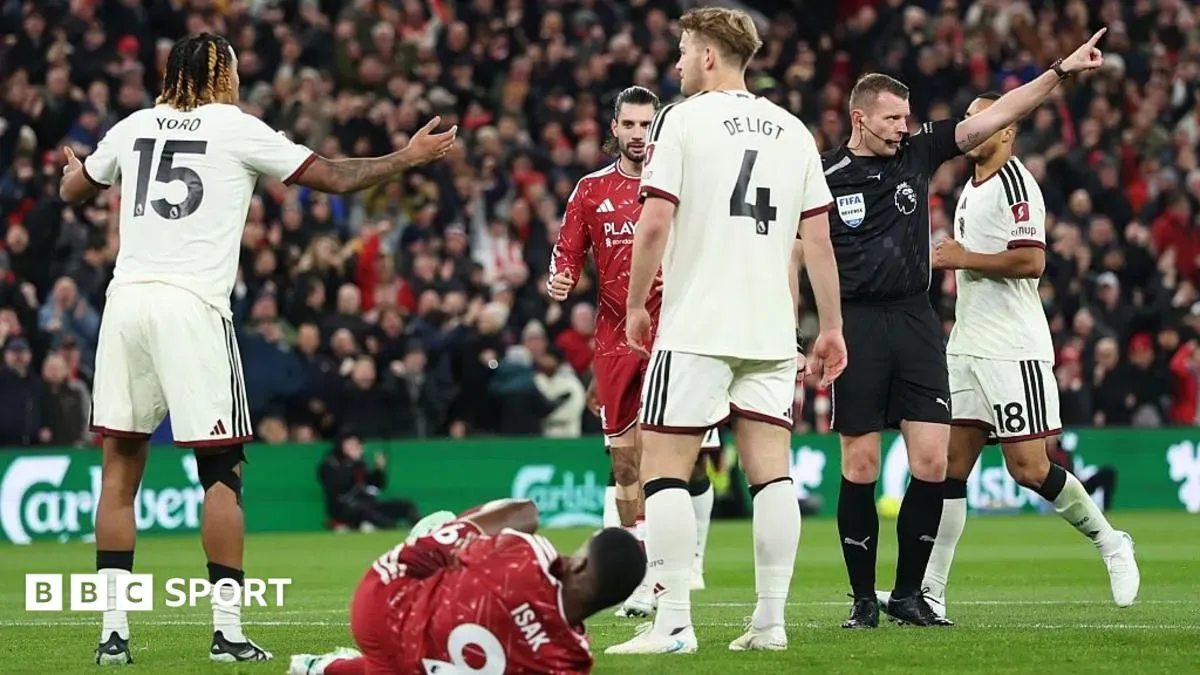
Manchester United's Leny Yoro has been at the center of a heated controversy after his red card against Liverpool was overturned.
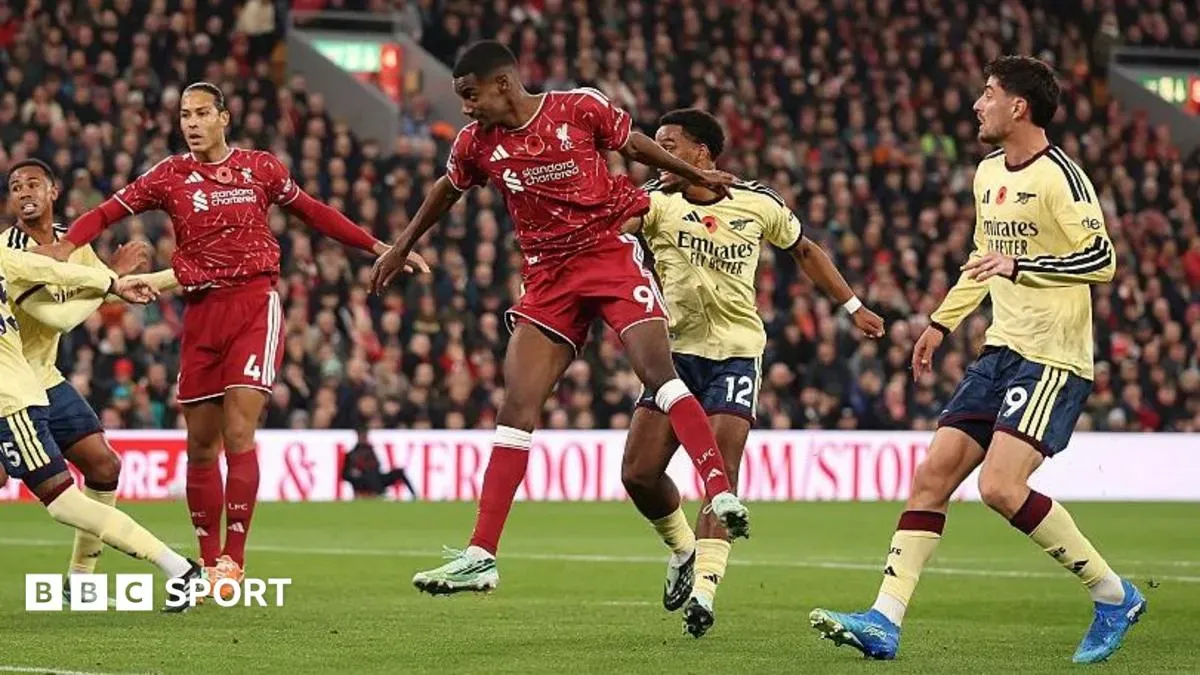
Yoro was initially sent off by referee Sam Barrott for bringing down Liverpool striker Alexander Isak in the eighth minute of their 4-0 defeat at Anfield, a decision that was also upheld by video assistant referee (VAR) John Brooks.
The incident sparked debate among pundits and fans, with some questioning whether Isak would have reached the ball before Manchester United goalkeeper Senne Lammens could have made the save.
A key moment in the game saw Yoro's red card being sent off for a challenge that was deemed to be reckless by the referee.
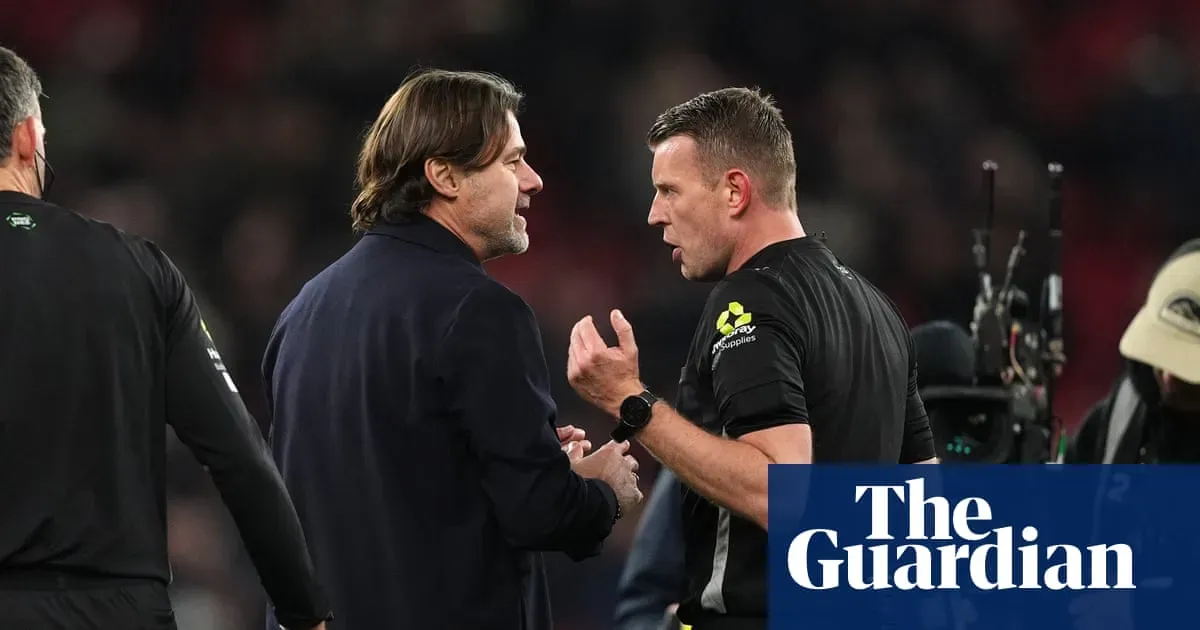
The incident involving Yoro's red card has sparked heated debate about the role of referees and VAR in high-pressure games. Pochettino defended his team's situation, emphasizing the need to protect their club and players from perceived injustices.
This stance reflects a broader concern among United's fans and management about the impact of refereeing decisions on key matches. The recent VAR error that allowed Erling Haaland's goal in the Manchester derby has left a sour taste, with many feeling that Enzo Fernandez committed an obvious offside offense.
The Yoro incident shares similarities with this controversy, as Pochettino reserved criticism for the VAR official who reviewed the play. United feels that the VAR gave only a cursory glance at where the ball would run, which may have influenced the decision to uphold the red card.
Webb's comments on Match Officials Mic'd up, recorded before the result of the appeal was known, suggest he remains convinced in his initial assessment. He acknowledged some merit to the argument that Isak would not gain possession, but insisted it didn't warrant a VAR intervention due to its relative severity.
The controversy surrounding Yoro's red card continues to spark debate about when VAR should intervene in a match. The Premier League clubs have set the threshold for VAR involvement, which has been criticized for being inconsistent. In fact, recent research suggests that fans are divided on whether the current threshold is too high or too low.
A survey of stakeholders, including Premier League clubs and referees, revealed that most respondents wanted to maintain the status quo when it comes to VAR intervention. However, opinions are sharply divided, with some arguing that the current system is flawed. The results show that 65% of respondents preferred to keep the current threshold, while 20% advocated for an increase and only 15% called for a decrease.
The latest development in the Yoro case has seen the FA regulatory commission declare that the red card decision was incorrect. But this ruling does not necessarily bring closure to the issue. Pro Ref officials have stated that they will not always agree with the decisions made by appeal boards, nor do they consider these rulings as a benchmark for future decisions.
The burden of proof for VAR intervention is considered higher than for an FA commission, and Pro Ref places significant weight on the judgments of the Premier League's Key Match Incidents Panel. This panel creates the merit table for referees and plays a crucial role in shaping how decisions are made regarding VARs.
The relationship between the FA and the Premier League's Pro Ref group has been exposed as more complex than initially thought.
While the FA handles disciplinary measures, it has no authority over refereeing decisions at the professional level, making the Premier League's opinion a crucial factor in such cases.
This dynamic raises questions about accountability and decision-making processes within the sport. If the Premier League deems a Pro Ref decision right or wrong, its verdict takes precedence over any vote by an FA commission.
The data presented by Manchester United as evidence of Isak's speed was not available to the referees during the game, which highlights the limitations of VAR technology.
The process of reviewing red card decisions by the Football Association's commissions can be unpredictable due to varying panel compositions.
Typically, three members make up these panels - often retired players, but occasionally a former referee is included. The commission's primary role is not to re-examine the incident, but rather to provide an objective review of the official's decision.
A designated delegate from Pro Ref, the organization responsible for refereeing standards, is present to clarify any questions regarding the laws of the game. However, this delegate cannot offer a personal opinion on the specific incident in question.
The commission relies solely on the referee's report, which includes a brief entry detailing the law used to justify the red card. For example, it might state: "I have to report that I, as the referee, sent off Yoro, Leny of Manchester United FC Under Law 12 section: S5."
Aston Villa's successful appeal against Douglas Luiz's red card four years ago has sparked a chain reaction of events that have left many in the football community perplexed.
The written reasons for the panel's decision highlighted a crucial factor: the physical difference between Luiz and his opponent, Aleksandar Mitrovic. According to the document, Luiz's shorter stature meant that when the two players collided, the headbutt was an unintended consequence of their bumping chests.
This reasoning has been met with skepticism by some, who view it as a desperate attempt to justify an unusual decision. However, the appeal has been upheld, and Luiz is now free to continue playing for Aston Villa.
Facts based on reporting originally published by BBC Sport.
You may republish this story, in full or in part, if you credit Noti Group and link to it (licence CC BY 4.0). Photos are not included.