







Israeli Forces Accused of Perpetuating Culture of Impunity for Settlers in Occupied West Bank
An investigation found that many Israeli settlers engage in brutal behavior towards Palestinians, often attacking and burning down villages before returning to their homes dressed in military uniforms.
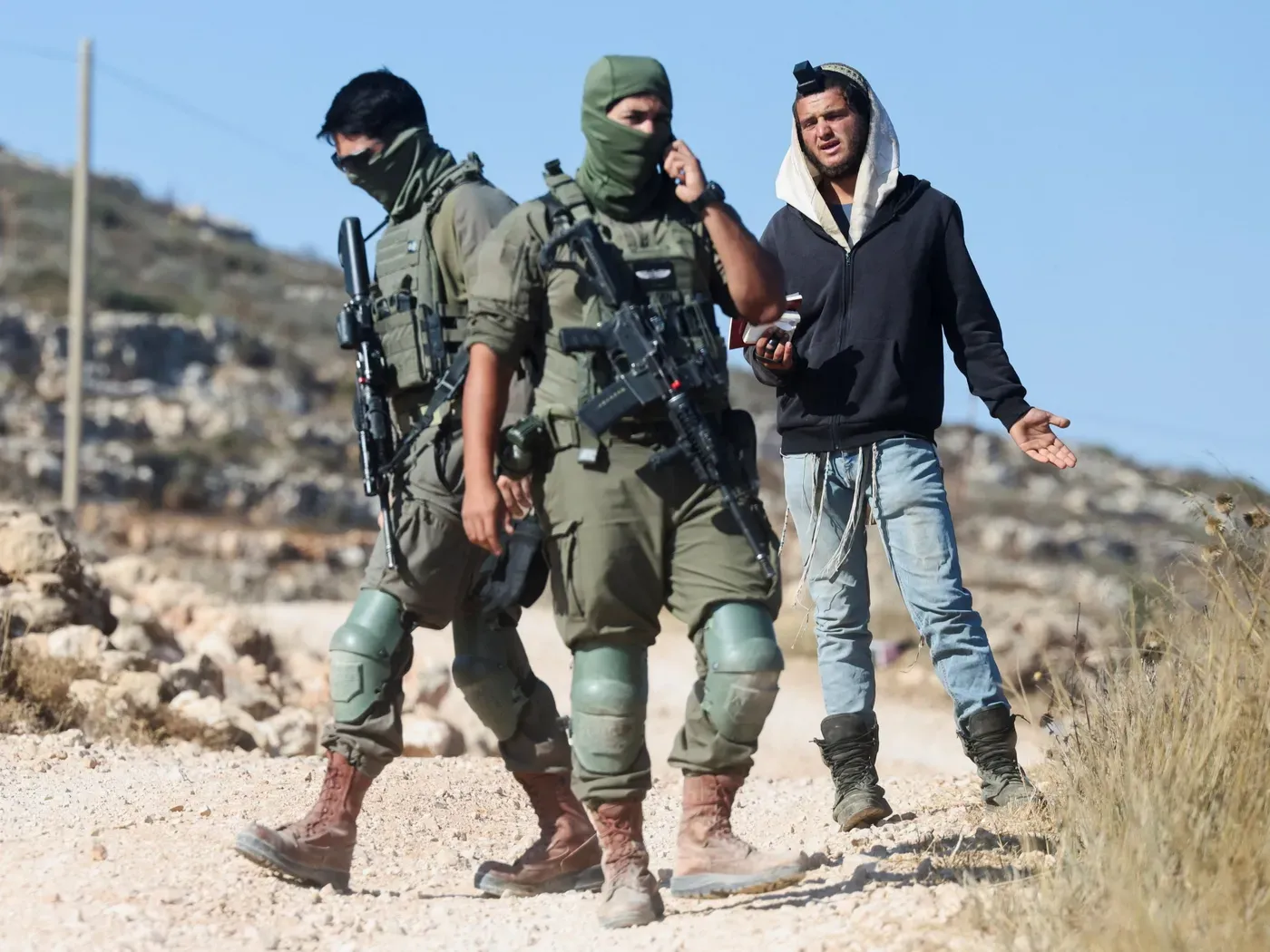
Israeli forces in the occupied West Bank have been accused of perpetuating a culture of impunity for settlers who carry out violent attacks on Palestinian communities.
The investigation found that many Israeli settlers engage in brutal behavior towards Palestinians, often attacking and burning down villages before returning to their homes dressed in military uniforms. This blurs the lines between those responsible for violent acts and security forces, which Israel claims are committed to upholding the law.
One disturbing example of this phenomenon was witnessed in the village of Tal, located southwest of Nablus. An investigation identified Yitzhak Levi Filant, a settler from Yitzhar known as "Yaqoub", who assaulted farmers while dressed in civilian clothing before donning military attire and issuing orders to villagers.
Filant's actions were documented by facial recognition technology and corroborated through local testimonies. Notably, he was previously placed on the United States sanctions list in August 2024 under President Joe Biden's administration, but was later removed from it by President Donald Trump's administration in early 2025.
The dual roles of some settlers as attackers and military personnel have become a daily reality for Palestinian farmers, according to Abbas Melhem, director of the Palestinian Farmers Union. He described how settlers often tell Palestinians that they don't need to call the army when confronted with their violent behavior, only to return dressed in military uniforms and assert authority.
The phenomenon has been extensively documented by human rights groups, journalists, and activists, who have pointed to institutional backing for settlers' attacks on Palestinian communities.
The overlap between Israeli soldiers and settlers in the West Bank is a complex issue that has been extensively documented. According to human rights groups, journalists, and activists, institutional backing for settler attacks on Palestinian communities is evident.
In Hebron, a settler named Nahman encroached on Palestinian land near the Susya settlement on March 7, summoning reinforcements. The arrival of an off-road vehicle brought with it brothers Shem Tov and Luria Luski, one of whom has been seen in military uniform in other footage.
Luria Luski opened fire, killing Amir Shanaran and severely wounding his cousin. The scene was recounted by Shanaran's father, who described the harrowing moments leading up to the attack. He stated that two shots were fired into the air before Luski approached his nephew, hitting him with the muzzle of his rifle.
The Israeli government's actions in the West Bank have been criticized for perpetuating a cycle of violence and aggression. The escalation of attacks since October 7, 2023, has led to a significant increase in tensions between Israelis and Palestinians.
The Israeli military's Regional Defence battalions, known as Hagmar, have undergone significant changes in recent years. Since 2023, these units have expanded sixfold, shifting their core function from guarding settlements to supporting settler operations.
Footage obtained by our investigation reveals a disturbing level of coordination between the army and settlers. Soldier Bezalel Talia was seen raiding Palestinian homes and detaining residents while simultaneously running a training camp for settler youth involved in attacks on villages.
The Hagmar battalions' deputy commander in Hebron, Assaf Surya, acknowledged that most members are settlers serving in the reserves. This blurs the line between military personnel and civilians, creating an environment of impunity for violent actions against Palestinians.
Mohannad Mustafa, an expert on Israeli affairs, explained how the Hagmar force's mission has fundamentally changed. It was originally intended to support the colonial settlement project in the West Bank, but its role has evolved to include geographical expansion and the expulsion of Palestinians from their lands.
Mustafa noted that the Hagmar battalions enjoy significant political and financial support from the Israeli government, which enables them to carry out their expanded mission with relative ease.
The Israeli army's integration with settler groups in the West Bank has been a deliberate strategy, according to Gideon Levy, a writer and journalist at Haaretz. He noted that settlers have chosen to join specific military units stationed in the West Bank, effectively blurring the lines between military service and settlement expansion.
The investigation found that settlers are able to obtain civilian weapon licenses through government facilitation, with National Security Minister Itamar Ben-Gvir stating that over 120,000 such licenses have been issued during the current government's tenure. This access to weaponry is further amplified by training at settlement firing ranges, such as the Ma'on facility.
The militarised network created by this integration has severe security implications for Palestinians, according to Amir Daoud from the Colonization and Wall Resistance Commission. He pointed out that former security officers have joined settler militias, providing them with valuable information that can be used against Palestinian communities.
The consequences of this trend are stark: settlers have seized control of approximately one-fifth of the West Bank, forcing the displacement of 118 Palestinian communities under Prime Minister Benjamin Netanyahu's government.
Israeli soldiers frequently stand by as settlers carry out attacks on Palestinian communities in the West Bank, according to eyewitness accounts and human rights groups.
A recent incident in Yasuf involved a settler killing a farmer, with Israeli army personnel present but taking no action to protect the victim or hold the perpetrator accountable. Those responsible for the crime were not brought to justice.
The theft of olive crops is another tactic used by settlers, often with the direct involvement of Israeli soldiers. It's estimated that around 50 tonnes of olives have been stolen this year, with some of these crops transported in military vehicles.
Many soldiers reportedly participate in these attacks because they believe there are no consequences for their actions, and those responsible will not face punishment. This lack of accountability is seen as a key factor driving the escalation of violence against Palestinian communities.
The investigation found that Israeli soldiers who commit violent acts against Palestinians are rarely held accountable for their actions, a stark contrast to settlers who also engage in similar behavior.
This lack of accountability has led to a blurring of lines between soldiers and settlers, with both groups now seen as agents of violence by Palestinian communities.
Facts based on reporting originally published by Al Jazeera.
You may republish this story, in full or in part, if you credit Noti Group and link to it (licence CC BY 4.0). Photos are not included.