






Google Unveils Fitbit Edge Smartwatch
The new smartwatch offers a balance between design and functionality, combining elements from Google's Pixel Watch and entry-level Fitbit Air.
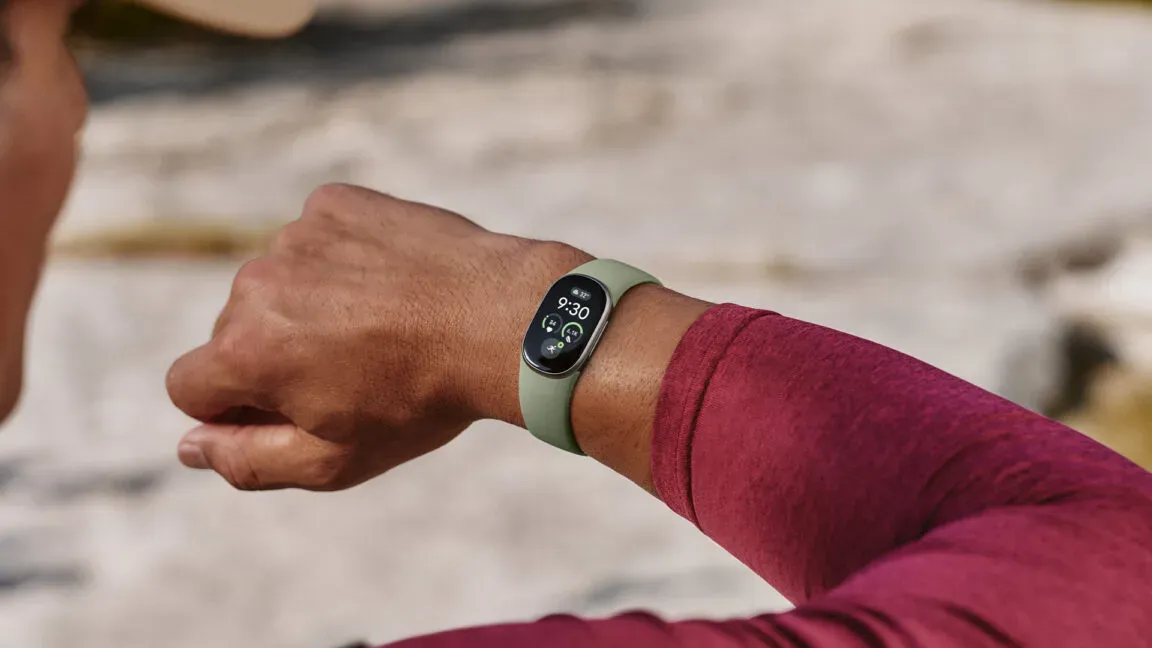
Google has unveiled a new addition to its Fitbit lineup, offering users an alternative between the more feature-rich Pixel Watch and the entry-level Fitbit Air. The Fitbit Edge combines the best of both worlds in terms of design and functionality. While it doesn't come with all the apps and features available on the Pixel Watch, it's significantly cheaper.
The Edge boasts a sleek and compact design that draws inspiration from Google's Pixel Watch. When viewed from the side, its slender aluminum frame bears a striking resemblance to its smartwatch counterpart. The 1.34-inch OLED touch display is nestled within this frame, which offers IP68 (5 ATM) protection against water and dust.
One of the standout features of the Fitbit Edge is its pill-shaped screen, offering a substantial 46 percent more viewable area compared to the Charge 6. This makes it an attractive option for those who want a larger display without sacrificing portability. The device's overall size is remarkably similar to that of the Fitbit Air.
Google has confirmed that the Edge will be compatible with both Android and iPhone devices via the Google Health app. Battery life is also impressive, allowing users to track their activity for around seven days on a single charge. However, this estimate doesn't take into account always-on display mode, which significantly reduces battery life to approximately two days.
The Edge's generous battery life enables it to store up to seven days of full health data or 30 days of basic data when not connected to a phone. This feature is particularly useful for users who want to track their activity without needing to recharge the device frequently.
Google hasn't released an official price for the Fitbit Edge, but based on its specifications and features, it's likely to fall somewhere in between the Pixel Watch 5 and the more affordable Fitbit Air.
The Fitbit Edge's design choices aim to strike a balance between its more premium sibling, the Pixel Watch 5, and the budget-friendly Air model. In terms of button count, it falls in between, featuring a single tactile side button that can be used to wake the device or start/pause workouts.
Interactions with the Edge will primarily take place through its touchscreen interface, although the side button provides an alternative means of inputting basic commands. The watch also ships with a selection of fitness-focused experiences and watch faces, but users won't be able to download additional ones.
One notable omission from the Edge's feature set is support for Gemini interactions, which are available on more advanced WearOS devices. Similarly, there's no built-in microphone or speaker, limiting responses to pre-defined quick replies.
The Edge does offer some key upgrades over the Fitbit Air, including on-device GPS that allows users to track outdoor activities without bringing their phone along. However, Google notes that this GPS system is not as accurate as the dual-band radio found in the Pixel Watch 5.
In addition to its GPS capabilities, the Edge retains several health-focused sensors from the Pixel Watch 5, such as an ECG and blood oxygen sensor. It also includes an altimeter, optical heart rate sensor, and skin temperature sensor for added tracking functionality.
The Google Health app serves as the central hub for collecting and analyzing data from the Fitbit Edge. This data is transmitted over Bluetooth 5.4 to the app, where it's integrated into the Gemini-powered Health Coach chatbot.
A premium subscription to Google Health Premium is required to access AI features, which are not available without this service. The monthly fee for this subscription is $10, although those with a Google AI Pro subscription will already have access to these features.
The Fitbit Edge comes with a basic silicone band known as the Active Band, priced at $180. Additional options include the Stephen Curry Special Edition, which carries a higher price tag of $220, and a range of third-party bands that are set to be released in the future.
A variety of add-on bands will be available for purchase when the Fitbit Edge launches, including the Active Sport band made from silicone with holes, priced at $40. Other options include the Performance Loop band made from polyester fabric, costing $50, and the Magnet Band, which features a leather-like finish but is still constructed from silicone, priced at $60.
The Metal Links Band will be the most expensive option, carrying a price tag of $150. The Fitbit Edge itself is available for preorder now and will begin shipping on October 27 in four different colors: matte black, polished silver, satin pyrite, and champagne gold.
The Fitbit Edge is designed to seamlessly integrate with other Google wearables in your ecosystem, allowing for a flexible and convenient tracking experience. This means that users can switch between different devices, such as the Pixel Watch 5 or the Fitbit Air, without having to re-pair or manually transfer health data.
Google has also emphasized the long-term durability of the Edge, highlighting its status as the company's first repairable fitness tracker. While the battery is not user-replaceable, customers will have access to service options that allow them to swap out the battery at a later time.
The introduction of the Fitbit Edge marks an important step towards making wearable technology more sustainable and environmentally friendly.
Facts based on reporting originally published by Ars Technica.
You may republish this story, in full or in part, if you credit Noti Group and link to it (licence CC BY 4.0). Photos are not included.