





Costa Rica Opens New Prison Facility Amid Rising Crime Rates
The new prison is expected to accommodate 5,100 inmates and address organized violence in the country.
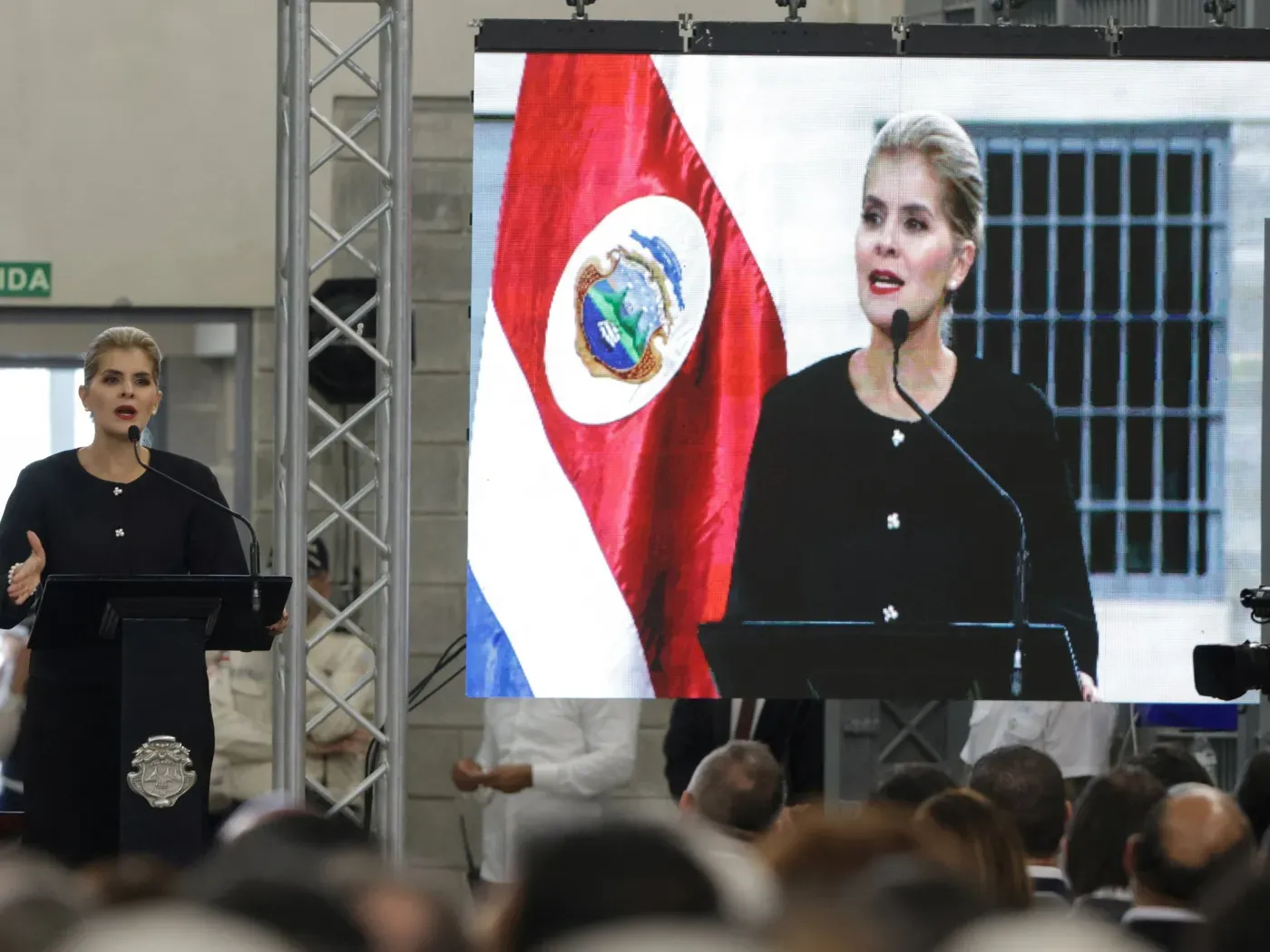
Costa Rica has launched a massive new prison facility to address rising crime rates and organized violence in the country. The High-Containment Centre Against Organised Crime (CACCO) is expected to accommodate 5,100 inmates, roughly 20 percent of Costa Rica's current prison population.
The inauguration ceremony for CACCO was attended by President Laura Fernandez, who emphasized that this new model aims to make lawbreakers face a "tough-on-crime approach. Fernandez expressed optimism that the facility will become a benchmark for prison security globally.
Critics have raised concerns about the impact of such policies on civil liberties in Costa Rica and other Latin American countries adopting similar strategies. The region has witnessed an increase in crime rates, with Costa Rica reporting 905 homicides in 2023, followed by 876 in 2024 and 873 in 2025.
This new approach to law enforcement is gaining traction across the continent, as several candidates have begun embracing mega-prison models inspired by El Salvador's President Nayib Bukele. His administration has implemented a string of mass arrests and suspended certain basic rights under the guise of combating crime, resulting in widespread popularity despite criticism from human rights groups.
The construction of massive prisons is gaining traction in Latin America, following El Salvador's lead. Analysts suggest that this trend is partly driven by the ongoing violence between criminal groups vying for control over lucrative drug routes.
Justice Minister Gabriel Aguilar has announced that the first transfers to Costa Rica's new mega-prison will take place at the end of October. According to him, the facility will help the government regain control over the prison system and reduce infiltration by organised crime.
Peruvian President Keiko Fujimori is considering replicating El Salvador's model in her country. She has expressed interest in visiting the Terrorism Confinement Centre (CECOT), which can hold around 40,000 people, as part of her plans to create a similar facility.
Right-wing leaders in other countries are also embracing the mega-prison concept. In Colombia, President Abelardo de la Espriella campaigned on building 10 such facilities, while Brazil's right-wing Senator Flavio Bolsonaro has pledged to construct five mega-prisons if elected president.
The state of exception declared by El Salvador's government has been a cornerstone of its strategy to combat gang violence, but it has also raised concerns about human rights abuses and due process violations. Critics argue that this emergency declaration has enabled mass arrests and trials, with hundreds of defendants often receiving rulings at the same time without adequate representation or access to evidence. Some individuals have even been detained for extended periods without being formally charged.
The conditions inside El Salvador's mega-prisons are reportedly dire, with overcrowding, alleged torture, and due process violations common complaints among imprisoned people. Critics claim that these facilities, such as CECOT, have become hotbeds of human rights abuses, with the government often using them to silence critics and opponents. The extension of the state of exception" has allowed the government to maintain a tight grip on power, despite growing concerns about its impact on civil liberties.
The Bukele administration's reliance on mega-prisons and emergency powers has inspired other Latin American leaders to adopt similar approaches, with some even vowing to replicate these policies in their own countries. As a result, the region is witnessing a worrying trend towards authoritarianism and human rights abuses, raising concerns about the long-term consequences for democracy and individual freedoms.
Facts based on reporting originally published by Al Jazeera.
You may republish this story, in full or in part, if you credit Noti Group and link to it (licence CC BY 4.0). Photos are not included.