






Chinese EVs Pose Challenge for US Automakers
Hyundai CEO José Muñoz has expressed optimism about the company's ability to compete with Chinese electric vehicles in the US market.
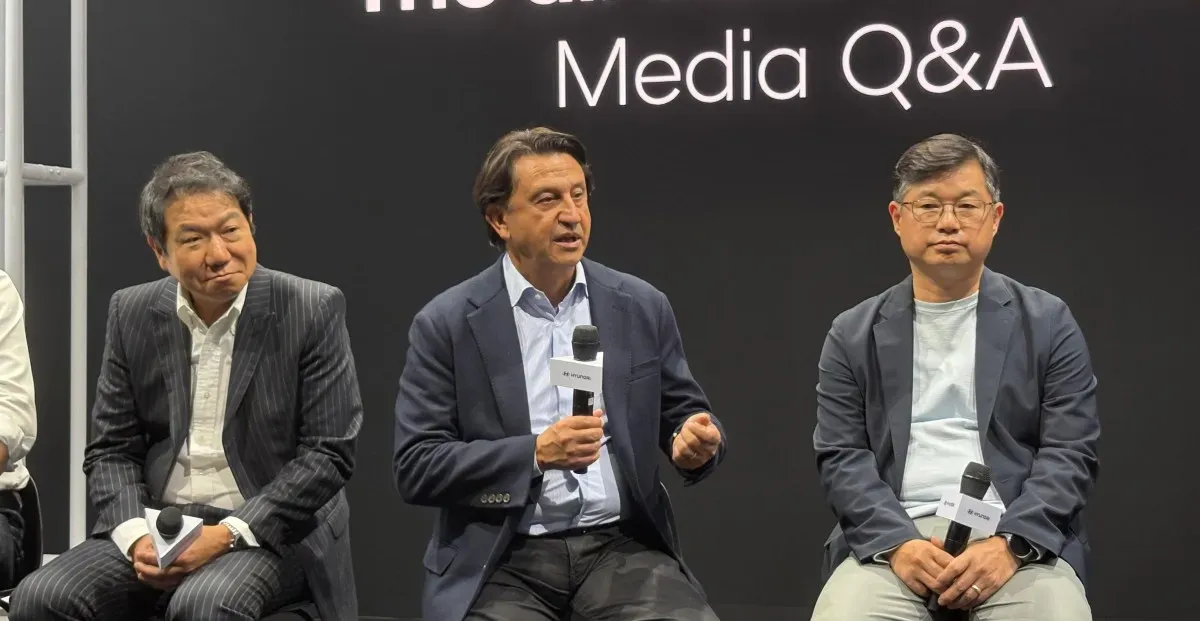
Hyundai's CEO has expressed a more optimistic view on the impact of Chinese electric vehicles on the US market compared to his industry peers.
Automakers have been warning that allowing Chinese electric vehicles into the US would be detrimental to their businesses due to their lower costs and high-tech features.
However, Hyundai CEO José Muñoz believes that with a mix of protectionist policies and product improvements, his company can compete with its Chinese rivals.
He acknowledges that China's ability to flood the US market with affordable imports poses a significant challenge if there are no established protections in place.
Muñoz's comments come as he unveiled the new 2027 Hyundai Tucson in New York City last week.
The Hyundai CEO's comments on a level playing field come at a time when the automaker is facing increasing competition from Chinese brands.
Experts predict that it's only a matter of time before China finds a way to sell its cars in the US market, with some suggesting that this could happen through manufacturing plants or partner channels.
When asked if Hyundai had begun planning for the eventuality of Chinese imports available in the US market, Muñoz replied that his company does not develop strategies based on specific competitors or consumer types.
Hyundai's focus instead lies in vertical integration, aiming to bring down costs by producing its own technology and components.
Hyundai's approach to software and technology development is also guided by the principle of vertical integration, aiming to bring down costs by producing its own technology and components.
This strategy allows the company to control its technological direction and reduce reliance on external suppliers, a move that could help minimize potential damage from competitors in China.
The cost savings from internal production can be significant, as demonstrated by Hyundai's efforts to develop its own electric vehicle (EV) batteries, which are now being used in its Kona Electric model.
Hyundai's focus on vertical integration is part of its broader effort to build a more sustainable business model, one that is less vulnerable to disruptions from external market forces.
In the US, for instance, Hyundai has seen robust sales of its EVs, although these have been largely driven by demand for its hybrid models.
Hyundai's diverse lineup has contributed to its success in the US market, where it offers hybrids across various models, including the Tucson, one of its top-selling vehicles. This strategic approach enables the company to cater to different consumer preferences and stay competitive. As a result, Hyundai has recently surpassed Honda to become the second-largest hybrid seller in the US, behind only Toyota.
The company's commitment to electric vehicles (EVs) is also evident, with the Ioniq 5 and Ioniq 9 models available for purchase in the US alongside its growing hybrid lineup. This contrasts with some automakers that have retreated from EV production. Hyundai operates a battery manufacturing joint venture with SK On in Georgia, near its massive Metaplant facility where all of its EVs and hybrids are assembled.
The challenge of competing with China's dominance in EV batteries remains a significant hurdle for the US market. According to Muñoz, having sufficient volume and critical mass is essential to be competitive, particularly when it comes to battery production costs. However, he notes that the US already has some of the world's top manufacturers producing high-quality batteries domestically, which could help mitigate this issue.
Facts based on reporting originally published by The Verge.
You may republish this story, in full or in part, if you credit Noti Group and link to it (licence CC BY 4.0). Photos are not included.