




Blade Runner 2099 Premieres with Visually Stunning Sequence
The new series explores themes of social upheaval and technological advancement in a world where replicants hold sway over humans.
Amazon's highly anticipated sequel to Ridley Scott's 1982 sci-fi classic has finally arrived in the form of Blade Runner 2099. The new series kicks off with a visually stunning sequence that sets the tone for the rest of the show.
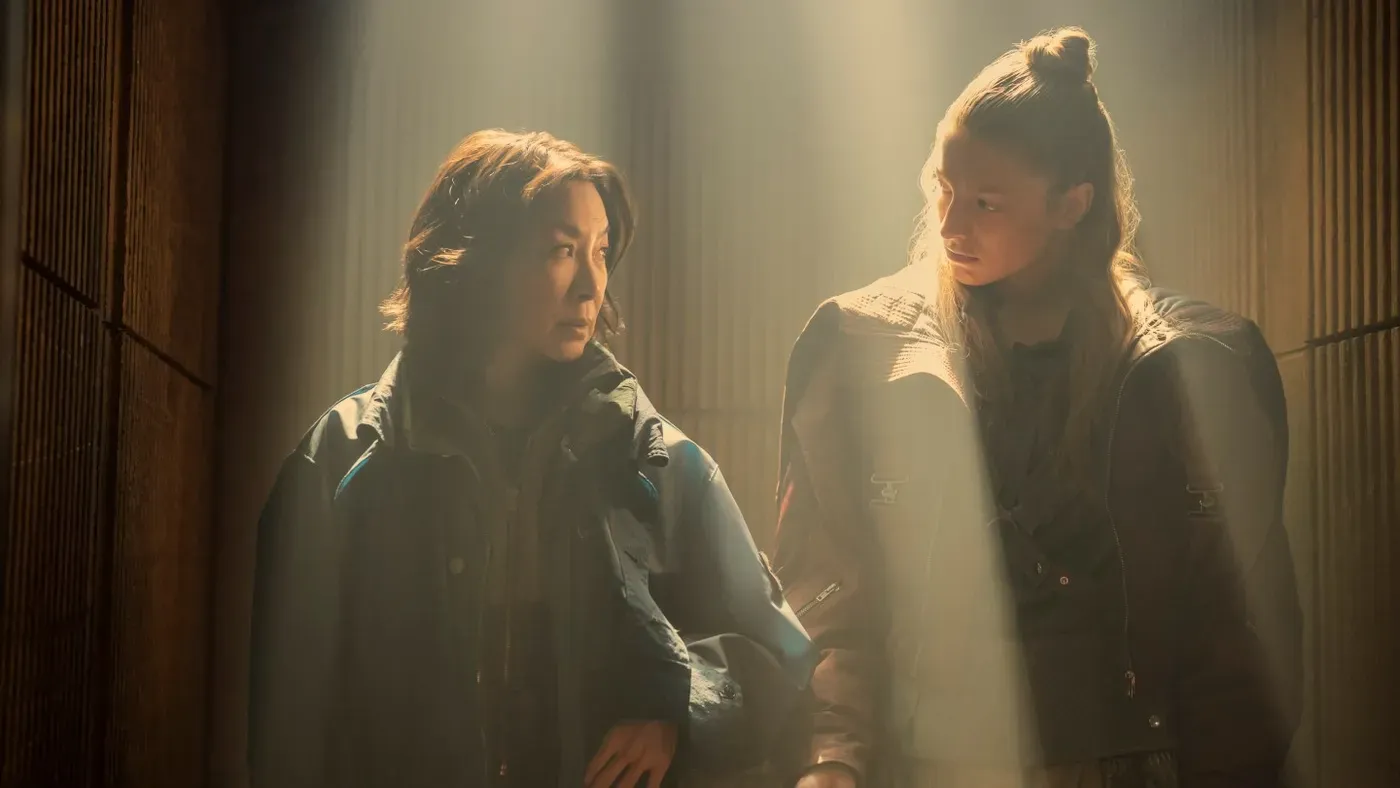
LAPD partners Olwen and Cora, played by Michelle Yeoh and Hunter Schafer respectively, investigate a lead at Body Body, a seedy sex club that appears to be just another rundown establishment in the city. However, as they delve deeper into the club's operations, they uncover a surprising truth behind its facade.
The patrons of Body Body are not what they seem - instead of engaging in illicit activities, they're paying to use pregnancy prosthetics and cradle mechanical babies. This unusual setup is designed to allow replicants to experience the illusion of parenthood, but it also raises questions about their place in society.
As the proprietor, Muller, explains, the goal is for replicants to stop defining themselves against human capabilities and instead become what they were meant to be - a concept that's both intriguing and unsettling.
The world of Blade Runner 2099 is a complex tapestry, woven from threads of social upheaval and technological advancement. Eighty years have passed since the events of the original film, and half a century since those of its sequel. This has led to a profound shift in power dynamics, with replicants now holding sway over humans who are forced to live on the fringes.
In this altered landscape, Olwen, a skilled replicant blade runner, is nearing the end of her predetermined lifespan. With only eight days remaining, she embarks on a mission to track down Marek, another blade runner who has gone missing without a word. Meanwhile, Cora, a human posing as a replicant, is searching for a valuable artifact that could secure her passage to Mexico City, one of the last remaining human enclaves.
The paths of Olwen and Cora converge in unexpected ways, with their individual quests becoming intertwined. As they navigate this treacherous world, they must confront the harsh realities of their existence and the delicate balance of power between humans and replicants. The stakes are high, and the consequences of failure could be catastrophic.
Blade Runner 2099 is a visually stunning sequel that pays homage to its predecessors while struggling to forge its own identity. Moody jazz-set visuals evoke the spirit of the original film, but ultimately fall short of true innovation. Without a clear sense of purpose or direction, the story meanders through familiar terrain, failing to break new ground.
As Olwen and Cora delve deeper into their respective missions, they begin to uncover secrets that threaten to upend the fragile social order. The world of Blade Runner 2099 is a complex, often contradictory place, where power is constantly shifting and allegiances are tested. Will our protagonists be able to navigate this treacherous landscape, or will they become the latest casualties in a war for survival?
The cityscape of Los Angeles in Blade Runner 2099 is a faithful extension of its predecessors' aesthetic, with grimy streets and ramshackle technology still dominating the landscape. The air is thick with smog, casting a perpetual gloom over the glittering white and neon lights that line the buildings. Interiors are just as cramped and cluttered, with ancient equipment rusting away in every corner.
The visual design of 2099 is undoubtedly one of its strongest aspects, transporting viewers to a world where technology has advanced but not necessarily improved the lives of those living there. The wailing jazz score by Leopold Ross adds to the sense of unease and foreboding that permeates the show, underscoring the isolation and desperation that seems to grip every character.
However, as engaging as the visuals may be, they can't quite compensate for the meandering pace of the plot. 2099 often gets bogged down in empty landscapes and aimless wandering, with characters moving from one location to another without much purpose or direction. It's unclear whether this is a deliberate choice or simply a way to pad out the narrative.
Olwen and Cora are at the center of the action, searching for Marek and navigating their complicated relationships along the way. But beneath the surface, there are secrets and agendas that threaten to tear them apart. Olwen struggles with her own mortality, while Cora conceals her true nature from those around her.
The show's reliance on familiar tropes and plot devices is starting to wear thin, particularly when it comes to the violent confrontations that erupt all too frequently. These scenes are often shrouded in darkness, making it difficult for viewers to fully appreciate their impact or significance. As a result, they feel more like an afterthought than a deliberate attempt to heighten tension or drama.
The TV series 'Blade Runner 2099' raises questions about what it means to be human, but never truly explores them in depth. The show's narrative is driven by familiar themes of immortality and a better tomorrow, yet these ideas are not given the complexity they deserve. Despite occasional flashes of existential angst, reminiscent of its predecessors, the series largely fails to deliver meaningful commentary on its central concepts.
The creators' decision to prioritize cinematic grandeur over small-screen storytelling results in pacing that is often plodding and deliberate. The luxury of a full TV season is squandered on characters who feel more like plot devices than fully fleshed out individuals. This approach neglects the intimacy and emotional connection that can be achieved through careful character development.
The show's characters struggle to connect with viewers due to their lack of real motives or personalities. They serve only to advance the plot or regurgitate the series' themes, rather than being multidimensional beings with their own agency. This oversight makes it difficult for audiences to become invested in their stories.
Michelle Yeoh brings a sense of depth and nuance to her character, even in small moments like watching a goat for the first time as she faces an impending end. However, her backstory is painted with broad strokes that fail to elicit genuine emotional investment from viewers.
Hunter Schafer's character poses an even greater challenge due to their minimal development beyond their disguise and desperation. Despite these limitations, Schafer effectively conveys the underlying tension and desperation driving her character's actions.
The show's inability to deliver meaningful exploration of its central themes leaves it feeling shallow and emotionally deficient.
The world of Blade Runner 2099 feels increasingly superficial as the series unfolds. The lack of depth in its characters and storylines is particularly noticeable when compared to a more substantial work like a feature film. This difference in scope becomes even more pronounced in an eight-hour series where viewers expect a richer experience.
Characters like Elias, Cora's brother, are given minimal development, with his actions often feeling contrived simply to advance the plot or create conflict for his sister. Similarly, characters like Greta and Bebeto have backstories that aim to add depth but ultimately feel too obvious and unengaging. These narrative choices leave viewers wondering about the world they're supposed to be invested in.
As a result of this lack of emotional specificity and textured world-building, the series starts to feel like an imitation rather than a genuine exploration of its themes and ideas. The show's visuals are certainly impressive, but even the most convincing special effects can't compensate for the absence of substance. What remains is a hollow shell of what could have been a compelling sci-fi story.
Ultimately, Blade Runner 2099 feels like a missed opportunity to delve deeper into the world it presents, instead opting for a surface-level exploration that fails to resonate with viewers on an emotional level.
Facts based on reporting originally published by The Hollywood Reporter.
You may republish this story, in full or in part, if you credit Noti Group and link to it (licence CC BY 4.0). Photos are not included.