






Artificial Intelligence Used in Real Estate Listings Raises Concerns About Honesty and Transparency
The use of artificial intelligence (AI) in real estate listings has raised concerns about honesty and transparency, with some estate agents using AI to enhance online photos and make properties appear more appealing than they actually are.
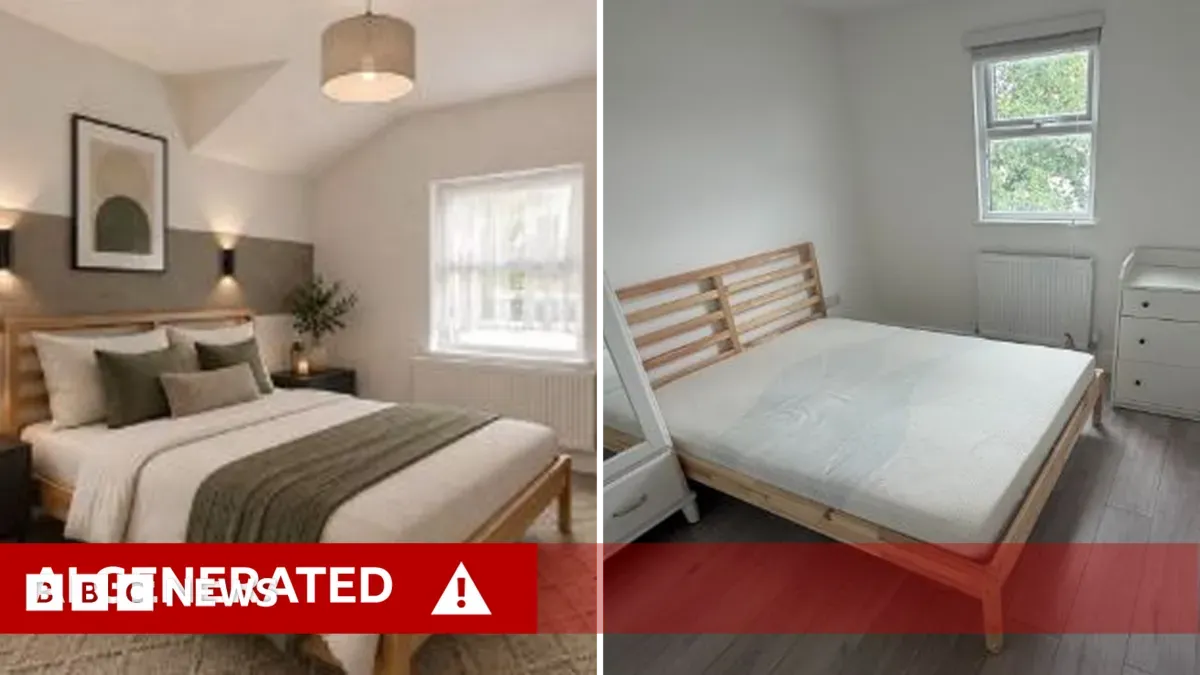
A growing trend has emerged among estate agents to use artificial intelligence (AI) to enhance online listings and make properties appear more appealing than they actually are.
This phenomenon is being referred to as "housefishing by experts who warn that it can mislead prospective buyers and create unrealistic expectations about a property's features. The practice involves using AI to touch up photos, making rooms look larger, walls brighter, and lawns lush and green.
The goal of these digital enhancements is to help buyers visualize the potential of a place, but some argue that it crosses the line into deception when taken too far. Olivia Nicole, 29, recently experienced this firsthand while searching for a five-bedroom property in south-west London on Rightmove.
When she arrived at the viewing several days later, she was shocked by the discrepancies between the online photos and reality. The rooms were much smaller than they looked in pictures," she said, and some structural features didn't appear at all.
The use of artificial intelligence (AI) in real estate listings has raised concerns about honesty and transparency. In some cases, property listings are being enhanced with AI to make homes look more appealing, but this can be misleading to potential buyers.
Olivia, a UK homebuyer, recently experienced this issue firsthand when viewing a property on Rightmove. The pictures she saw were not entirely accurate, as they had been artificially improved with AI before being posted online. This lack of transparency wasted her time and caused frustration.
Estate agents have long used various techniques to make homes appear more attractive in listings, such as wide-angle lens cameras or photo editing software like Photoshop. However, the increased use of AI has made this process easier and more accessible, potentially leading to even more misleading listings.
The Guild of Property Professionals has issued guidelines for responsible use of AI enhancement in real estate listings, but it's difficult to determine how widespread the practice is among UK estate agents. A recent survey found that one in five homebuyers who purchased a property in the past year reported viewing a listing with digitally enhanced photos that made the home appear better than it actually was.
Homebuyers are increasingly encountering listings with digitally enhanced photos on property websites like Rightmove.
The trend, which some refer to as 'housefishing', raises questions about when using AI in real estate marketing crosses a line into misrepresentation. For Jack Bushrod, who reviews quirky properties for his social media channel Housing Horrors, the issue is about transparency and honesty.
Bushrod notes that while AI can be useful in decluttering rooms or adding furniture to empty spaces, it should not be used to deceive potential buyers or waste their time. He has observed a surge of AI-enhanced images on Rightmove over the past six months, often without clear labelling indicating they are generated by artificial intelligence.
In some cases, these enhancements can be quite convincing. Bushrod recalls seeing one listing where a pillar had been removed and a window added using AI. He also notes that small details like stains or cracks in tiles might go unnoticed online but become apparent during an in-person viewing.
The ongoing debate about the ethics of using artificial intelligence (AI) in real estate listings continues to gain traction. The issue at hand is whether AI-enhanced photos can be misleading or deceptive to potential buyers.
One aspect of this controversy revolves around the labeling of AI-generated content. Trading Standards has clarified that estate agents are allowed to use basic enhancements, such as virtually furnishing a room or garden, as long as they clearly indicate the use of technology in the listing. This is seen as a way to provide additional information and help buyers visualize the possibilities.
However, there is still concern that some estate agents may be pushing the boundaries too far. Jack Bushrod suggests that all AI-enhanced photos should be labeled prominently, along with any other uses of the tech. He believes this would help maintain transparency and prevent potential misrepresentation.
In response to these concerns, one firm has introduced a policy of labeling all AI-enhanced photos in their listings. This move is seen as a step towards greater accountability and honesty in real estate marketing.
The use of AI in real estate marketing is expected to continue growing, with some experts predicting a surge in "housefishing" - the practice of using technology to create misleading or exaggerated property listings.
This trend may lead to more people jumping on the bandwagon and adopting similar tactics, as others see the potential benefits of using AI to enhance their marketing efforts.
Facts based on reporting originally published by BBC News Technology.
You may republish this story, in full or in part, if you credit Noti Group and link to it (licence CC BY 4.0). Photos are not included.