






Virgin Galactic Unveils First Delta-Class Spacecraft
The naming ceremony for Virgin Galactic's first Delta-class spacecraft, Apeiron, marks a crucial step towards reviving private space tourism.
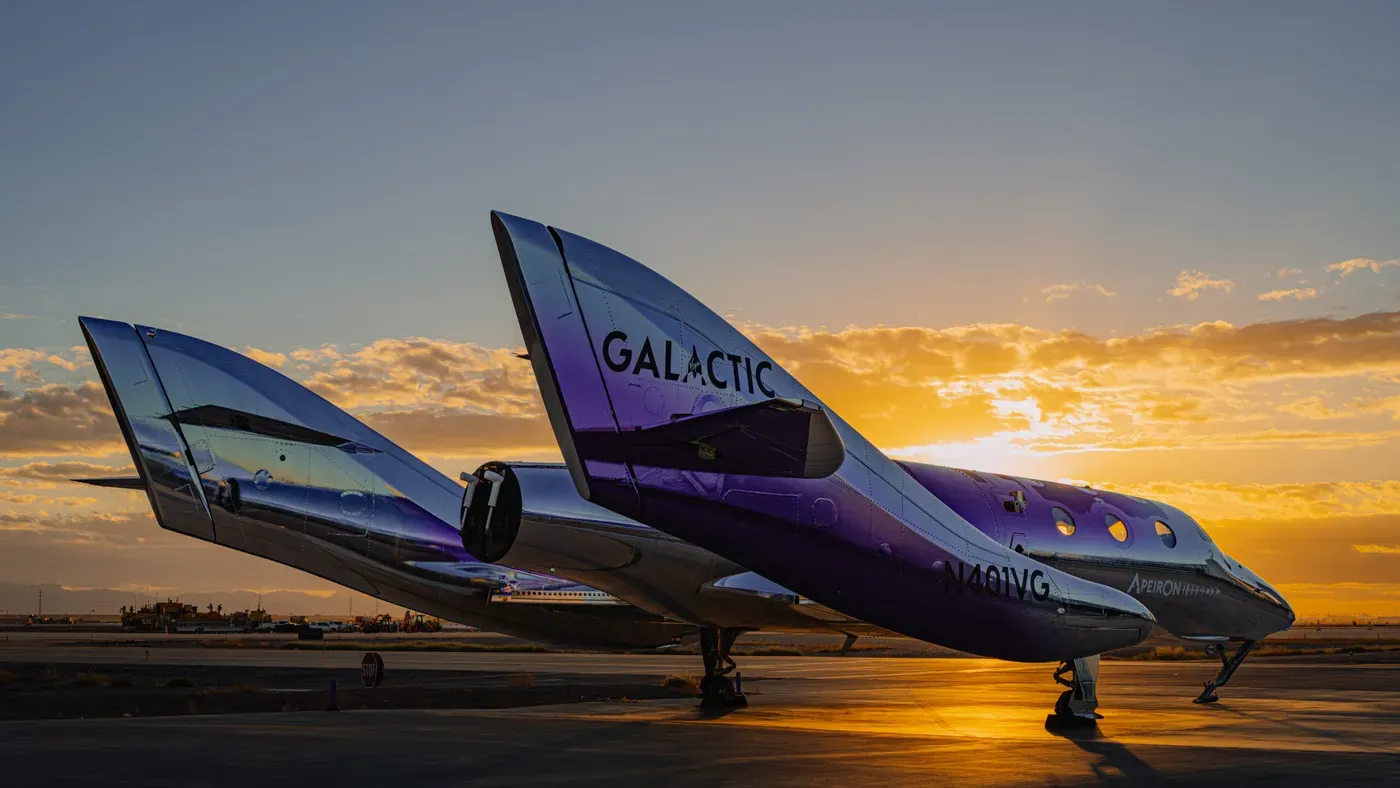
A long-awaited development in private space tourism has taken place in Arizona, marking a crucial step towards reviving the industry's momentum.
After years of stagnation, Virgin Galactic is finally moving forward with its second-generation suborbital spacecraft, known as the Delta-class. The company had initially announced plans to deploy these vehicles by 2026, but it seems that timeline might be achievable after all.
The first Delta-class ship has been named Apeiron, a term derived from ancient Greek philosophy. It represents the concept of boundlessness, which is an intriguing choice for a spacecraft that will be limited by Earth's gravitational pull. The name was chosen through a public vote, as revealed in Virgin Galactic's latest news release.
The naming ceremony comes at a critical juncture for Virgin Galactic, which has faced significant challenges in recent years. Despite its initial promise of taking private citizens to space, the company's suborbital tourism program has been plagued by delays and setbacks.
Virgin Galactic's decision to name its first Delta-class ship Apeiron signals that progress is being made towards bringing this new generation of spacecraft online. However, it remains to be seen whether these vehicles will meet their intended deployment timeline or if they will face further delays.
The spaceship Apeiron has been named by Virgin Galactic's fans, according to Michael Colglazier, chief executive officer of the company. The naming process was a way for the company to engage with its enthusiasts and build excitement around its space tourism venture.
A significant development in the journey of Apeiron is that it will be transported from Virgin Galactic's Spaceship Factory in Mesa, Arizona, to Spaceport America in New Mexico later on Wednesday. This move marks a crucial step towards preparing the spaceship for its maiden flight.
Once at Spaceport America, aircraft engineers and technicians will focus on completing work on Apeiron's avionics equipment and flight software. The next steps will involve additional ground tests, followed by captive carry tests with the VMS Eve, a drop test, and ultimately a powered test flight above 80 km.
Virgin Galactic now expects Apeiron to make its first commercial spaceflight "early" in the second quarter of 2027, but as is common in the aerospace industry, projected timelines should be viewed with caution. However, it seems plausible that the spaceship may begin carrying paying customers on suborbital space tourism missions within the next 12 to 18 months.
Virgin Galactic's ambitious plans for space tourism have faced significant skepticism regarding their commercial viability. To succeed, the company's vehicles must operate with nearly flawless reliability and exceptional durability to transport hundreds of people into space annually, albeit briefly.
The harsh reality has begun to set in for investors, leading to a downturn in the company's market value. In 2021, Virgin Galactic's stock reached an impressive valuation of $1,118 per share, but it has since plummeted to around $2.50 per share.
Despite these challenges, Virgin Galactic appears poised to play a crucial role in expanding space tourism capabilities over the next decade, with its vehicles potentially carrying paying customers on suborbital missions within 12 to 18 months.
Facts based on reporting originally published by Ars Technica.
You may republish this story, in full or in part, if you credit Noti Group and link to it (licence CC BY 4.0). Photos are not included.