





UK Financial Markets Underestimate Interest Rate Hike Likelihood
Market expectations suggest four to five interest rate hikes over the next year, pushing the bank rate from its current 3.75% to as high as 5%.
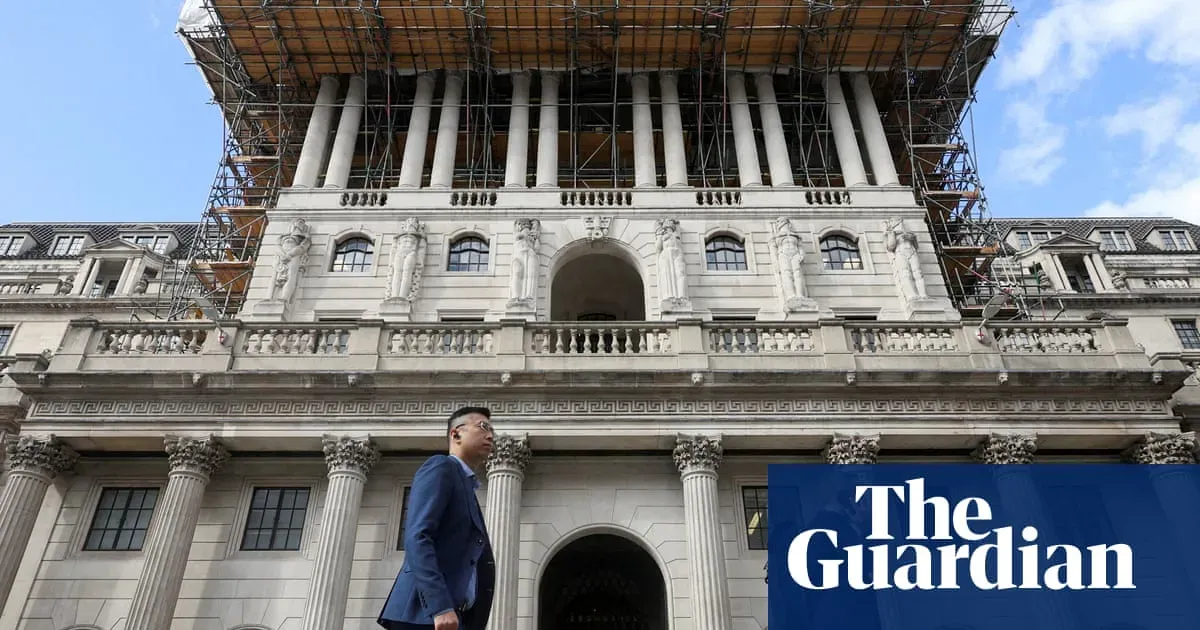
The UK's financial markets are underestimating the likelihood of a significant interest rate hike by the Bank of England. Many economists believe that predictions of a full percentage point increase or more by next summer are overly optimistic.
Market expectations suggest four to five interest rate hikes over the next year, pushing the bank rate from its current 3.75% to as high as 5%. However, some City experts disagree with this forecast, citing the lack of evidence that rising energy costs are having a broad impact on prices.
James Smith, a developed markets economist at ING, questioned the market's consensus view. He pointed out that the swaps market currently implies four rate hikes followed by no cuts, which he believes is an unlikely scenario.
The Bank of England has been closely monitoring inflation and economic growth as it considers future interest rate decisions. With energy prices continuing to rise, some might expect a sharp tightening cycle to follow.
However, Smith thinks otherwise, suggesting that the Bank could be sounding the all-clear by next spring and potentially cutting rates again by the end of next year.
Market-implied interest rates are calculated from financial instruments such as derivatives and swaps to forecast where traders think interest rates will be in the future.
The high market-implied interest rate expectations can be attributed to a correlation between these expectations and oil prices since the Iran conflict began. As oil prices increase, so do the anticipated rate hikes. This creates a risk for investors who bet against rising rates, as they may face losses if oil prices continue to rise and interest rates don't follow suit.
Investors are hesitant to take on this risk due to the potential pain of mark-to-market losses and margin calls. Many traders have learned from past experiences, such as the start of the current Middle East crisis when most were positioned for further rate cuts.
Traders who bet against rising rates during that time suffered losses. As a result, they are now more cautious about taking on similar risks until there is greater certainty about energy supply and inflation this winter.
Sanjay Raja, chief UK economist at Deutsche Bank, also expresses skepticism about the market-implied interest rate expectations. He believes it's unlikely for the Bank of England to raise rates as fast as currently priced in by traders, given the current information.
Market analysts have been factoring in a significant amount of uncertainty into their forecasts for Bank of England interest rate hikes.
This "baked-in risk premia is essentially an extra return that investors demand to compensate for potential risks and instability, which can skew the perceived likelihood of future rate rises.
When this premium is stripped away, however, economists estimate that only a relatively modest half a percentage point of hikes remains pencilled in.
Deutsche Bank's base case forecast still suggests a significant increase in interest rates, with the bank rate expected to reach 4.25% by next February and remain there until the end of 2027.
The Bank of England is widely anticipated to raise interest rates to 4% at its upcoming meeting on November 5, following September's inflation reading that saw prices rise above target to 3.5%.
Goldman Sachs has also noted a discrepancy between market expectations and its own forecast path for the bank rate, which it believes remains notably below market pricing".
The UK's interest rate-raising cycle is expected to be less pronounced than market expectations suggest. Oxford Economics, a consultancy firm, has forecasted that the Bank of England's monetary policy committee will increase interest rates by 25 basis points at its November and February meetings, resulting in a peak bank rate of 4.25%. This is significantly lower than the current market expectation of a peak between 4.75% and 5%.
Market expectations have been driven up by concerns over inflation and economic growth, but even Huw Pill, the Bank's hawkish chief economist, has expressed skepticism about the need for such aggressive rate hikes. In a recent speech at an International Monetary Fund meeting in Bangkok, Pill questioned whether the Bank would need to raise interest rates four times over the next year.
These views are in line with Goldman Sachs' assessment that market expectations are running too high, with their forecast path for the bank rate notably below market pricing. The discrepancy between market expectations and forecasts suggests that interest rates may not reach 4.75% by next summer as some have predicted.
Facts based on reporting originally published by The Guardian Business.
You may republish this story, in full or in part, if you credit Noti Group and link to it (licence CC BY 4.0). Photos are not included.