





Air Travel Demand Experiences First Annual Decline Since 2020
The US airline industry is seeing its first annual decline in air travel demand since the pandemic, with fewer people passing through airport checkpoints this year.
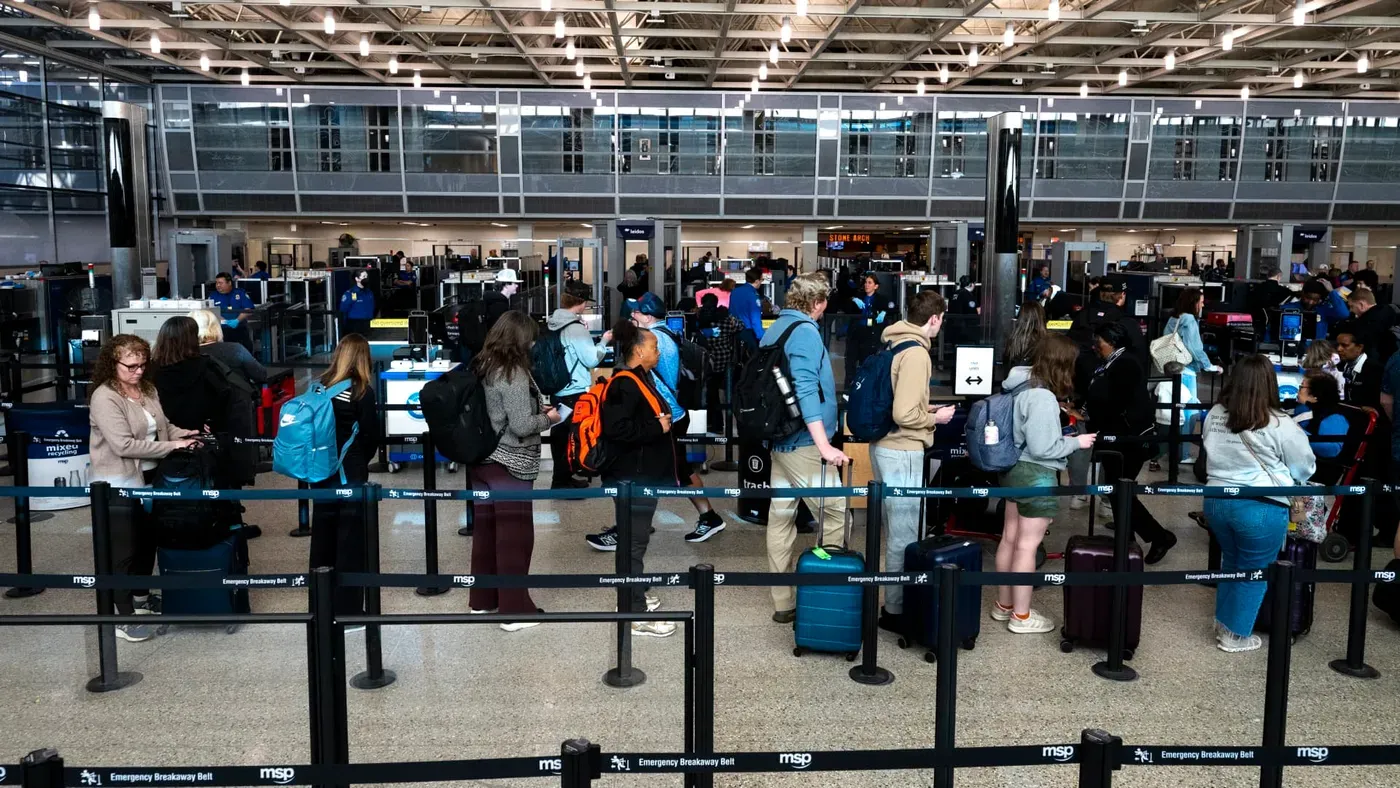
Air travel demand is experiencing its first annual decline since 2020, with fewer people passing through US airport checkpoints this year.
This decrease has been met with a shrug from major airlines, who are instead focusing on maximizing revenue by increasing ticket prices. With airfare soaring to record highs, airlines are prioritizing yield over load factor, the percentage of seats filled on each flight. For American Airlines, this means embracing higher fares as part of its premium investments.
American's Chief Commercial Officer Nat Pieper explained the airline's strategy during an earnings call last week. According to Pieper, the company is deliberately choosing to prioritize revenue growth over filling planes to capacity. This approach aligns with American's efforts to boost profitability through targeted investments.
The rising cost of jet fuel has significantly contributed to the surge in airfare prices, which have increased by more than 22% year-over-year in September. Fares are expected to remain high this holiday season, with fare tracker Hopper predicting that ticket prices will be among the highest in years.
Southwest Airlines has seen a significant increase in average fares this year, with third-quarter prices reaching $231.69 per ticket. This is nearly a $50 hike from the same period last year and does not include additional fees for checked bags or preferred seating.
The airline's revenue passenger count has also experienced a decline of 3.2% compared to last year, totaling approximately 33.5 million people. Despite this drop, both fares and passenger numbers have exceeded Southwest's projections.
Southwest CEO Bob Jordan highlighted the positive aspects of their earnings report during an investor call on Thursday. He noted that ticket prices surpassed expectations by $3 per ticket, while also exceeding forecasts for passenger volumes.
The decline in air travel is not unique to Southwest Airlines, as airport checkpoint screenings have decreased by around 9.3 million since April this year compared to the same period last year. This drop represents less than a 2% decrease from last year's numbers, which follows years of steady growth.
Jet fuel prices have more than doubled in recent times, with U.S. Gulf Coast spot prices reaching $4.63 per gallon according to the U.S. Energy Information Administration. As airlines struggle to mitigate the impact of these increased costs, they are focusing on recovering as much of the fuel price spike as possible.
Airlines are reporting robust travel demand, particularly in premium cabins such as business class, despite rising airfares. This trend is evident from earnings calls where executives highlighted the resilience of passenger numbers. Some carriers have even seen an increase in passengers and revenue.
United Airlines stands out with a 2.4% rise in third-quarter passengers compared to last year. The airline's unit revenue also saw a significant jump, increasing by 16%, its largest growth since the pandemic. This impressive performance suggests that airlines are successfully passing on fuel price increases to customers.
Airlines' ability to raise yields and absorb fuel costs has been praised by industry leaders. United Airlines CEO Scott Kirby noted during his company's earnings call that the industry's pricing power is a key factor in offsetting rising fuel prices. As a result, some carriers may prioritize yield over load factor, potentially leading to higher profits.
Airlines are anticipating continued pressure from fuel costs, with many expecting to pay more for gasoline next quarter. United Airlines forecasts an average fuel price of $4.80 per gallon in the fourth quarter, up from $3.90 in the third. This increase will further test airlines' pricing power and ability to maintain profitability.
The recent earnings reports from major carriers have led to downward revisions in profit forecasts for 2026. American Airlines is the only one among the four major carriers that expects to post a loss this year, while others are anticipating reduced profits due to the ongoing fuel cost challenge.
As airlines continue to grapple with soaring fuel costs, they're also scaling back their growth plans and capacity expansion goals. This reduced supply can exacerbate the issue of high airfare, making it even more challenging for travelers.
Demand has been strong in the premium cabin, where fares are significantly higher than economy seats. In fact, passengers booking business or first-class tickets often pay hundreds or thousands of dollars more than those in coach.
The impact on smaller airlines, such as Frontier and Allegiant Air, which cater to budget-conscious customers, will be closely watched for signs that these travelers are pulling back due to high fares. The demise of Spirit Airlines earlier this year has also left a void in the market, potentially affecting air travel patterns.
Facts based on reporting originally published by CNBC.
You may republish this story, in full or in part, if you credit Noti Group and link to it (licence CC BY 4.0). Photos are not included.