






Regent's Seven Seas Splendor offers luxurious accommodations at high prices
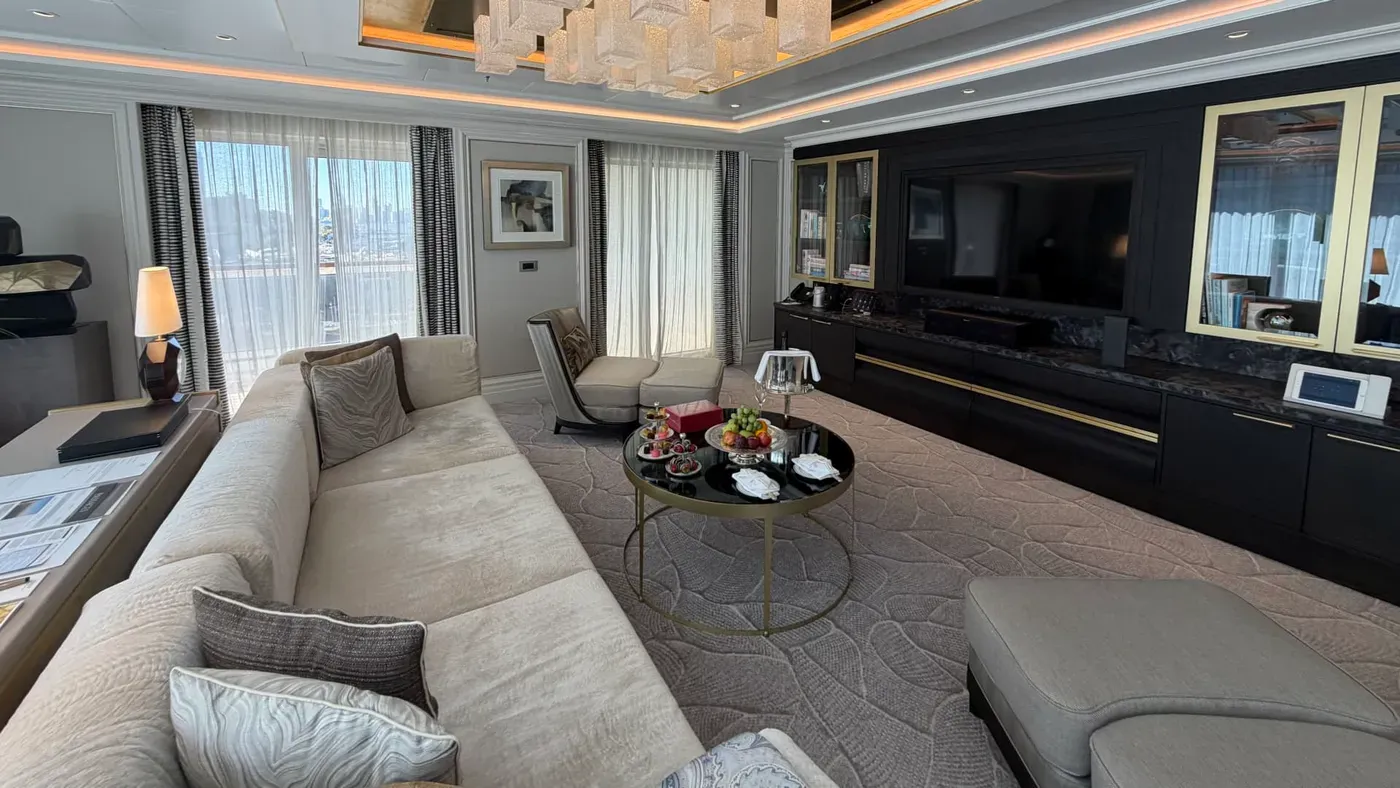
The Regent Suite on the ship is a top-tier offering with features such as a Steinway piano and private dining room.
Luxury travel is taking to the seas as cruise lines focus on high-end offerings to attract affluent passengers.
Regent's Seven Seas Splendor is an all-luxury ship that boasts cabins ranging from $1,800 to $15,000 per night for its top-tier suite, the Regent Suite. This luxurious booking offers significantly more space than other accommodations, measuring a substantial 5,100 square feet.
The Regent Suite stands out with its high-end features, including a Steinway piano and a private dining room reserved exclusively for its occupants. The suite's wraparound deck also comes equipped with a hot tub and an expansive view that rivals that from the ship's bridge.
Multiple passengers have expressed interest in securing the suite on Splendor's upcoming 151-night global cruise, which sets sail in January, according to Regent. In fact, the suite is almost always occupied during its voyages.
Regent plans to expand its luxury offerings with the introduction of Seven Seas Prestige, a new ship class set to debut in December after a decade-long hiatus. The top-tier suite on this ship will command an impressive $25,000 per night price tag.
Regent and Oceania are expected to maintain a strong presence in 2027, despite the lack of specific metrics provided by Chidsey.
Several other cruise lines have made significant investments in luxury offerings, including new ships and specialized experiences designed to cater to high-end travelers.
Luxury cruise operators must contend with established competitors such as Silversea and Seabourn, which are owned by Royal Caribbean and Carnival respectively. New entrants like Four Seasons, Aman, and Orient Express are also vying for market share with their upscale hospitality offerings on yacht-style vessels.
The luxury segment is expected to drive growth in the cruise industry, with forecasts indicating an increase from 104 ships in 2026 to at least 130 by 2036.
As airlines and hotels compete for luxury travelers, they are investing heavily in premium amenities and services. United Airlines' Polaris Studio suites have been a notable addition this year, featuring private doors and caviar service to create an exclusive experience.
The success of such initiatives is evident in the numbers: American Airlines reported an 18.5% increase in its premium passenger unit revenue during the third quarter, outpacing the 14.4% growth seen in its main cabin segment.
Similarly, Marriott's luxury revenue per available room has been growing faster than the broader hotel business in the US and Canada. In the second quarter, this metric rose by 9.1%, compared to a 5% increase for all Marriott hotels in the region.
Wynn Resorts, which caters almost exclusively to high-end customers, has taken a different approach to managing its room rates. Despite a slowdown in visitation over the past year, Wynn has opted to maintain its high prices rather than fill rooms with travelers seeking bargains.
While offering luxury vacations can be lucrative, it is not without risks. The Ritz-Carlton Yacht Collection has struggled with occupancy despite significant marketing efforts and has accumulated nearly $700 million in losses since 2017, according to the Financial Times.
The luxury cruise industry is facing increased competition as more companies launch high-end products to attract wealthy travelers.
This growing competition has raised concerns that it may undercut the perception of exclusivity and scarcity in the market, making it harder for these luxury brands to justify their premium prices.
Las Vegas Sands, a major player in the gaming industry, reported disappointing earnings on Wednesday due to softness in its high-end segments in Macao and Singapore. The company's CEO, Patrick Dumont, attributed this decline to a lack of customer interest, rather than any single cause.
Dumont believes that the current quarter is an anomaly, but acknowledges that luxury travel may be becoming overcrowded, making it essential for companies to create unique experiences that keep customers coming back.
Facts based on reporting originally published by CNBC.
You may republish this story, in full or in part, if you credit Noti Group and link to it (licence CC BY 4.0). Photos are not included.