







The Gilded Age Returns for Its Fourth Season with a New Approach to Storytelling
The premiere episode of The Gilded Age sets a high bar for the rest of the season, introducing new storylines and character developments while maintaining its historical context.
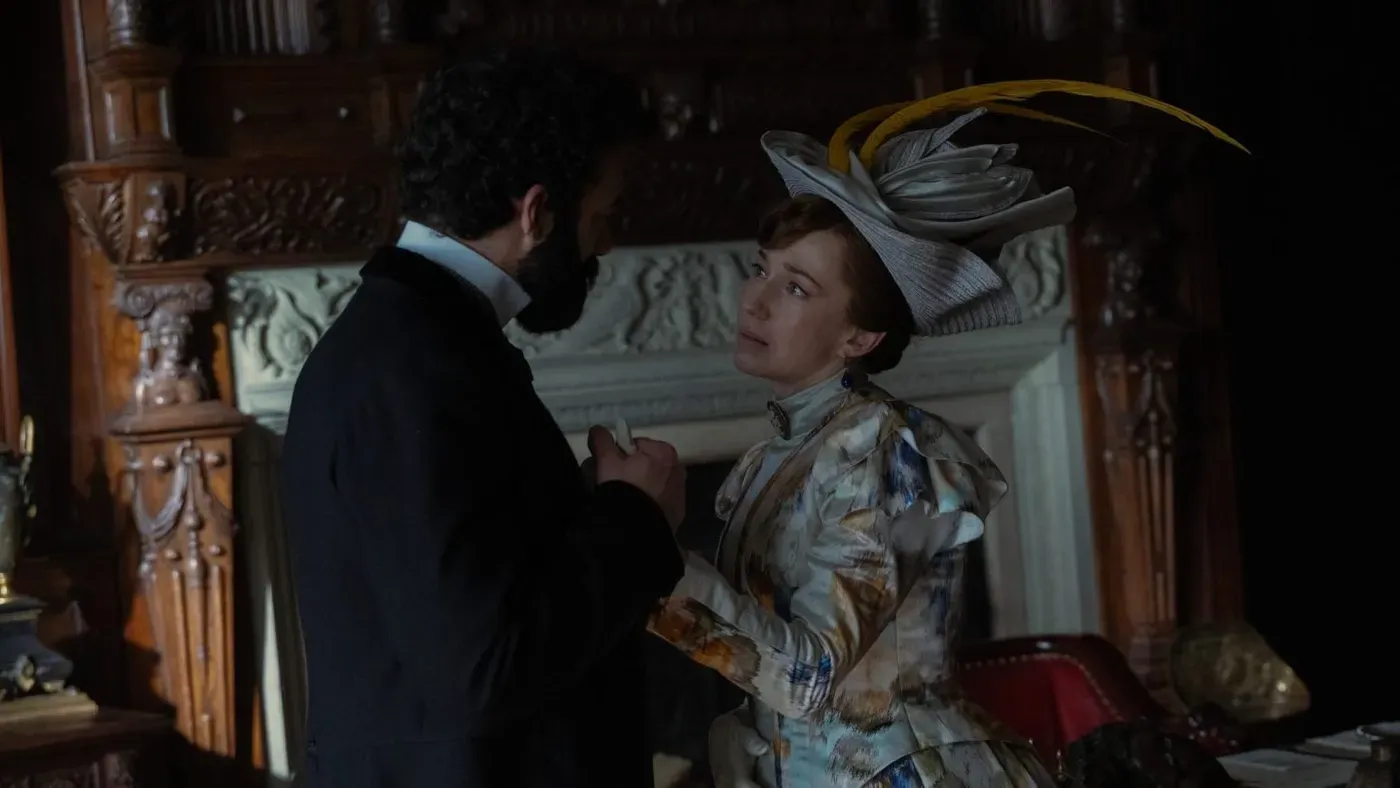
The Gilded Age has returned for its fourth season, and fans of the show will have to adjust their expectations about how the story unfolds.
The premiere episode "Ring the Bells kicks off with a dramatic scene that sets the tone for the rest of the series. The opening sequence introduces viewers to two significant events: Gladys is giving birth to her first child in England, while Oscar van Rhijn is exchanging vows with his new wife Enid Winterton.
The choice to feature the wedding between Oscar and Enid was a deliberate decision by show creator Julian Fellowes. He wanted to surprise audiences by not showing one of the more anticipated weddings from previous seasons. Instead, he opted for a group scene that would reintroduce viewers to the characters and world they love.
Fellowes explained that starting a series with a group scene has its benefits. It allows the audience to become reacquainted with the setup and see multiple characters interacting. By doing so, it creates a sense of continuity and immersion in the show's world.
The Gilded Age is known for its intricate storylines and complex characters. The premiere episode sets the stage for an exciting season ahead, with plenty of twists and turns to keep viewers engaged.
Fellowes' approach to storytelling has been praised by fans and critics alike for its attention to historical detail and character development. As the show continues into its fourth season, it will be interesting to see how the story evolves and if Fellowes can continue to surprise audiences with his creative choices.
The premiere episode of The Gilded Age sets a high bar for the rest of the season, with its engaging storyline, memorable characters, and historical context that brings the era to life.
The characters of The Gilded Age are facing new challenges as they navigate the complexities of their relationships and social standing in Season 4.
Sonja Warfield, executive producer and writer alongside Julian Fellowes, explains that this season is more personal than ever before. The writers aimed to test all the relationships within the show, including marriages, romances, and familial ties.
Newly wealthy Jack, still grappling with his past as a servant, struggles to adjust to the rules of high society. He must decide how much he wants to play along and what he's willing to sacrifice for acceptance.
The character of George Russell is particularly interesting this season, as he renegotiates his position within both his family and the wealthy elite. His estrangement from Bertha carries over from last season's finale, with many feeling that George needs to get his act together.
Julian Fellowes notes that real-life relationships are rarely happy ever after, and The Gilded Age aims to explore this reality through the Russell marriage. Their well-balanced partnership is beginning to show cracks, and it will be interesting to see if they can come together again or not.
The first episode hints at George's growing instability, with even his son Larry feeling the effects of his father's behavior. Meanwhile, investigators may have found leads on a potential assassin who targeted George last season.
Morgan Spector, who plays George Russell, describes this season as a total life reset for his character. His relationship with Bertha is on shaky ground, and he has also failed their daughter Gladys catastrophically.
As the characters face these new challenges, they will be forced to make difficult choices about what they're willing to sacrifice for what they feel is right. This season promises to be just as engaging as the last, with its thought-provoking storyline and memorable characters.
As the storylines unfold in Season 4, George's relationships with Gladys and Bertha take center stage, forcing him to reevaluate his sense of self-worth.
The duke's decision to save his wife over their unborn child has pleased Bertha, who sees it as a sign that Hector values her above all else.
Gladys's close call with death has also brought her closer to Bertha, who feels vindicated by the experience.
Taissa Farmiga, who plays Gladys, notes that during this time period, infant mortality rates were high, and if given the choice, a mother would likely prioritize her own survival over that of her child.
Bertha's efforts to secure Gladys's place in society have been successful, but Enid's journey is far from over as she continues to navigate the complexities of social mobility.
The upcoming wedding between Oscar and Enid serves as a reminder of the characters' worldly ambitions, with neither partner motivated by romantic love.
Kelly Curran, who plays Enid, notes that her character's primary drive is power, which she sees as achievable through her union with Oscar and the van Rhijn family name.
Enid's rise to prominence has been gradual, with each season marking a significant step up the social ladder for the former lady's maid.
With Oscar by her side and the support of the van Rhijn family, Enid is now poised to make her mark on society, armed with her vision, taste, and plans.
The union between Enid and Oscar has brought a sense of unity to their shared vision for a new society. Despite coming from different backgrounds, they share a common trait - a desire to disrupt the status quo.
Agnes van Rhijn, Oscar's mother, is particularly enthusiastic about the couple's pairing. Fresh from the wedding, she's eager to host a dinner in her home, which serves as vice-president of the New York Historical Society, for President Grover Cleveland.
The dinner party has sparked some tension among the family members. Agnes's sister, Ada Forte, has been hesitant to fund the event, leaving an opening for Enid to step in and offer financial support. This decision hasn't pleased Agnes, who is still grappling with news of her daughter-in-law's past as a servant.
Cynthia Nixon, who plays Ada, appreciates Agnes's newfound confidence this season. She notes that one of the highlights of the new episodes is witnessing an unhinged Agnes, which adds to the comedic tone of the show.
Creator Julian Fellowes reminds us that the Gilded Age was characterized by worldly ambitions rather than spiritual ones. The people of this era were more concerned with projecting success and wealth rather than genuinely caring about social issues.
Fellowes also points out that the society's obsession with appearance was a key aspect of their culture. People built grand palaces, wore extravagant clothing, and engaged in other superficial activities to showcase their supposed success.
The term gilded is particularly apt when describing this era, as it implies an element of falseness or pretension. Fellowes notes that the show aims to highlight these flaws, rather than presenting a sanitized view of history.
Fellowes's experience with creating Downton Abbey has given him a unique perspective on period dramas and their ability to comment on contemporary issues through historical settings.
Peggy's life appears to be unfolding exactly as she had envisioned it. Her personal and professional accomplishments are mounting, and her upcoming wedding to Dr. William Kirkland seems to be a well-planned event. Mrs. Kirkland, who was once at odds with Peggy, has surprisingly become an active participant in the planning process.
Mrs. Kirkland's involvement extends beyond just helping with the wedding arrangements; she has also bought the wedding dress and is even inviting Peggy and her mother to join her ladies club." This sudden change of heart from Mrs. Kirkland suggests that Peggy's relationship with her soon-to-be mother-in-law is improving.
Peggy's literary endeavors are also thriving, with her book Friends in These Times receiving positive attention from publisher Ada and friend Marian. The possibility of a lecture tour is being discussed, and William has been supportive throughout the process. Peggy seems to be on top of the world as she prepares for her wedding.
However, not everyone is sharing in Peggy's joy. Her fiancé's enthusiasm for her success is palpable, but it appears that he may be pushing her too hard to succeed. This pressure could potentially create tension in their relationship.
Meanwhile, Marian finds herself in a precarious situation after being caught off guard by the events at Oscar's wedding party. A storm forces her and Larry into a hotel room together, where they both attempt to maintain some level of decorum despite the circumstances.
Despite the fact that Marian and Larry are clearly in love, their actions are still considered taboo by today's standards. The consequences of Marian's decision will likely have far-reaching repercussions for her reputation and relationships.
As the situation unfolds, it becomes clear that Marian's horror at what has happened is not unfounded. Her co-stars emphasize the gravity of the situation, acknowledging that Marian's reaction is rooted in the societal expectations of the time rather than any personal failing.
The societal pressures of the 19th century are starkly evident in Marian's life, serving as a poignant reminder of the era's strict moral codes.
Marian is caught between her desires and the harsh consequences she would face if discovered, with premarital sex being viewed as a cardinal sin. Her co-stars emphasize that this reaction is deeply rooted in the societal expectations of the time rather than any personal failing.
The external obstacles Marian faces are starkly real, with potential discovery leading to destitution, loss of marriage prospects, and a ruined life. This serves as a harsh reminder of the era's restrictive social norms and the limited agency women had at the time.
As an audience in 2026, it can be difficult to fully comprehend the weight of these societal expectations, particularly when it comes to bodily autonomy and personal freedom, making Marian's situation all the more poignant.
Facts based on reporting originally published by The Hollywood Reporter.
You may republish this story, in full or in part, if you credit Noti Group and link to it (licence CC BY 4.0). Photos are not included.