






Spotify Launches Native In-Car App for Audi Vehicles
Spotify's new native app eliminates the need for phone tethering and allows direct control over the in-car experience.
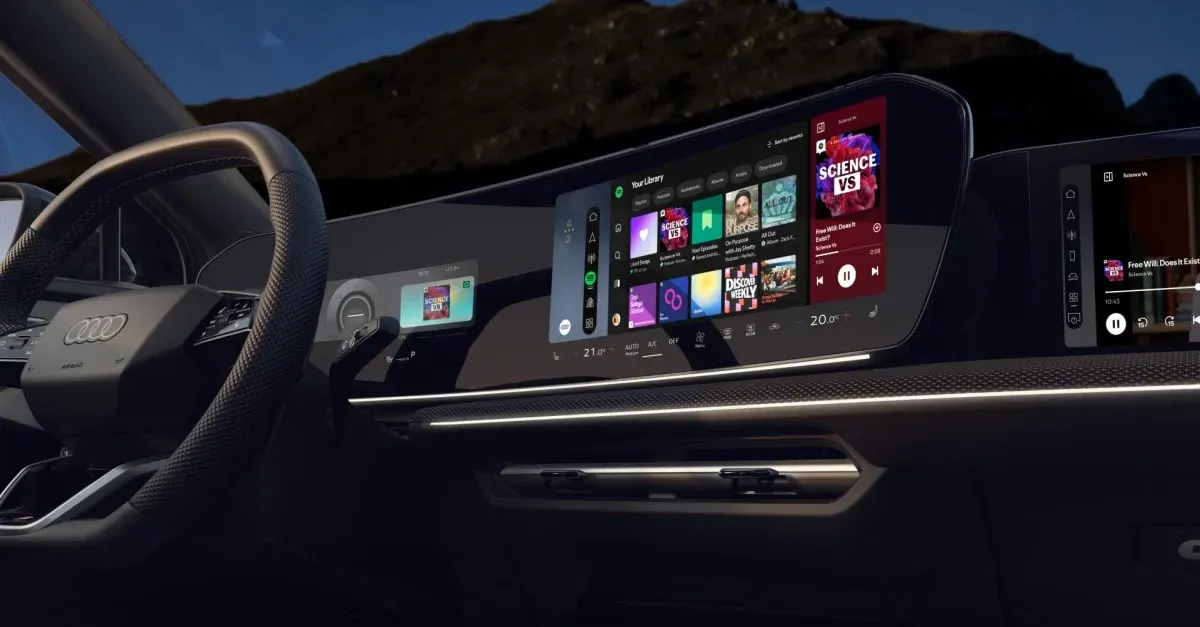
Spotify has announced the launch of its next-generation in-car app, built directly on Google's Android Automotive operating system. This new native app eliminates the need for phone tethering, Bluetooth connections, or aux cables, and runs directly on a vehicle's infotainment hardware.
The standalone app is launching today in select Audi models, including electric vehicles such as the A6 e-tron and Q6 e-tron, as well as gas-powered cars like the A5, Q5, and A6. This marks a significant shift for Spotify, which has been reliant on Apple CarPlay and Android Auto to deliver its service to car owners.
The move suggests that Spotify is looking to break free from the dominance of these popular phone projection systems, which currently dominate the way people consume media in their cars. The platform's leadership likely recognizes that with a significant portion of users streaming music while driving, having control over the in-car experience is crucial.
With around 34 percent of monthly active users and 77 percent of Premium subscribers listening to music in their cars, Spotify has a substantial stake in ensuring its service meets the evolving needs of car owners. The new native app aims to deliver an immersive experience that is fully controlled by Spotify.
The new Audi application developed by Spotify allows for a more immersive experience, as it is a "headful integration, meaning Spotify has control over how the interface is drawn and structured onscreen.
This marks a significant shift from Spotify's standard Android Automotive app, which operated as a headless integration, with Google's templates dictating the layout of the user interface. With the new Audi application, Spotify can draw and render its own native UI directly on the vehicle's screens from scratch.
Spotify is keen to emphasize that it has complete control over the user experience in this new app, as Tarlton explained: We're drawing all the pixels. This means that Spotify owns the entire interface, without relying on pre-existing templates or frameworks.
The launch of the native Spotify app does not signal a withdrawal from other car integration platforms, however. Spotify remains invested in phone projection and will continue to support Apple CarPlay and Android Auto, which remain widely used for listening to music and podcasts in vehicles.
The new Spotify app allows for seamless integration with a car's infotainment system, eliminating the need for wireless connections that can be unreliable in certain vehicles. This is particularly evident during morning commutes when drivers may experience delays due to slow boot times and screen loading.
According to Jonathan Tarlton, head of automotive business development at Spotify, the native app offers a more streamlined user experience. By drawing all pixels and owning the user interface, Spotify can provide a tailored experience without relying on templates or frameworks.
In addition to improved performance, the new app also introduces features that enhance the overall in-car experience for both drivers and passengers. For instance, front-seat passengers can scan a QR code displayed on the screen to join a wireless Spotify Jam" session, allowing them to add songs directly from their smartphones to the queue.
Passengers with access to a dedicated secondary display can browse, view lyrics, and watch video content without distracting the driver. Moreover, when the vehicle is parked or charging, motion graphics such as video podcasts and lyrics are redirected to the central display for everyone's enjoyment.
The new Spotify app aims to break down barriers between car passengers by providing a shared experience that brings everyone together.
Parents and kids are often separated by headphones in today's cars, but the new app seeks to correct this dynamic by offering features that cater to all occupants.
By focusing on Android-based operating systems, Spotify can minimize the need for bespoke applications tailored to individual automakers.
Facts based on reporting originally published by The Verge.
You may republish this story, in full or in part, if you credit Noti Group and link to it (licence CC BY 4.0). Photos are not included.