





Shortage of RAM Expected to Persist Through at Least 2028
Global memory manufacturers are bracing themselves for a prolonged shortage of RAM due to an imbalance between demand and supply of high-bandwidth memory (HBM) used in AI applications and DRAM for servers.
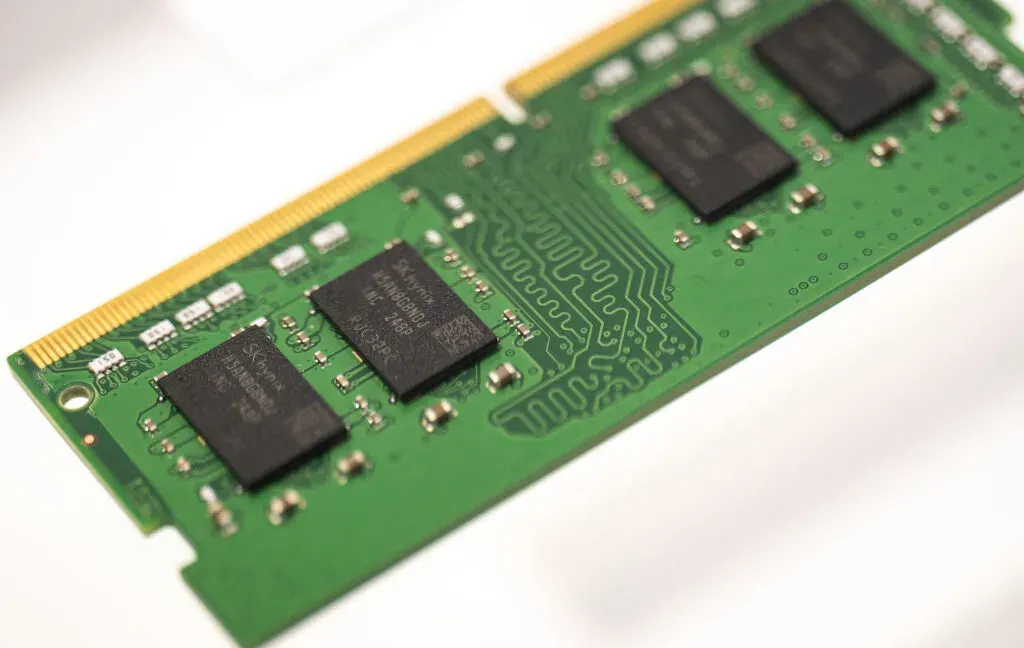
Global memory manufacturers are bracing themselves for a prolonged shortage of RAM, with executives predicting that the scarcity will persist through at least 2028.
Micron's CEO, Sanjay Mehrotra, made this prediction during an investor update last night, citing an imbalance between demand and supply of high-bandwidth memory (HBM) used in AI applications and DRAM for servers. This shortage has significant implications for consumer devices that rely on these types of memory.
The manufacturing capacity is currently prioritizing the production of HBM and DRAM for businesses, limiting the supply of memory manufactured for consumer devices such as laptops and smartphones. As a result, consumers may face ongoing challenges in obtaining sufficient RAM to meet their needs.
According to Mehrotra, the current supply-demand environment is becoming increasingly tight, with no relief in sight anytime soon. In fact, he expects demand for Micron's memory products to consistently exceed available supply over the next couple of years.
Micron plans to address this shortage by opening new clean rooms for memory manufacturing in 2028, but Mehrotra believes that even these new facilities will not be able to meet the growing demand for RAM.
Micron's CEO has revealed that a significant portion of the company's memory output for next year is already spoken for. As a result, most of its current sales discussions are centered around 2028, indicating that the shortage will persist.
The demand for High-Bandwidth Memory (HBM) is outpacing Micron's DRAM production, with prices skyrocketing compared to last year. For 2027, a substantial amount of HBM volume has already been sold out, leading to higher prices than in 2026.
The driving force behind the increasing demand for memory is the growing need for higher performance and content. Larger models, greater concurrency, and more agents across enterprise and consumer contexts are all contributing to this trend.
Samsung's EVP Kim Taewoo recently weighed in on the market, stating that HBM will account for nearly 30 percent of DRAM manufacturers' wafer capacity next year, up from 20 percent this year. This significant increase would inevitably limit the amount of DRAM available for consumer devices.
The memory shortage that has been affecting consumers is expected to continue through 2028, as major manufacturers adjust their supply chains to meet growing demand from data centers.
This shift in priorities has already led to Crucial, Micron's consumer-facing brand, stopping sales of RAM to individual buyers in December 2025. As a result, prebuilt PCs are becoming more expensive due to higher costs for OEMs, who have responded by offering lower RAM configurations at inflated prices. The shortage is also affecting other types of gadgets, with rising prices seen across smartphones, streaming sticks, and gaming consoles.
Facts based on reporting originally published by Ars Technica.
You may republish this story, in full or in part, if you credit Noti Group and link to it (licence CC BY 4.0). Photos are not included.