





Sherlock Holmes Inspiration Revealed in New Biography
A new biography sheds light on Joseph Bell's life and work as a surgeon who inspired Sir Arthur Conan Doyle's fictional detective Sherlock Holmes.
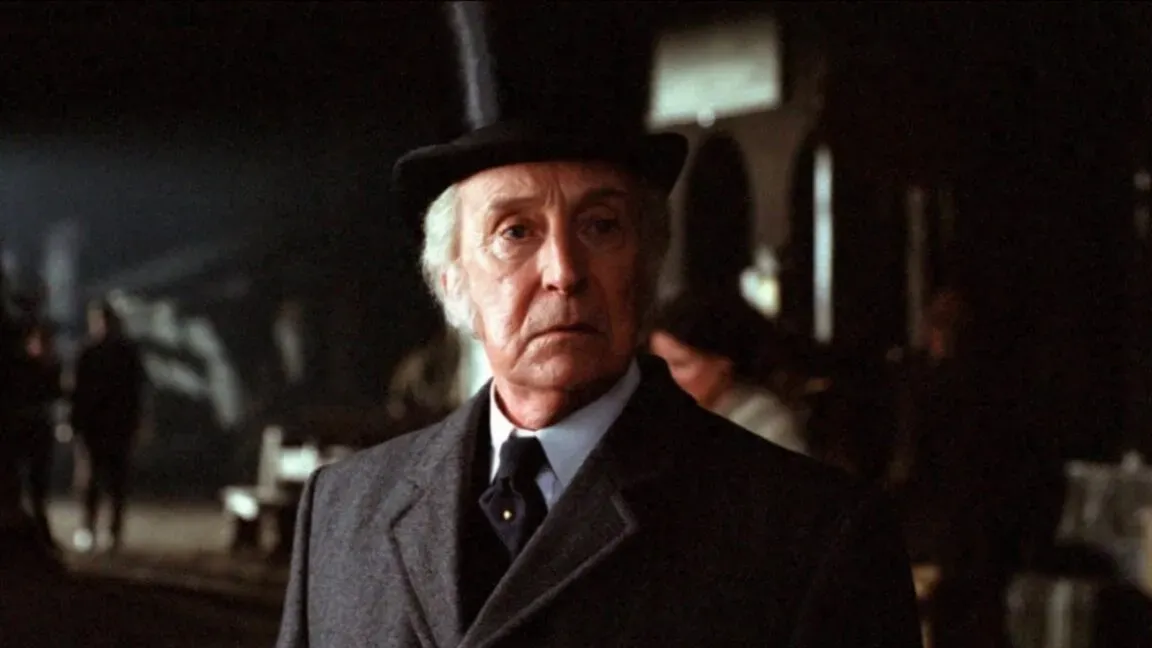
A new biography sheds light on the real-life inspiration behind one of literature's greatest detectives, Sherlock Holmes. The book, titled Sleuth-Hound: The Case of the Real Sherlock Holmes, focuses on Joseph Bell, a renowned surgeon at Scotland's University of Edinburgh who taught Sir Arthur Conan Doyle when he was a young medical student.
Medical historian Lindsey Fitzharris has written extensively on the intersection of medicine and history, with previous books exploring the lives of pioneering surgeons. Her latest biography delves into the life and methods of Joseph Bell, a surgeon known for his unique approach to diagnosis.
Bell's method involved observing patients' physical characteristics to infer their occupation, habits, and health issues. He was reportedly able to deduce the route a patient had taken walking to the infirmary by examining the type of clay on their boots. This skill was later referenced in one of Doyle's novels, The Sign of the Four.
Fitzharris' biography also highlights Bell's work with local police surgeons on notable murder cases during his time at Edinburgh University. As a medical detective, Bell's expertise in forensic pathology and observational skills made him an invaluable asset to law enforcement.
The author's previous works have covered various aspects of medical history, including the life of Scottish surgical pioneer Joseph Lister and the experiences of soldiers during World War I. Her latest book offers a fresh perspective on the Edinburgh of Doyle's time, where body snatchers and surgeons were experimenting with new techniques.
Bell's influence on Doyle is well-documented, with many believing that the fictional detective was modeled after the real-life surgeon. However, few people know about Bell's significant contributions to forensic medicine and his work in solving high-profile murder cases.
Fitzharris' writing style has been praised for its accessibility and engaging storytelling, making complex medical topics easy to understand for a broad audience. Her use of vivid descriptions and anecdotes brings historical figures to life, offering readers a unique perspective on the past.
The biography offers a fascinating glimpse into the world of Victorian-era medicine, where surgeons were pushing boundaries in their field and contributing to major breakthroughs in forensic science.
Joseph Bell's life story offers a fascinating glimpse into the world of Victorian-era medicine, where surgeons were pushing boundaries in their field and contributing to major breakthroughs in forensic science.
Medical historian Lindsey Fitzharris was drawn to writing about Joseph Bell because she wanted to bring a medical history lens to his story. She notes that while some people in the Sherlockian community are familiar with Bell due to Ely Liebow's 1982 book, there was still much to explore and share with a wider audience.
Fitzharris had initially intended to write about Bell as part of her broader work on medical history, but the opportunity arose to focus specifically on his life. She decided to put off reading the original Sherlock Holmes stories until later in the project, so she could approach the subject without being influenced by the popular cultural icon that Bell inspired.
As Fitzharris delved deeper into Bell's story, she began to see parallels between him and Sherlock Holmes, but also significant differences. This contrast sparked an interesting discussion among Sherlockians about what aspects of Bell Conan Doyle chose to emphasize in his fictional character.
One key area where Bell is similar to Sherlock Holmes is in his ability to observe and interpret details that others might miss. However, Fitzharris notes that there are also important distinctions between the two men, particularly in their personalities and relationships with others.
For instance, while Bell was known for being a meticulous observer of human behavior, he was also a deeply empathetic character who was devoted to his patients and family. He was a widower who raised three children alone after his wife's untimely death in childbirth.
Fitzharris suggests that Conan Doyle may have taken some liberties with Bell's personality when creating the character of Sherlock Holmes. She notes that her husband, a caricaturist, has observed that people are often more complex and nuanced than their initial impressions suggest.
This observation raises an interesting question about whether Sherlock Holmes would exist in the same form if Conan Doyle had known Bell better as a person rather than just as a student.
The complexities of Joseph Bell's character are multifaceted, and those who knew him recognized his influence on Conan Doyle's creation immediately. Robert Louis Stevenson was one such individual, and he wrote to Doyle expressing his concerns that Sherlock Holmes might be based on a familiar figure from their past - none other than Joe Bell himself.
However, Bell's significance extends far beyond his connection to the fictional detective. His work in forensic medicine marked an important milestone in the development of this field, as medical professionals began to enter the courtroom for the first time. This was a groundbreaking moment, and one that would have far-reaching implications for justice systems around the world.
Bell's partnership with Henry Duncan Littlejohn, a pioneering figure in fingerprinting and courtroom photography, was particularly significant. Together, they worked on some of Scotland's most high-profile cases during the 19th century, pushing the boundaries of what was possible in terms of forensic investigation.
One case that stands out for its sheer horror is the baby farming scandal. This was a common practice at the time, where impoverished mothers would pay to have their children taken away by "baby farmers who promised to find them new homes. In reality, these individuals were often motivated by greed rather than altruism, and the consequences for the children were devastating.
The case of Jessie King, highlighted in Lindsey Fitzharris's book Sleuth-Hound, is a stark example of this darker side of human nature. King would take payment from desperate mothers, only to kill their infants and dispose of them. The discovery of one such child, found by boys who used its decomposing body as a football, was a shocking moment in the investigation.
Littlejohn and Bell worked tirelessly on the case, performing postmortems and testifying in court. Their expertise helped bring King to justice, but it also highlighted the need for greater understanding and support for vulnerable women during this period.
The lack of effective birth control measures at the time meant that many women were forced into desperate situations, with limited options available to them. The baby farming scandal was just one symptom of a broader societal issue, and one that would have far-reaching consequences for generations to come.
As historians continue to uncover more about Bell's life and work, it becomes increasingly clear that his influence on Conan Doyle's creation is only part of the story. His contributions to forensic medicine, and his partnership with Littlejohn, are a testament to the power of human ingenuity in shaping our understanding of justice and humanity.
The intersection of medical history and true crime stories like the baby farming scandal offers a unique perspective on the complexities of human nature. By examining the cases that Bell and Littlejohn worked on, we can gain a deeper understanding of the social and cultural context in which they lived, and the impact that their work had on shaping our modern justice system.
The infamous Chantrelle murder case is a stark reminder of the dark themes present in early forensic investigations. Women were disproportionately represented among those brutalized and killed, often as part of crimes that went unpunished. This was particularly true for women who committed crimes related to poverty and desperation.
The Chantrelle case itself is a prime example of this phenomenon. Eugene Chantrelle, a French tutor living in Edinburgh, stood accused of poisoning his wife Lizzie with opium. Initially, the cause of death was attributed to a gas leak from a broken pipe, but further investigation revealed that Lizzie had been suffering abuse throughout her marriage.
The case is notable for its involvement of forensic scientists Joe Bell and William Littlejohn. While it's unclear whether Bell directly worked on this case, his expertise in toxicology likely played a significant role in unraveling the mystery.
Littlejohn's investigation led to the discovery that Lizzie Chantrelle had been poisoned with opium, which was later confirmed through tests conducted on her nightgown. The evidence tied Eugene Chantrelle to the crime, and he was subsequently convicted.
The dramatic conclusion of the trial is well-documented. On the scaffold, Eugene Chantrelle allegedly locked eyes with Littlejohn and shouted a cryptic message: Give my regards to Joe Bell. He did a good job putting the noose around my neck. This enigmatic statement has sparked debate among historians about whether Chantrelle knew of Bell's involvement in the case.
Despite the intrigue surrounding this comment, there are no concrete records confirming that Bell worked on the Chantrelle case. The absence of such documentation leaves room for speculation about the extent of Bell's involvement.
The Chantrelle case highlights the complexities and challenges faced by early forensic investigators like Bell and Littlejohn. Working in a field still in its infancy, they relied on innovative methods to solve crimes and bring justice to victims.
Littlejohn's work on the Chantrelle case demonstrates his dedication to uncovering the truth, even in the face of adversity. His partnership with Bell likely played a crucial role in shedding light on the dark events that unfolded within the Chantrelle household.
The connection between Chantrelle's life and literature is even more intriguing given his friendship with Robert Louis Stevenson, who would later pen Dr. Jekyll and Mr. Hyde. This novel explores the dual nature of a person, where one persona is respectable on the outside but harbors dark, sinister tendencies within.
Chantrelle's association with Stevenson highlights the complexity of this case, as it adds another layer to our understanding of his character. The prosecutor in Chantrelle's trial reportedly informed Stevenson that the accused was not a first-time offender and had previously killed several people using opium-laced parties.
This revelation only underscores the dangers posed by easily accessible poisons during the Victorian era. Pharmacists could sell these substances over the counter, making it challenging for law enforcement to detect and prosecute crimes involving poison.
Chantrelle's own background as a doctor and his purchase of large quantities of opium shortly before the murder raise further suspicions about his intentions. Even his local chemist found this behavior unusual, but attributed it to Chantrelle's profession.
The ease with which poisons could be obtained during this period was compounded by the limitations of forensic medicine at the time. The field was still in its infancy, making it difficult for investigators to collect and analyze evidence effectively.
This challenging environment created opportunities for individuals like Chantrelle to exploit the system and evade detection. Lindsey Fitzharris refers to this era as the golden age of murdering," where the chances of getting away with a crime were significantly higher due to the lack of effective forensic tools.
Fitzharris's extensive research on this case is evident in her novel, Sleuth-Hound. She attributes much of her understanding to Bell's previously unavailable diary, which provided crucial insights into his partnership with Chantrelle and their work together on various cases.
Bell's own significance in the development of forensic science cannot be overstated. As a professor of forensics at Edinburgh University, he played a pivotal role in shaping Conan Doyle's approach to crime investigation. Their collaboration on several high-profile cases helped lay the groundwork for future advancements in the field.
The availability of court records and trial transcripts has also enabled Fitzharris to reconstruct the events surrounding Chantrelle's case with remarkable accuracy. While some creative liberties were taken, they are always grounded in historical evidence and supported by a wealth of documentation from the time.
The author's approach to historical storytelling has been shaped by their background as a historian, requiring them to ensure that every detail is grounded in verifiable evidence.
This commitment to accuracy allows readers from diverse backgrounds to engage with the narrative without prior knowledge of Sherlock Holmes or medical history, making the story more accessible and enjoyable.
Facts based on reporting originally published by Ars Technica.
You may republish this story, in full or in part, if you credit Noti Group and link to it (licence CC BY 4.0). Photos are not included.