






Rising Inflation Threatens Chancellor Healey's Budget Plans
A prominent think tank has warned that rising inflation could significantly cut into the government's intended spending on public services, forcing difficult decisions between cuts, tax hikes, or a combination of both.
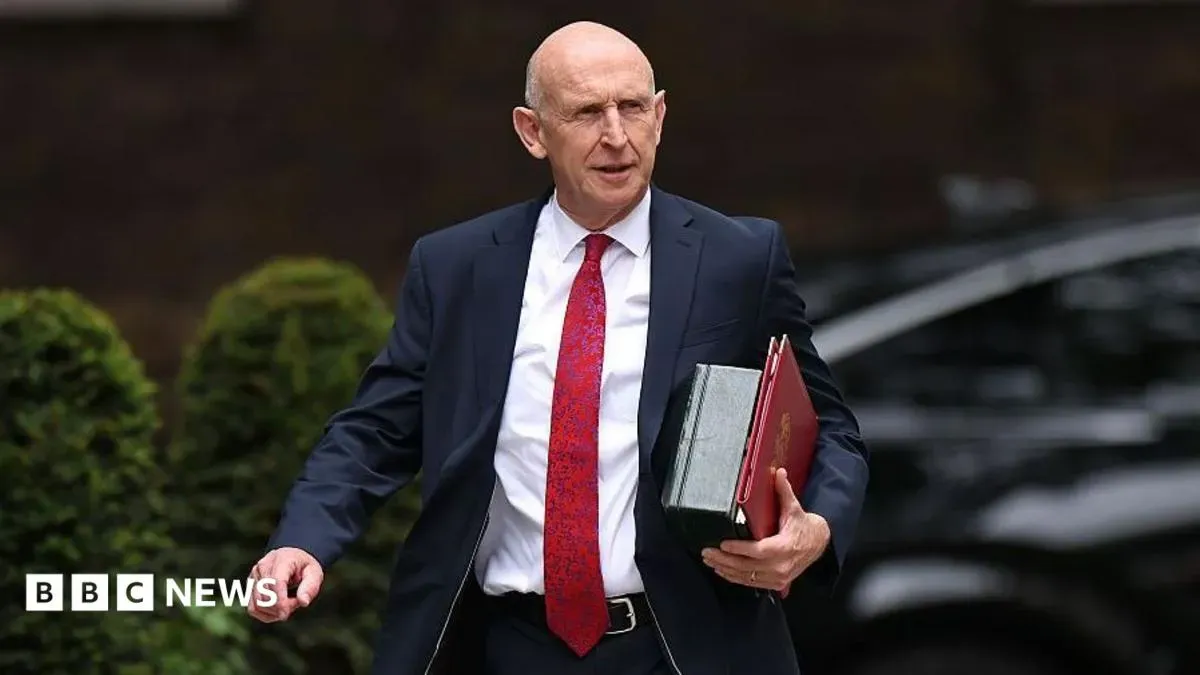
A brewing conflict in Iran threatens to upend Chancellor John Healey's plans for his first Budget, according to a warning from a prominent think tank.
The Institute for Fiscal Studies (IFS) has cautioned that rising inflation could significantly cut into the government's intended spending on public services, forcing Healey to make difficult decisions between cuts, tax hikes, or a combination of both.
To mitigate this risk, the IFS urges the government to ensure its financial projections are realistic and not based on unrealistic future cost savings. This would help prevent the Budget from becoming unworkable.
The Treasury has declined to comment on the think tank's assessment, but Chancellor Healey expressed his concerns about the global economic implications of conflict in the Middle East and Europe, stating that it is leading to higher fuel prices and more expensive mortgages worldwide.
The Institute for Fiscal Studies (IFS) is advising Chancellor Healey to reconsider his plans for the upcoming Budget speech, citing concerns about the economic implications of ongoing global conflicts.
According to IFS director Helen Miller, a "steady-as-she-goes approach in the Budget would be unrealistic given the current economic climate. She argues that sticking to existing tax and spending plans would allow inflation to derail departmental budgets, making it necessary for the Chancellor to make adjustments.
The IFS points out that higher energy prices driven by the US-Israel war against Iran and Russia's invasion of Ukraine have led to increased costs being passed on to consumers in various forms. This has also contributed to a rise in UK government debt interest payments, adding pressure on the Chancellor.
As a result of these developments, the IFS expects higher inflation to erode the value of departmental cash budgets, while also boosting tax revenues that will be partially offset by increased borrowing costs. The think tank estimates that recent turbulence on bond markets and higher inflation could add around £10bn to forecasts for government borrowing costs in 2029-30.
The think tank's revised forecast suggests that the government will still meet its fiscal targets, but with a narrower margin for error. The Office for Budget Responsibility had previously predicted a £24bn buffer to account for any shortfalls in tax revenues, but the Institute for Fiscal Studies now estimates this will be reduced to around £20bn.
This reduction is partly due to higher inflation pushing up tax revenues, which should help offset some of the costs associated with meeting the government's fiscal rules. However, the think tank warns that these gains may not be enough to compensate for potential shortfalls in other areas.
Despite recent market stability, the IFS expects households to face continued financial pressures, and any breathing space" measures will likely be temporary and limited in scope. This uncertainty makes it challenging for the government to plan its finances with confidence.
The Institute for Fiscal Studies also notes that maintaining departmental budgets in the face of higher inflation could require an additional £25bn in 2029-30.
The UK's economic situation is set to face significant challenges if Chancellor Healey's budget plans are not revised in light of rising defense spending ambitions.
Leaving departmental budgets unchanged will require additional funding to keep pace with inflation, according to the Institute for Fiscal Studies. By 2029-30, this could amount to an extra £25bn, a substantial increase that would likely necessitate significant tax rises.
The government's decision not to address these budgetary concerns in the current budget may ultimately undermine its credibility, as it relies on unrealistic future spending plans to meet fiscal rules.
Facts based on reporting originally published by BBC News Business.
You may republish this story, in full or in part, if you credit Noti Group and link to it (licence CC BY 4.0). Photos are not included.