





Paramount Acquisition Finalized Under Skydance Ownership
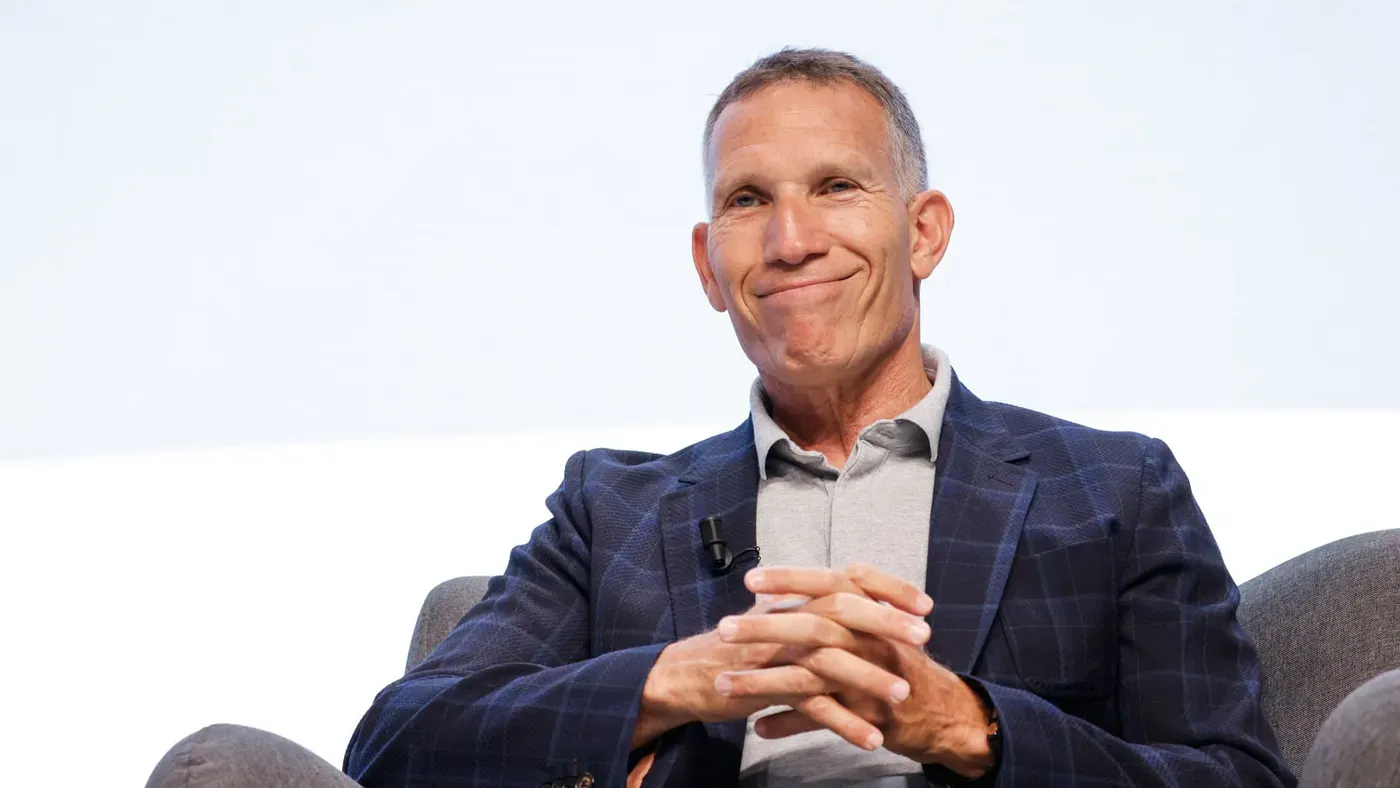
David Ellison met with investors and analysts at UBS's Global Media and Communications Conference to pitch his vision for Paramount's future under Skydance ownership.

David Ellison, the CEO of Skydance, has been on a mission to expand his company's reach in the entertainment industry. On a recent trip to New York City, he met with investors and analysts at UBS's Global Media and Communications Conference.
Ellison was not scheduled to speak at the conference, but he took advantage of the location to pitch his vision for Paramount's future. He emphasized that Skydance is the right owner for the studio, rather than Netflix. Ellison's message resonated with some attendees, who described him as a "man on a mission.
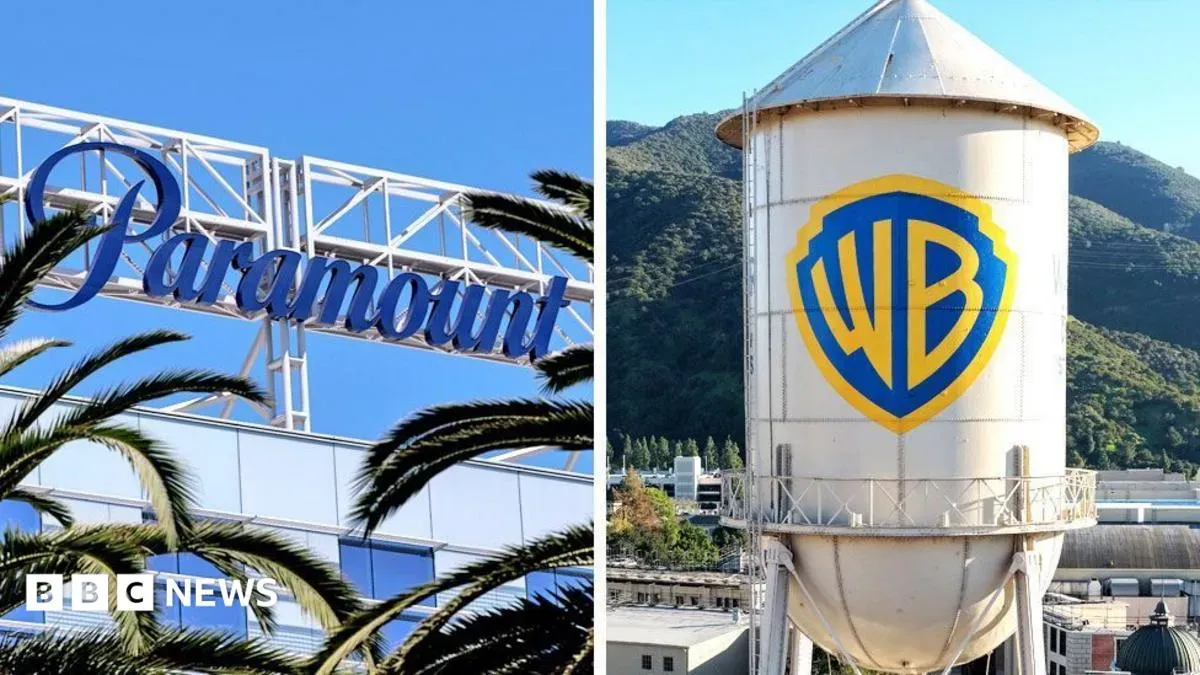
Skydance has made significant strides in recent years under Ellison's leadership. In just over a year and a half, he closed deals to acquire Paramount and Warner Bros., uniting two of Hollywood's most iconic film studios.
Ellison's ambitious plan is now complete, with the acquisition of Warner Bros. finalized. The deal brings together Skydance with Paramount+ and HBO Max, creating a streaming powerhouse that rivals Netflix and Disney in scale.
The combined company has significant momentum, but it also faces major challenges. With an $80 billion debt load, there is little room for error in managing the financials of this massive entity.
As the dust settles on the merger, attention turns to the future of the combined company. Services will be integrated, studios will merge, and organizational structures will be streamlined.
The impact on various divisions within the company will be significant, including CBS News and CNN. The fate of these outlets will need to be determined as part of the integration process.
In the coming months, viewers can expect changes in streaming prices and the types of content offered by the combined company. With a large debt load and a commitment to producing more movies, the challenge for Skydance is clear: deliver on its promises while managing its finances carefully.
The combination of Warner Bros. and Paramount under new ownership will undoubtedly lead to significant changes within the companies. As part of this process, thousands of layoffs are expected as redundancies are eliminated through consolidation.
Ynon Kreiz, a seasoned media executive with experience leading Maker Studios and Endemol, has joined Skydance as co-CEO. He brings a wealth of knowledge from his previous role at Mattel, where he implemented significant changes after becoming CEO in early 2018. His tenure at Mattel was marked by a major overhaul that included slashing 22 percent of the workforce and restructuring the company to focus on digital innovation.
Kreiz's appointment as co-CEO is seen as a strategic move to lead the effort in achieving $6 billion in synergies. This will involve streamlining operations, combining resources, and eliminating inefficiencies across both companies. The goal is to create a more streamlined and efficient organization that can compete effectively in the rapidly changing media landscape.
In an internal email to staff, Ellison and Kreiz outlined their priorities for the new entity. They emphasized the importance of embracing technological advancements to enhance creativity and productivity. However, they also stressed that technology should be used to support artistic endeavors, not drive them.
Gerry Cardinale, the founder of RedBird Capital and operating partner in the deal, recently clarified the nature of the $6 billion in cost savings. He dismissed concerns that this would involve significant job losses, instead suggesting that much of the savings could come from more efficient use of technology stacks, marketing spend, and vendor management.
According to Ellison and Kreiz's joint letter, they aim to go beyond traditional synergies by integrating cutting-edge technologies into their operations. This will enable them to work smarter, move faster, and unlock efficiencies not possible through merger alone.
The reality is that significant layoffs are still expected as the two companies combine. Paramount itself had already cut around 10 percent of its workforce in 2025 in conjunction with the Skydance deal, foreshadowing the scale of the job losses to come.
The new ownership structure of Paramount Pictures and Warner Bros. Discovery is expected to lead to significant cost-cutting measures as the industry adapts to changing market conditions.
Industry insiders believe that the merged entity will need to rationalize its costs in order to remain competitive, a process often referred to as Darwinian evolution". This approach may involve reducing overheads, streamlining operations and eliminating non-essential expenses.
The combined company's real estate footprint is set to shrink, with a particular focus on New York City. The Paramount Times Square headquarters will be retained, along with other notable properties such as the CBS Broadcast Center and Ed Sullivan Theater.
Bank of America analyst Jessica Reif Ehrlich has suggested that the promised cost savings will provide a significant boost to profitability and cash flow generation over time. However, she also notes that realizing synergies in the media industry is often a complex and challenging process.
The integration costs, execution risks and increased leverage associated with the merger are likely to offset some of the benefits in the short term. Nevertheless, consolidation is seen as the only viable path forward for Skydance, given the intense competition and technological disruption facing the industry.
One key aspect of the new strategy will be the expansion of streaming services, which are expected to become the primary economic driver of the combined company. Casey Bloys, who has been appointed to lead streaming operations, brings a wealth of experience from his time at HBO Max.
Bloys' approach is centered on creating popular and engaging content that appeals to a broad audience, as evidenced by shows like The Pitt and The Penguin. This strategy will be crucial in the years ahead, particularly when Taylor Sheridan departs for NBCUniversal in two years.
A key factor in Warner Bros.'s ability to retain talent under its new leadership has been the decision to keep Craig Bloys as president and chief content officer for HBO and Max. Industry insiders believe that his departure would have had a significant impact on the network's stability.
Bloys's presence is seen as crucial in maintaining HBO's identity and cohesion, which could be disrupted if he were to leave. His leadership has been instrumental in shaping the network's content strategy, and his absence would likely be felt throughout the organization.
As Warner Bros. prepares for a new era under its parent company's leadership, the studios will need to focus on developing strategies to meet ambitious production targets. With Pamela Abdy and Mike De Luca departing, James Gunn and Peter Safran will play key roles in stabilizing the studios' operations.
The departure of top executives is creating opportunities for other talent to step up and take on new responsibilities. As Warner Bros. looks to the future, it's clear that a new generation of leaders is emerging to shape the company's direction.
The elevation of DC Entertainment within the Warner Bros. universe is also noteworthy, as it appears to be gaining more autonomy from its parent brand. This shift in dynamics could have significant implications for the way the studios operate and produce content.
CBS News and CNN remain a pressing concern, given the turmoil that has engulfed CBS since Bari Weiss's appointment as editor-in-chief. One of the key challenges facing her is navigating the complex relationship between the two news organizations.
The fact that Thompson has agreed to remain chairman and editor-in-chief of CNN is seen as a significant development, particularly given the concerns about the potential for oversight from CBS News. This arrangement will be crucial in ensuring that the two organizations operate independently and effectively.
Warner Bros. Discovery's financial projections indicate that CNN is expected to generate significant revenue in the coming years. According to documents released by the combined company, CNN is projected to bring in $1.8 billion in 2026, rising to $1.9 billion in 2027 and reaching $2 billion by 2028.
This growth in revenue is expected to continue through 2030, with estimates suggesting that CNN will reach a projected $2.2 billion in revenue during this period. However, the channel's adjusted EBITDA - a key measure of profitability - is also expected to remain strong, with an estimated $600 million in 2026 and flat earnings of $600 million through 2030.
In contrast to other channels within Warner Bros. Discovery's portfolio, which are projected to see significant declines in revenue by 2030, CNN's financial performance is notable for its consistency. The channel's cable peers, which combine for a projected $3.8 billion in EBITDA in 2026, are expected to fall to just $1.9 billion by 2030.
The combined company will need to rely heavily on these profitable channels, including CNN, to generate the revenue necessary to service its massive debt load. With an estimated $80 billion in debt, Warner Bros. Discovery's financial situation is precarious, and cost savings will be crucial in keeping profits flowing.
Combining CBS News with CNN has been touted as a potential source of cost savings, but it remains unclear how this can be achieved while maintaining the editorial independence of both channels. The integration process will undoubtedly be closely watched by viewers, politicians, and industry observers alike.
The editorial independence board, which is responsible for safeguarding the integrity of CNN's reporting, will also come under scrutiny as part of this process. Who will sit on the board, what powers they will wield, and how their decisions will be implemented are all questions that remain unanswered at present.
As the combined company navigates its complex financial landscape, key executives like George Cheeks will hold significant sway over the direction of Warner Bros. Discovery's linear TV operations. With a vast portfolio spanning sports, entertainment, news, and more under his purview, Cheeks' influence will be felt across the entire organization.
Warner Bros. Games will be a key asset for the new owner of Paramount and Warner Bros., providing a vast library of intellectual property to draw from.
The game studio is responsible for hits like Mortal Kombat and games based on popular franchises such as Batman, Harry Potter, and Game of Thrones. This wealth of IP will be further expanded with the combined effort of the new gaming studio launched within Paramount earlier this year, which has partnered with outside companies like Disney to develop additional content.
As one executive from a competing company notes, Warner Bros. Games could become an even more significant contributor to the business than expected, potentially overshadowing the film and TV output. This speculation highlights the potential for the game studio to play a major role in the new owner's overall strategy.
The integration of these assets will be crucial, as Morgan Stanley's Sean Diffley noted on September 22nd. While acknowledging the complexity of combining large media companies, he emphasized that scale and IP are essential in today's fragmented media landscape.
Ultimately, the success of this venture will depend on the ability to manage the $80 billion debt burden while leveraging these valuable assets to create a formidable intellectual property powerhouse.
Facts based on reporting originally published by The Hollywood Reporter.
You may republish this story, in full or in part, if you credit Noti Group and link to it (licence CC BY 4.0). Photos are not included.