




Hark Pro Enters Market for AI Personal Assistants
A new player has entered the market for AI personal assistants, with Hark Pro launching its wide release today.
A new player has entered the market for AI personal assistants, with Hark Pro launching its wide release today. Founded less than a year ago by serial founder Brett Adcock, the startup aims to make a splash in this increasingly crowded space.
Hark Pro is accessible for free, with a subscription tier available for users who rely heavily on the service. This pricing model allows users to try out the AI assistant without committing to a paid plan upfront.
The company's mission is centered around building an intuitive user interface for artificial intelligence, rather than pursuing more ambitious goals like creating artificial general intelligence or tackling complex problems like curing cancer. Instead, Hark Pro focuses on leveraging computer capabilities to streamline tasks and automate processes.
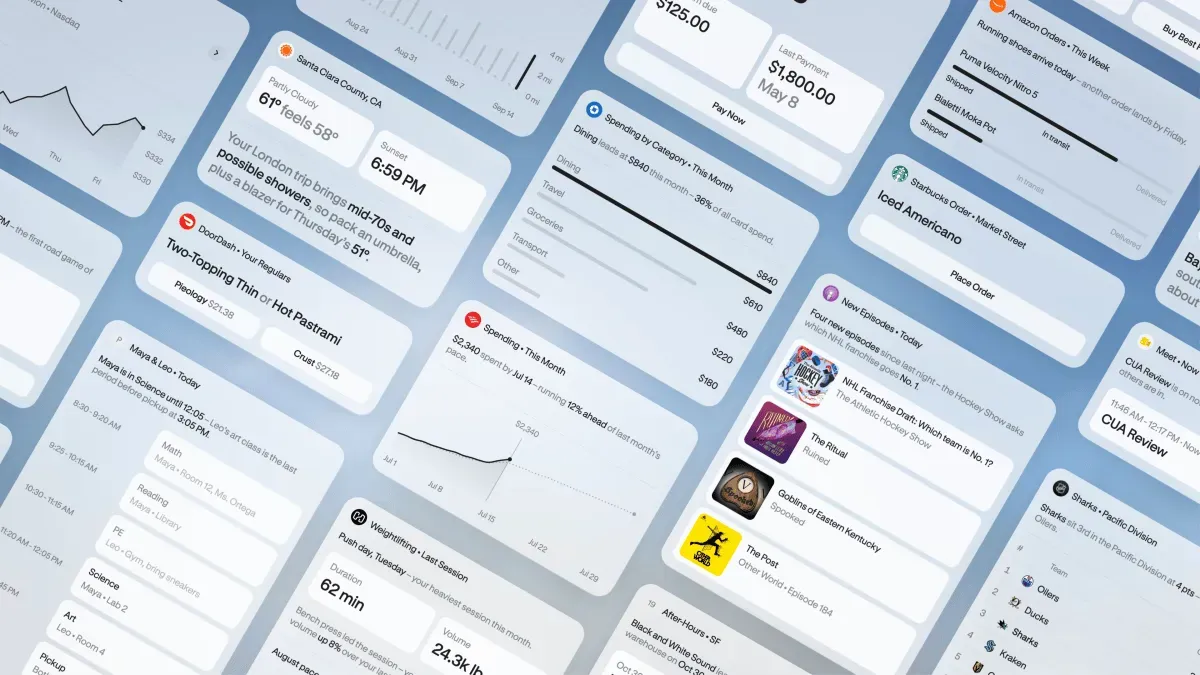
Hark Pro operates as a full-screen experience, featuring a central chat dialog that allows users to interact with the AI assistant. A feed is populated by prompts for actions the user might need assistance with, while "panels provide mini-dashboards for tracking various interests or activities.
The AI assistant's ability to access various aspects of a user's digital life allows it to perform tasks and answer questions on their behalf. This includes linking to email, calendar, hard drive, credit cards, and other relevant systems.
During a demo, Abidur Chowdhury, Hark's design lead and former Apple staffer, showcased the product's capabilities. The AI assistant proactively suggested tasks for him to consider, such as approving expenses, responding to emails, and even booking a flight for an upcoming trip.
The system demonstrated its ability to recognize and address specific needs, including one instance where it identified that Chowdhury's colleague required car registration renewal at the California DMV. The AI assistant successfully handled this task through the agency's website, showcasing its capabilities in automating routine administrative tasks.
To build trust with users, Hark's designers have implemented a feature that displays how the AI agent navigates the web within the app. This transparency allows users to see what actions the system is taking on their behalf, providing an added layer of accountability.
This design choice highlights Hark's focus on user experience and building trust in its AI assistant. By surfacing its online activities, the company aims to reassure users that the agent is working diligently to complete tasks and address needs.
Hark's approach to AI personal assistants stands out from its competitors in that it emphasizes transparency about its online activities. This effort aims to reassure users that the agent is working diligently to complete tasks and address needs. By surfacing its online activities, the company seeks to alleviate concerns about data collection and usage.
The company's pitch hinges on its commitment to user privacy, with Chowdhury explicitly stating that Hark is not interested in selling ads or collecting user data like Meta does. This approach raises questions about whether users will be comfortable sharing their digital lives with a company like Hark, especially when it comes to creating detailed profiles of friends and family.
Hark's focus on task-related assistance means the agent is designed to help with specific tasks rather than building comprehensive profiles of users' interests or behaviors. Chowdhury emphasizes that the goal is to provide useful services that take things off users' plates, rather than trying to understand them in a broader sense.
One key aspect setting Hark Pro apart from its competitors is its ability to fully substitute for computer use, making it faster and cheaper at tasks like document processing or data entry. However, this approach may come at the cost of trading away some of the broader knowledge and capabilities found in more advanced language models.
The trade-offs between different AI model architectures are still an open question, with Hark's explicit training for computer use presenting a clear advantage but also raising questions about its limitations compared to more general-purpose language models.
Hark's vision for an AI-native device to support its software is expected to become a reality in 2027, marking the next step in the company's mission to revolutionize personal assistants.
The form this device will take remains unclear, with Hark's co-founder and CEO, Chowdhury, expressing concerns about the creep factor" associated with wearable cameras. Instead, he hints at introducing a product that defies convention, one that has never been seen before in the market.
Chowdhury's comments suggest that traditional computing methods are due for an overhaul. He notes wryly that despite significant advances in AI technology, humans still interact with computers using keyboards and typing interfaces, a setup that has remained largely unchanged over the past five decades.
As Hark continues to push the boundaries of what is possible with AI-powered personal assistants, it remains to be seen whether its innovations will live up to the hype surrounding them.
Hark's latest AI-powered personal assistant has sparked significant attention in the tech industry due to its emphasis on user privacy.
The innovative system promises to safeguard sensitive information by storing it locally and using end-to-end encryption, allowing users to maintain control over their data at all times. This approach is a departure from other popular virtual assistants that often collect and store vast amounts of user data on remote servers. By prioritizing user privacy, Hark's AI assistant aims to provide a more secure and trustworthy experience for its users.
Facts based on reporting originally published by TechCrunch.
You may republish this story, in full or in part, if you credit Noti Group and link to it (licence CC BY 4.0). Photos are not included.