





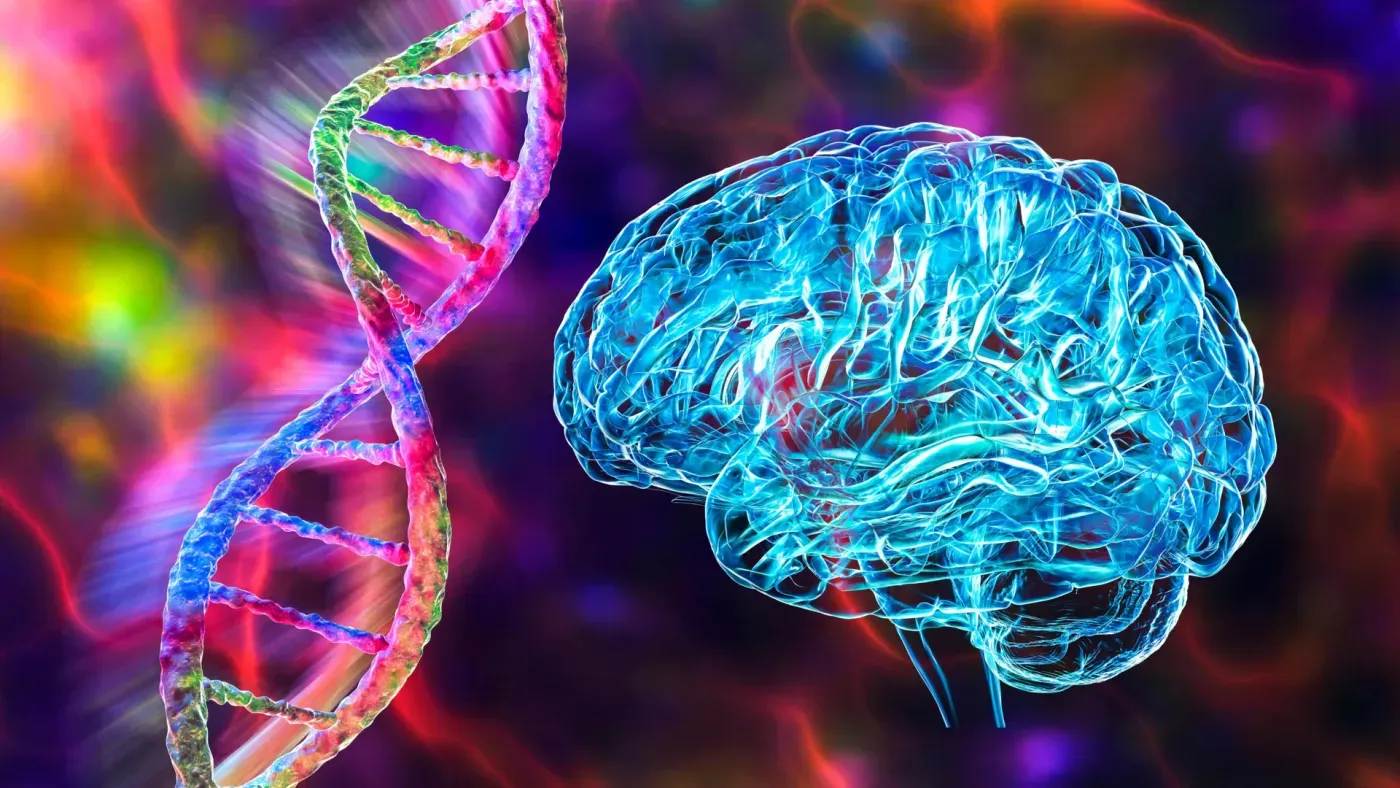


Nobel Prize Awarded for Research on Controlling Brain Cells with Light
Scientists Karl Deisseroth and his colleagues have been awarded this year's Nobel Prize in physiology or medicine for their groundbreaking research on controlling brain cells with light.
Scientists have been awarded this year's Nobel Prize in physiology or medicine for their groundbreaking research on controlling brain cells with light. Karl Deisseroth and his colleagues, Peter Hegemann and Georg Nagel, were recognized for their pioneering work in the field of optogenetics.
Their discovery began when Peter Hegemann and Georg Nagel set out to understand how a single-celled alga called Chlamydomonas senses its environment through light. This tiny organism is able to detect its surroundings and respond to changes using proteins that react to light, a phenomenon not unique to animals with eyes. Even the most basic life forms have evolved ways to harness light energy.
In their research, Hegemann and Nagel identified a key protein called channelrhodopsin that plays a crucial role in Chlamydomonas's ability to detect light. This remarkable molecule is embedded in the outer membrane of the algal cell, with part of it facing the water outside and part facing the inside.
Channelrhodopsin contains a vital component called retinaldehyde, which can absorb light and trigger a response within the cell.
When light hits the retinaldehyde inside channelrhodopsin, it triggers a chain reaction that affects the protein's structure. This change in shape has a ripple effect, causing the cell membrane to open up and allow positively charged particles to flow in.
The influx of these positively charged particles sends a signal within the cell that can have significant effects on its behavior. For example, in algae cells, this signal helps them swim more effectively. The mechanism is particularly fascinating because it highlights the intricate dance between light, protein structure, and cellular activity.
But what makes this discovery so groundbreaking? The answer lies in the way nerve cells function. These cells rely on the movement of charged particles across their membranes to control their activity. When positively charged particles flow into a nerve cell, they can stimulate it to become more active.
Researchers realized that if channelrhodopsin could be introduced into nerve cells, they might be able to harness its power to switch those cells on and off with light. This idea led Hegemann, Nagel, and Deisseroth to experiment with optogenetics.
The ability to control nerve cells with light has revolutionized the field of neuroscience. By switching specific groups of nerve cells on and off, scientists can gain valuable insights into how they function and interact.
The process begins with delivering the gene for channelrhodopsin to the specific nerve cells under study. This is typically done using a virus that has been engineered to be harmless to humans and animals. The gene is inserted into the cell, where it instructs the production of the channelrhodopsin protein.
Once the protein is made, these cells become responsive to light. In animal subjects such as mice, scientists can direct a thin beam of light into the brain using an optical fibre. When this light reaches the targeted cells, the channelrhodopsin protein activates them, while nearby cells that lack the protein remain unaffected.
Optogenetics allows for precise control over specific regions of the brain and its many functions. This is made possible by the ability to focus a narrow beam of light on a very small area and switch it on or off extremely quickly. By leveraging this capability, researchers can gain valuable insights into how different parts of the brain interact.
One notable application of optogenetics has been in the study of fear conditioning in mice. In an experiment conducted by a team at the Massachusetts Institute of Technology, mice were subjected to a mild electric shock in a specific cage. The researchers then used optogenetics to identify and mark the nerve cells involved in this experience.
Days later, when these marked cells were activated with light in a different cage, the mice exhibited signs of fear, as if recalling the earlier shock. This finding underscores the potential of optogenetics for shedding light on complex neurological processes.
The reactivation of a specific memory in mice that were not shocked suggests that light can revive dormant recollections. This finding is significant as it implies that optogenetics has the potential to uncover complex neurological processes. The use of light-sensitive proteins in nerve cells has already shown promise in treating certain conditions.
Optogenetics has revolutionized the study of brain function by allowing researchers to manipulate specific cells with precision. Its applications extend beyond research, with early-stage clinical trials underway for people suffering from retinal degeneration. In these trials, light-sensitive proteins are introduced into surviving retina cells, enabling them to respond to light and restore some vision.
Researchers are now exploring the possibility of using optogenetics to treat a range of neurological conditions, including Parkinson's disease and epilepsy. While these applications may seem distant, they highlight the potential for this technology to improve human health. The success of optogenetics underscores the importance of basic research in driving innovation.
The discovery of optogenetics began with a seemingly esoteric question about how certain algae swim towards light. This inquiry may not have had immediate practical significance, but it has led to a major breakthrough in our understanding of brain function and its potential applications. The path from curiosity-driven research to groundbreaking technology is often unpredictable, yet it is precisely this type of inquiry that can lead to significant advances in science.
The breakthrough research that led to this year's Nobel Prize in Science has shed light on a previously unknown method of controlling brain cells using light. This innovative approach has far-reaching implications for the treatment of various neurological disorders.
By harnessing the power of optogenetics, scientists have made significant strides in understanding how to manipulate brain activity with precision and accuracy.
Facts based on reporting originally published by ScienceDaily Health.
You may republish this story, in full or in part, if you credit Noti Group and link to it (licence CC BY 4.0). Photos are not included.