

FIFA's Peace Prize Faces Scrutiny Amid Criticism of Infantino's Plan to Sell World Cup Broadcasting Rights
Several members of FIFA's Council are questioning the merit of the FIFA Peace Prize and demanding changes, including abolishing it altogether.
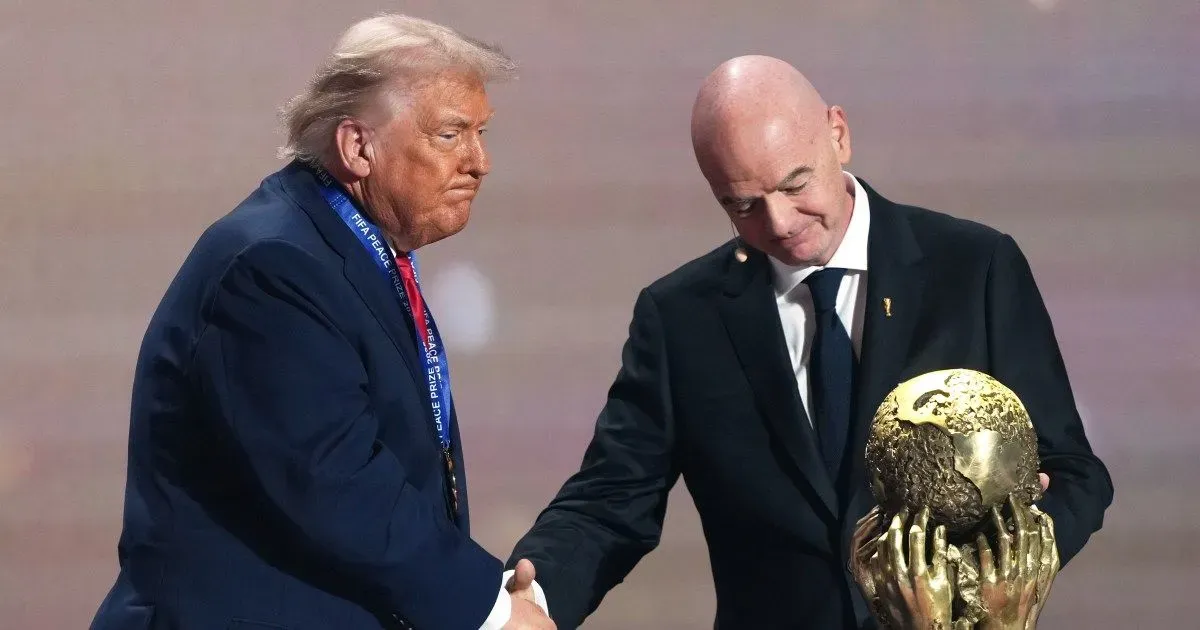
FIFA's Peace Prize, awarded to US President Donald Trump six months before the 2026 World Cup draw, is on the verge of being scrapped.
Several members of FIFA's Council are questioning the prize's merit and have demanded changes, including abolishing it altogether. This move comes amidst ongoing criticism of FIFA President Gianni Infantino's plan to sell off World Cup broadcasting rights. The controversy surrounding the plan has led to calls for Infantino's removal from office.
The FIFA Peace Prize was introduced in November 2026 as an annual award given to individuals who have made exceptional contributions to peace through football. Trump became its first recipient just a month later, sparking debate about the prize's legitimacy and the selection process.
Critics of the prize argue that it undermines FIFA's commitment to promoting peace and unity through football.
FIFA's President Gianni Infantino is known for his high-profile endorsements and statements of support, including his comments on Donald Trump's Nobel Peace Prize chances.
Infantino had publicly advocated for Trump to receive the Nobel Peace Prize for his efforts in brokering a ceasefire in the conflict over Gaza. This endorsement came despite widespread criticism of Trump's handling of international relations and humanitarian crises.
The prize ceremony at Washington DC's Kennedy Center was attended by celebrities and dignitaries, with Infantino presenting it to Trump as "your prize" and "your peace prize. The award is seen as a departure from FIFA's traditional focus on sports, raising questions about the organization's commitment to promoting unity through football.
Critics have pointed out that the timing of the recognition was suspiciously close to the US administration's actions in the Caribbean, where a deadly air strike took place just hours before. This has led to accusations that the prize is being used as a reward for the Trump administration's aggressive foreign policy rather than promoting peace and unity.
The controversy surrounding FIFA's Peace Prize has escalated further as several member nations have called for its discontinuation. This move comes after the prize was awarded to US President Donald Trump, sparking accusations that it is being used as a reward for aggressive foreign policy rather than promoting peace and unity.
Reports indicate that during Thursday's FIFA Council meeting in Zurich, Switzerland, some members demanded an end to the award. Others suggested that politicians should no longer be eligible to receive the prize. The debate highlights growing concerns about the purpose and impact of the Peace Prize.
FIFA has responded by assigning its 22-member Football Social Responsibility Committee to assess the merits of the award. The committee will provide a recommendation before the next council meeting in Doha, Qatar, on December 16. This decision is seen as a step towards addressing the controversy surrounding the prize.
FIFA vice president and English Football Association president Debbie Hewitt has confirmed that the committee's review will be comprehensive, examining how the prize was established, whether it was awarded appropriately, and who made the decision to award it to Trump.
The Norwegian Football Association has formally raised concerns about the awarding of the FIFA Peace Prize to US President Donald Trump. The association made parallel filings in October with various FIFA committees regarding this issue among others. According to a statement from NFF, their intention is to have these matters investigated and for relevant evidence to be obtained.
The NFF has been vocal in its criticism of the award, questioning whether it was given appropriately. In April, Lise Klaveness, president of the association, suggested that FIFA should abolish the peace prize altogether to avoid getting entangled in politics. Klaveness argued that a Nobel institution already exists to honor achievements in this area independently.
The NFF's stance on the issue is not unique. Human rights group FairSquare had previously filed a complaint with the FIFA Ethics Committee against Infantino, accusing him of compromising his duty of neutrality by supporting Trump. This move was seen as a breach of FIFA's human rights policy and a mockery of its values.
Criticism of the award has also come from within the football community. In late April, Australian midfielder Jackson Irvine expressed concerns that FIFA's actions had undermined the sport's credibility as a force for good, pointing to the apparent disconnect between FIFA's stated commitment to human rights and its actual behavior in this case.
The awarding of FIFA's peace prize to US President Donald Trump has sparked outrage among some critics who argue it undermines the organization's commitment to using football as a force for good and positive change in the world.
Former United Nations official Craig Mokhiber, who has campaigned for Israel's suspension from international football over its actions in Gaza, called the award truly shameful". He accused Infantino of inventing the peace prize to curry favor with Trump, while also obscuring his record on human rights and support for Israel.
Mokhiber pointed out that FIFA's complicity in alleged genocide in Palestine had already lasted two years, and that the organization's actions have become increasingly disconnected from society and grassroots football. This perceived disconnection has led some to question the credibility of football as a global force for good.
The award has also raised questions about Infantino's stance on geopolitical issues, particularly his refusal to take action against Israel over its actions in Gaza. Critics argue that this stance sends a message that football is willing to turn a blind eye to human rights abuses and other serious issues.
Mokhiber's criticism of FIFA's peace prize and the organization's handling of human rights issues highlights the growing concern among some critics that the award has become nothing more than a tool for Infantino to curry favor with world leaders.
The controversy surrounding FIFA's peace prize has intensified, coinciding with criticism aimed at Infantino over his recent proposal to introduce private investors into the organization's premium competitions.
Infantino's plan to open up the World Cup and other high-profile events to private investment was met with widespread opposition from governing bodies such as UEFA and CONCACAF. The backlash led to the abandonment of this plan, with many questioning Infantino's leadership and decision-making process within FIFA.
The latest developments have raised further concerns about Infantino's suitability to lead FIFA, which he has headed since 2016 and is currently seeking re-election in March amidst growing criticism over his handling of key issues.
Facts based on reporting originally published by Al Jazeera.
You may republish this story, in full or in part, if you credit Noti Group and link to it (licence CC BY 4.0). Photos are not included.