








Eurovision Song Contest Expands to Asia for Its 70th Anniversary
The European Broadcasting Union has announced that it will finally bring the Eurovision Song Contest to Asia for its 70th anniversary.
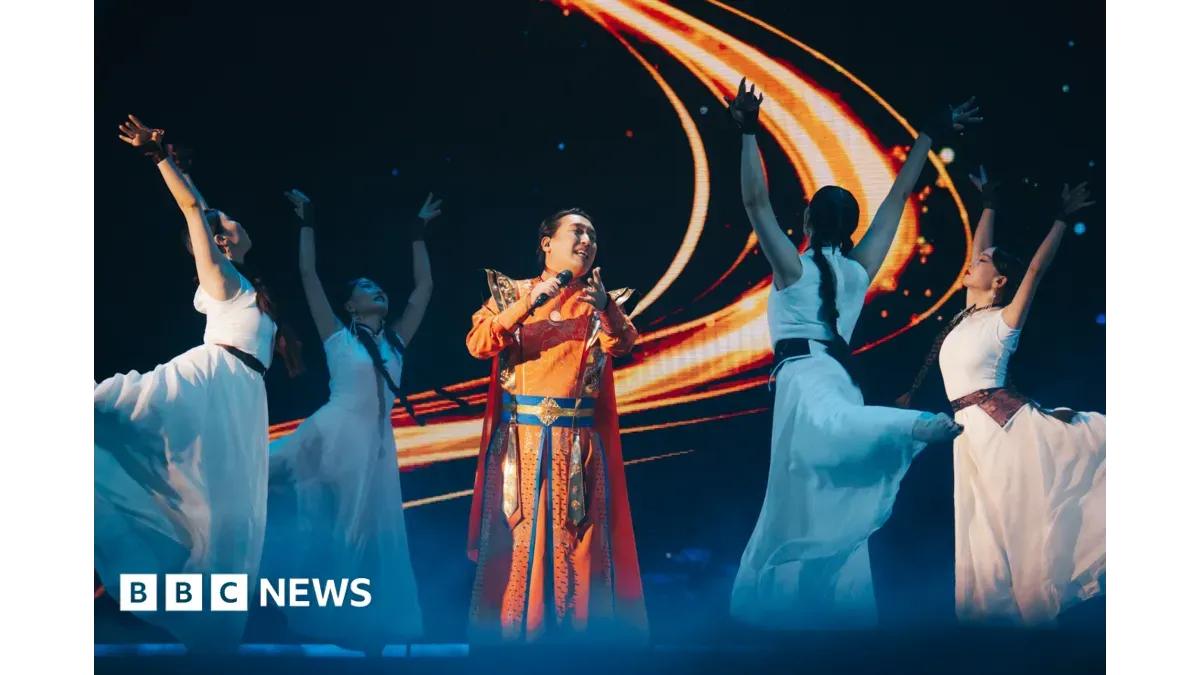
The European Broadcasting Union has announced that it will finally bring the Eurovision Song Contest to Asia for its 70th anniversary.
This year's competition marks a significant milestone in the contest's history, and the EBU is taking this opportunity to expand its reach beyond Europe by introducing audiences in Asia to its unique format. The decision to hold the first-ever Eurovision Asia grand final in Bangkok has been met with both excitement and skepticism among fans of the contest.
Sarun 'Note' Kungbunpot, a Thai singer and Eurovision enthusiast who has won several regional competitions, acknowledges that the concept may be unfamiliar to many people in Asia. He notes that while contests in countries such as Thailand, the Philippines, and Korea often focus on the popularity of the singer rather than the quality of the song.
Eurovision's voting system, which is based on a combination of jury votes and public participation, has been a subject of debate among fans for years. According to Kungbunpot, one of the main challenges in introducing Eurovision to Asia lies in educating audiences about its unique format and emphasis on musical quality over popularity.
The first-ever Eurovision Asia grand final is scheduled to take place in Bangkok at 20:30 ICT (13:30 GMT) this Saturday, marking a significant step for the contest as it seeks to expand its global reach.
The introduction of Eurovision to Asia marks a significant departure from its European roots, where it has been a staple of cultural heritage since 1956. This was an era when mass television ownership was on the rise, and the contest became a cornerstone of shared experience for Europeans.
In contrast, Eurovision's arrival in Asia comes at a time when traditional TV formats are struggling to gain traction amidst the shift towards digital media. As a result, the contest has yet to achieve the same level of cultural significance it enjoys in Europe.
A total of 11 countries have confirmed their participation in this inaugural Eurovision Asia event: Thailand, Malaysia, the Philippines, Vietnam, Cambodia, Laos, South Korea, Mongolia, Bangladesh, Nepal, and Bhutan. Their inclusion represents a mix of established and emerging markets within the region.
Notably absent from this lineup are several major Asian nations, including India, China, Japan, and Indonesia. Efforts are underway to secure their participation in future contests, with negotiations ongoing for next year's event assuming it takes place.
The voting system for Eurovision Asia is set to be a unique experience for viewers from the region. A 50/50 split between public and national jury votes will determine the winner, just like in European contests. However, Asian audiences may find this format unfamiliar.
To participate in the voting process, individuals can register once and receive eight votes. But there's a catch: voters cannot cast their ballots for their own country's contestant and must distribute their votes among at least three other countries.
The public and jury votes are then translated into points, with the song receiving the most votes from a particular nation earning 12 points from that country. Conversely, the song ranked last will receive zero points, also known as "nul points in Eurovision parlance.
In past European contests, there have been allegations of strategic voting, such as neighboring countries supporting each other's entries. While this may not be as prevalent in Eurovision Asia, geographical and cultural differences between participating nations could influence their audience's voting decisions.
As the largest country by population in Southeast Asia, the Philippines is expected to bring a strong enthusiasm for singing to the contest. However, with many Filipinos living abroad in non-participating countries, their votes will be funneled into the rest of the world category rather than contributing directly to their home nation's score.
The voting system for Eurovision Asia is designed to encourage broad participation and engagement from all 12 competing nations. By combining public and national jury votes, organizers aim to create a more inclusive and diverse contest experience.
Filipinos living abroad will have their voices heard, albeit indirectly, through the rest of the world category. This pool will aggregate votes from Filipinos residing in non-participating countries, potentially making a significant impact on the overall outcome.
Bhutan's Thukten Nyendra has never traveled outside his country before arriving in Bangkok for Eurovision Asia. The 24-year-old singer is now under pressure to shine on a global stage with his song Lhayi Semo (The Angel). This rare opportunity has put him in the spotlight, making every step count.
I'm not a star, Nyendra told the BBC, downplaying his newfound fame. I'm just Nyendra from Bhutan. He admitted that Eurovision has given him a massive platform, and winning would be a life-changing experience for himself and his country.
The performances are reaching a fever pitch as contestants put the final touches on their acts ahead of the big finale. Thinla from Laos has ditched her earlier outfit for a more authentic Lao hill-tribe costume, complete with intricate designs and patterns that reflect her country's rich cultural heritage.
Her new look is just one aspect of a bid to make her reggaeton song Bae stand out on stage. But it's far from the only dramatic change - Thinla has also revamped her choreography to incorporate traditional Lao dance moves, giving her performance an added layer of authenticity.
Meanwhile, Vietnamese singer Tóc Tiên is pushing the boundaries with her elaborate and intricate routine for Em Tiên (Fairy Maiden). The sheer scale and complexity of her performance have left onlookers breathless, with costume changes and choreographed movements that require a high level of precision and skill.
The Bangladeshi entry, Beatmosphere's Tumi Ele (You Came), is an a cappella and beatboxing extravaganza featuring six men who will take centre stage without the aid of backing music.
The finalists chosen for this inaugural Eurovision Asia contest are already well-known in their home markets due to a lack of public awareness about the event.
Malaysian singer Aina Abdul is one such artist, renowned for her impressive vocal range and dramatic costumes that have become an integral part of her performances. Her song Bluest Sky" has been gaining traction, with Abdul revealing that it was inspired by her late cat Hiro. The emotional connection to her pet adds a poignant touch to the song.
Abdul's elaborate dress, designed by Malaysian fashion designer Melinda Looi, is a masterpiece in its own right. Taking 600 hours to create, the garment features materials sourced from Italy and China, with Looi travelling all the way to Bangkok to showcase her work at the contest. The glistening texture of the dress represents moving water, adding an extra layer of depth to Abdul's performance.
If things go according to plan on the night, this could mark the beginning of Eurovision's expansion into a region that accounts for half the world's population, offering a fresh and exciting chapter in the history of the contest.
Facts based on reporting originally published by BBC News Entertainment.
You may republish this story, in full or in part, if you credit Noti Group and link to it (licence CC BY 4.0). Photos are not included.