
Dutch Driver Saves Fellow Racer in Shanghai Car Crash
A Dutch driver saved a fellow racer's life after a car crash in Shanghai last month.
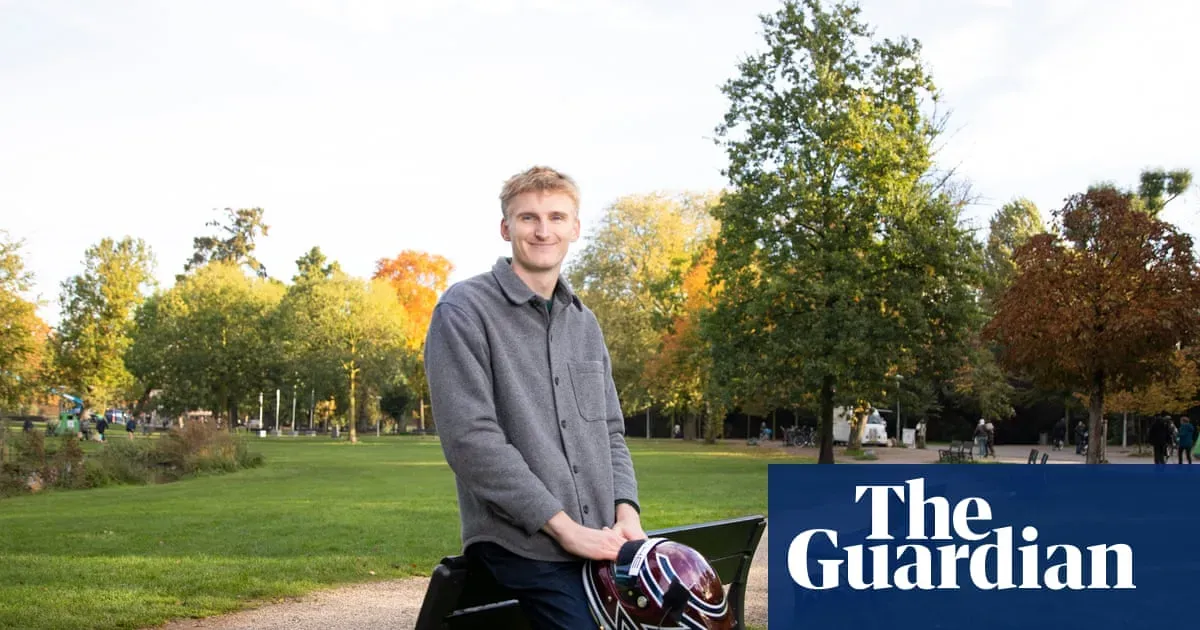
In a harrowing incident that has left a lasting impact on both parties involved, Dutch driver Loek Hartog saved fellow racer Ollie Millroy's life after a car crash in Shanghai last month.
The accident occurred during a GT racing event, and the severity of Millroy's injuries was apparent as he lay trapped inside the burning vehicle. Hartog sprang into action, using his strength to rip off the doors and pull Millroy to safety before trying to comfort him.
Hartog has been hailed for his bravery in the face of danger, but he resists being called a hero. Instead, he emphasizes that his actions were motivated by a sense of humanity and a desire to help someone in need.
As we walk through Amsterdam's Vondelpark on a chilly morning, Hartog reflects on the incident and its aftermath. He notes that the experience has given him a newfound appreciation for life and a sense of responsibility towards others.
The young driver is scheduled to return to Shanghai this weekend for another GT World Challenge Europe Endurance Cup event, where he will be driving the same car that almost claimed his friend's life. Hartog's decision to continue racing despite the incident speaks to his dedication to his sport and his passion for competition.
Hartog's thoughts on the matter are philosophical, and he believes that society as a whole needs to do better in terms of supporting one another. He notes that people often respond with skepticism when hearing about heroic acts, which can be hurtful to those who have risked their own lives to help others.
As we sit by a small lake within the park, Hartog shares his perspective on why he feels compelled to speak out about this issue. He believes that everyone has the capacity for kindness and compassion, and that it's up to each individual to decide whether to act with empathy or indifference.
Hartog's words are a poignant reminder of the impact one person can have on another's life, and his message is clear: we all have the power to make a difference, and it starts with treating others with kindness and respect.
The accident that Hartog witnessed has left a lasting impact on his life. He reflects on how it has changed him, noting that he now looks at things from a different angle. However, he emphasizes that this new perspective is not a result of any character change, but rather an additional layer of experience.
Hartog's words convey a sense of humility and a desire to downplay his actions. He expresses his discomfort when people label him as heroic, stating that it's not what he wants to be remembered for. Instead, he hopes that others will take inspiration from his actions and emulate them in similar situations.
The incident occurred on a straight stretch of road where Hartog was driving at high speed. As he approached the scene, he witnessed flames engulfing Millroy's Ferrari after it had been hit by another car involved in a separate collision. The intensity of the fire was evident, with flames reaching twice Hartog's height.
Hartog recalls feeling a sense of detachment from fear as he assessed the situation. He likened it to stepping onto a surfboard for the first time, unfamiliar and uncertain. However, his focus remained on rescuing Millroy, with no other scenario seeming plausible.
The danger posed by an exploding car did not cross Hartog's mind in that moment. The incident seemed to unfold in slow motion, much like a scene from a movie. He later watched the footage and was struck by how quickly it had all transpired.
Hartog attempted to open the driver's door before moving around to the passenger side of the car. With some effort, he managed to yank the doors off, creating an opening for Millroy's escape. The process seemed more intense in retrospect than it actually was.
A marshal eventually arrived on the scene, but Hartog took charge by retrieving a fire extinguisher from him. Despite not wearing flame-proof clothing, Hartog used the extinguisher to douse the worst of the flames before finally pulling Millroy out of the burning wreck.
The aftermath of the rescue was marked by confusion and disorientation for both Hartog and Millroy. The latter was unaware of his surroundings and kept repeating questions about where he was and what had happened. Hartog's attempts to communicate with others on the scene were hindered by language barriers, leaving him feeling helpless as they tried to move Millroy.
Despite the chaos surrounding the rescue, Hartog managed to keep a clear head and prioritize Millroy's safety above all else. His actions that day are a testament to his ability to remain calm under pressure and think clearly in high-stress situations.
The rescue was over in just over a minute, but its impact will be felt for years to come. For Hartog, it has been a transformative experience that has left him with a new perspective on life.
The emotional aftermath of the rescue was still raw for Loek Hartog as he sat near a barrier waiting for medical help to arrive for Ollie Millroy.
As they waited, Hartog tried to reassure Millroy that everything would be okay and that help was on its way, making eye contact with him despite his shock.
Hartog's own emotions were likely in check during this time, but once Millroy was taken away he began to process what had just happened. He drove back to the pits slowly.
The racing event seemed to fade into the background as Hartog grappled with the gravity of the situation, and he soon found himself thinking about all that racing meant to him.
Despite initial doubts about continuing the race, Hartog's competitive spirit soon took over and he was eager to get back out on the track.
That night, Hartog visited Millroy in hospital, where he showed him footage from his phone of the rescue. Millroy was still under the influence of medication but he was shocked by what he saw.
Hartog has said that if he hadn't been in such a poor position during the race, he may not have been able to respond as he did and save Millroy's life.
In the days leading up to the incident, Hartog had a bad feeling about something being wrong for him, but it turned out to be an omen of sorts.
The full extent of his selfless act hit home for Hartog when he thought about Ollie's family, including his wife and three children, who could have lost their loved one that day.
Hartog's expression changes from shock to delight as he reflects on the aftermath of the rescue. The simple gesture of receiving a watch from Ollie Millroy and his family is a poignant reminder of the time Hartog gave them.
The watch, a Rolex, is a symbol of the precious gift of life that Hartog bestowed upon the Millroy family. As we examine it, the significance of the moment becomes even more apparent.
Hartog reveals that he and Ollie Millroy were not acquainted before the accident, despite being from different generations in the racing world. However, their encounter has created a bond between them.
Their differences in age notwithstanding, Hartog and Millroy are determined to work together to create something positive out of this incident. They recognize the importance of turning a potentially tragic story into one with a redeeming outcome.
Hartog acknowledges that the slow response time of the marshals and medical assistance was unacceptable. He understands why Betty Chen, Ollie's teammate at Ferrari, expressed her anger and frustration over the handling of the situation.
The incident has highlighted the need for more flexible rules in emergency situations. Hartog believes that drivers should be allowed to act on their instincts when they feel it is necessary to help someone in distress.
Hartog emphasizes that an incident like this should never happen, and there should always be a prompt and adequate response from the marshals and medical teams. He also questions the rules that prevent marshals from taking immediate action.
As we continue our conversation with Hartog, he expresses his hope that he and Ollie Millroy may have the opportunity to compete against each other again next year. This sentiment is a testament to the human connection they have formed through their shared experience.
During our WhatsApp video call with Ollie Millroy, it becomes clear that he is struggling with the aftermath of the accident. He candidly shares his difficulties in managing pain without his strong painkillers, likening it to withdrawal symptoms experienced by heroin addicts.
Hartog and I had agreed to postpone our joint interview until Millroy was feeling better after his accident. We decided to leave him in peace during his recovery, assuming he wouldn't be well enough to talk just yet.
However, 24 hours later, Millroy messaged me to say he was ready to chat on a Zoom call from Dubai. Despite not being in the best shape six weeks on, he was eager to discuss his experience.
Millroy's pain and frustration were evident as he spoke about his recovery. He had been hoping to be back on track by now but was struggling with the physical toll of his injuries. The painkillers he had been taking had given him a false sense of security, leading him to believe he might be ready for racing again in just four weeks.
But since coming off the medication, Millroy realized how far away from recovery he actually was. He couldn't even imagine getting behind the wheel of a racing car at this point, let alone driving on public roads. His appointment later that day would help him work out a plan to get back on track.
Hartog leaned in towards his friend on screen, acknowledging the incredible challenge Millroy's body had been facing over the past six weeks. Millroy nodded in agreement, aware of just how much his body needed time to heal.
Millroy's desire to move forward and resume racing was understandable, given the nature of his profession. However, he also acknowledged that patience was a quality he didn't always possess, especially when it came to something as important to him as driving.
Despite the pain and frustration, Millroy expressed gratitude for the time he had been spending at home with his family. He didn't feel like his life had been put on hold by his absence from racing circuits, but rather that he was taking a necessary break to focus on his recovery.
The conversation turned to Millroy's son Mylo, who had already fallen in love with karting. It was ironic that Mylo's first race took place while his father was still recovering in hospital.
Millroy's wife had even managed to sneak away from Dubai and watch the race live on TV, getting the first flight back to China to be with her husband. The news of the accident had spread quickly around their school, with kids as young as eight years old seeing it on YouTube.
The family was already dealing with the aftermath of the accident, but Millroy's enthusiasm for racing and his love for his son were clear throughout the conversation.
Mylo's phone call after the accident was a heart-wrenching moment for the family, as they were still reeling from the shock of what had happened.
The family managed to find some solace in their son's resilience and enthusiasm for racing, and encouraged him to focus on enjoying his weekend despite the traumatic event.
Facts based on reporting originally published by The Guardian Sport.
You may republish this story, in full or in part, if you credit Noti Group and link to it (licence CC BY 4.0). Photos are not included.