







Decree 54 Cybercrime Law Amended in Tunisia
Tunisia has made a significant change to its cybercrime law, reducing penalties for first-time offenders from imprisonment to fines ranging from $3,370 to $6,740.
Tunisia has made a significant change to its cybercrime law, Decree 54, which has been criticized for being overly restrictive and repressive.
The amendment, which came into effect on Wednesday, reduces the penalty for first-time offenders from imprisonment to fines ranging from 10,000 to 20,000 Tunisian dinars ($3,370 to $6,740).
This change is a significant shift from the original law, which imposed a five-year prison sentence on those convicted of spreading "false news or related violations. Repeat offenders may still face jail time.
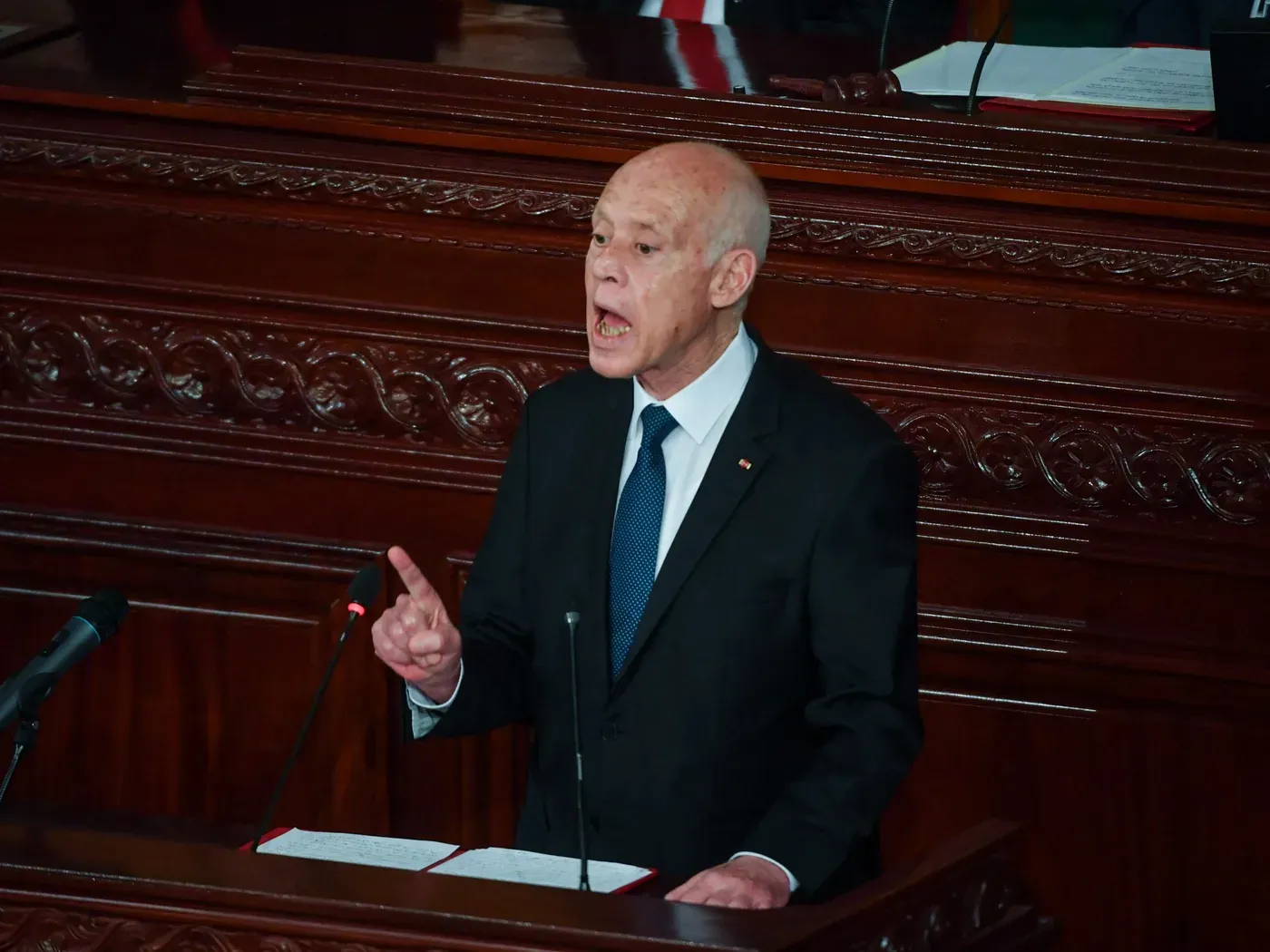
Rights and media freedom advocates have long criticized Decree 54, arguing that it has been used to silence President Kais Saied's opposition, activists, and reporters.
The penalties for spreading false information under Decree 54 were severe, with fines and prison sentences imposed on individuals who shared doctored content or made untrue allegations to incite hatred or damage someone's reputation.
Those targeting public officials or people of equivalent status faced even harsher punishments, including up to a decade in prison and a fine of over $32,000. Repeat offenders were also subject to additional penalties, with six months behind bars and a $16,000 fine for those who continued to spread false information.
The decree's provisions had significant implications for free speech in Tunisia, with critics arguing that it was used to silence opposition voices and restrict civic space. The law was seen as a potent tool of oppression by international organisations concerned with press freedom.
Tunisian officials have faced criticism from rights groups and former government figures who argue that the decree has been misused to suppress dissent and limit free expression in the country.
The Tunisian government's crackdown on dissent has been a contentious issue since President Kais Saied initiated a severe crackdown against opposition parties, including Ennahdha, which was once a leading force in the country's politics.
Under Saied's rule, hundreds of journalists, bloggers, and activists have faced prosecution for speaking out against the government. The National Syndicate of Tunisian Journalists has documented numerous cases of individuals being tried under Decree 54, with many facing lengthy prison sentences or even death.
In recent years, the number of prosecutions has continued to rise, with at least six journalists targeted under the decree between April 2025 and April 2026. One notable example is prominent lawyer and columnist Sonia Dahmani, who was sentenced to two years in prison for criticizing conditions in Tunisian prisons during a radio interview this May.
Dahmani's case is not an isolated incident; she has been charged under Decree 54 on multiple occasions, with five separate cases relating to her media appearances. Her previous conviction in 2024 for criticizing Saied's policies resulted in an 18-month prison sentence.
The international community has also weighed in on the issue, with organizations like Amnesty International and Human Rights Watch condemning Decree 54 as a tool for suppressing fundamental freedoms. Even the European Parliament has called for its repeal, highlighting concerns about the decree's impact on free speech and democracy.
The move to soften Tunisia's false news penalty has sparked debate about the country's democratic trajectory since President Saied took office in 2011. Critics argue that his actions have undermined progress made during the Arab Spring revolution.
Saied's decision to suspend parliament and dismiss the government in 2021 marked a significant shift away from democratic norms, with many viewing it as an attempt to consolidate power. The subsequent introduction of a new constitution in 2022 cemented these changes, despite widespread criticism that it represented an erosion of Tunisia's democratic institutions.
The president has maintained that his actions are necessary to address years of disorder and alleged corruption, but his critics see it as a thinly veiled attempt to suppress dissent and opposition. Amidst growing concerns about political repression, Saied won re-election in 2024 with a landslide victory, albeit on a low voter turnout.
Tunisia's largest labour union has joined forces with civil society groups to organize a nationwide march against what they see as restrictions on civil liberties, highlighting the deep-seated disillusionment among citizens with their government.
Tunisia has witnessed a surge in protests over the past year, as citizens express their discontent with government actions. Demonstrations against abuses of power, democratic backsliding, and deteriorating living standards have become increasingly common. In June, hundreds of protesters gathered in Tunis to demand press freedom and the release of detained critics.
The mobilization of civil society has been credited with forcing the government to reconsider its stance on certain issues. The suspension of parliament by President Saied five years ago is still a contentious topic, with thousands gathering in July to urge him to step down. This public pressure has also led to international attention being focused on Tunisia's democratic situation.
The country has faced mounting criticism from abroad, particularly from the United States. A US House of Representatives member, Joe Wilson, stated that he would continue to push for a bill imposing sanctions on Saied and those close to him due to their anti-democratic policies. This external pressure may have contributed to the government's decision to soften its stance on certain issues.
Critics argue that the amended penalties do not go far enough in addressing concerns about freedom of speech under Saied's government. The International Commission of Jurists has described the change as a positive development, but notes that more is needed, including an end to all abusive prosecutions and the release of those detained arbitrarily.
The revised penalty for spreading false news" in Tunisia has been reduced, but its underlying repressive nature remains intact. According to Abdessalem, this change was made to soften the image of President Saied's government, which has come under scrutiny due to its handling of trials, arrests, and use of arbitrary decrees.
The move has been met with skepticism by civil society groups and journalists' unions, who had demanded that Decree 54 be abolished altogether. They argue that journalists should be held accountable under the press freedom law passed in 2011, which balances individual rights with professional responsibilities. Despite proposals for a broader overhaul of media laws since 2024, these efforts have been ignored by parliament.
Facts based on reporting originally published by Al Jazeera.
You may republish this story, in full or in part, if you credit Noti Group and link to it (licence CC BY 4.0). Photos are not included.