






Data Centre Growth Sparks Environmental Concerns
Data centres have become ubiquitous, powering internet activity and driving AI growth, but critics argue they contribute significantly to greenhouse gas emissions.
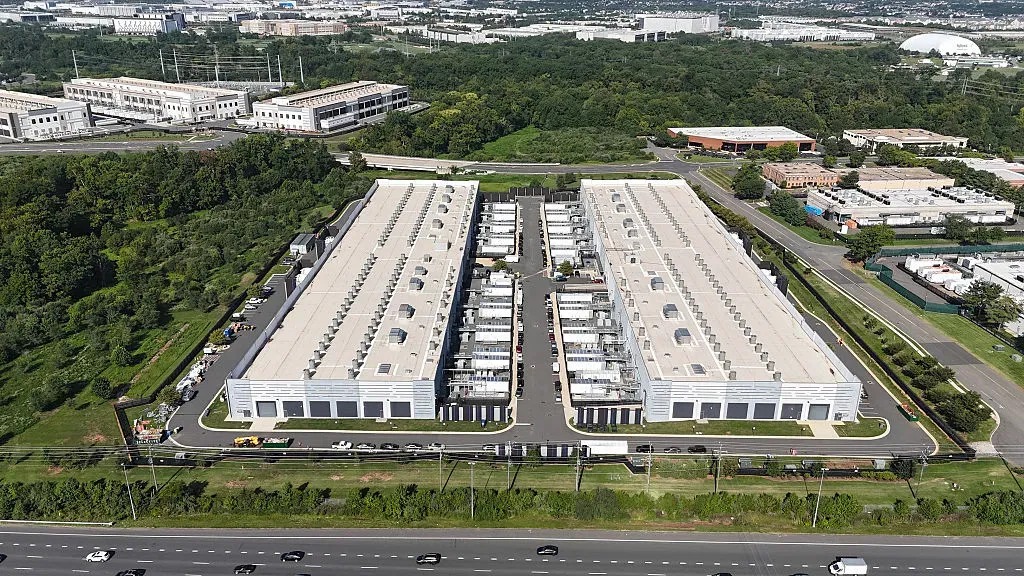
Giant data centre complexes have become ubiquitous, powering our internet activity from browsing to banking, as well as driving the AI boom that's transforming industries worldwide.
These massive buildings house advanced computer chips and servers needed for services like ChatGPT and Claude, which rely on complex algorithms and vast processing power. Data centres are essentially the backbone of modern digital life, handling everything from web searches to online transactions.
However, their rapid growth has sparked growing concerns about their environmental impact and energy consumption. Critics argue that data centres contribute significantly to greenhouse gas emissions and strain local resources, fuelling a global backlash against their expansion.
The issue is particularly contentious in the US ahead of the November midterm elections, with both Republicans and opposition Democrats speaking out against new developments.
This has put them at odds with President Donald Trump, who dismisses the criticism as "a sick conspiracy", despite mounting public discontent.
The construction of data centres is shifting from urban areas to rural regions as they grow in size.
These massive facilities are being built to accommodate the increasing demand for computing power required by artificial intelligence (AI) services.
The US has a significant lead over other countries when it comes to data centre capacity, with China in second place and Europe lagging behind.
This gap is expected to widen further in the coming years, potentially depriving Europe of economic benefits from the AI boom.
Data centres vary greatly in size, ranging from small facilities that fit inside a garden shed to massive sites covering vast expanses of land.
The world's largest operational data centre is reportedly located in Hohhot, Inner Mongolia, and covers an area equivalent to about 140 football pitches.
As concerns about data centres' impact on local resources continue to grow, experts are sounding the alarm about their water consumption. These facilities use significant amounts of water to cool their systems, which could lead to water shortages in some areas.
The scale of data centre power consumption is staggering. According to analysis, these facilities worldwide consume more electricity than the entire country of France, as a recent chart highlights.
This growing demand for energy is driving up carbon emissions and putting pressure on local grids, potentially leading to increased energy prices. The strain on resources has sparked worries about the long-term sustainability of data centre operations.
Opposition to new data centres is gathering momentum in various countries. In the US, 16 states have proposed laws to ban or temporarily block new facilities, with some politicians framing it as a key issue for November's midterm elections.
Supporters of data centres argue that they are crucial for national security and AI development, while also contributing positively to local economies by attracting investment, generating tax revenue, and creating jobs.
The environmental impact of data centres has become a major concern as their rollout continues despite growing debate over their merits.
Colocation facilities, which lease space to remote tenants without a local presence, are seen as less beneficial than traditional data centres that bring in investment and create jobs for the local community. As the tech industry's spending on AI infrastructure reaches new heights, concerns about energy consumption and carbon emissions associated with these massive data storage facilities have intensified.
The industry is now exploring alternatives to traditional data centres, including placing them in space or on the Moon where solar energy can be harnessed, or using existing hardware in computers and smartphones for AI processing.
Facts based on reporting originally published by BBC News Technology.
You may republish this story, in full or in part, if you credit Noti Group and link to it (licence CC BY 4.0). Photos are not included.