





Daley Thompson Speaks Out on Lack of Knighthood Recognition
Double Olympic champion Daley Thompson has spoken out about his achievements and the lack of recognition he received in the form of a knighthood, citing his unwavering dedication to training as a key factor.
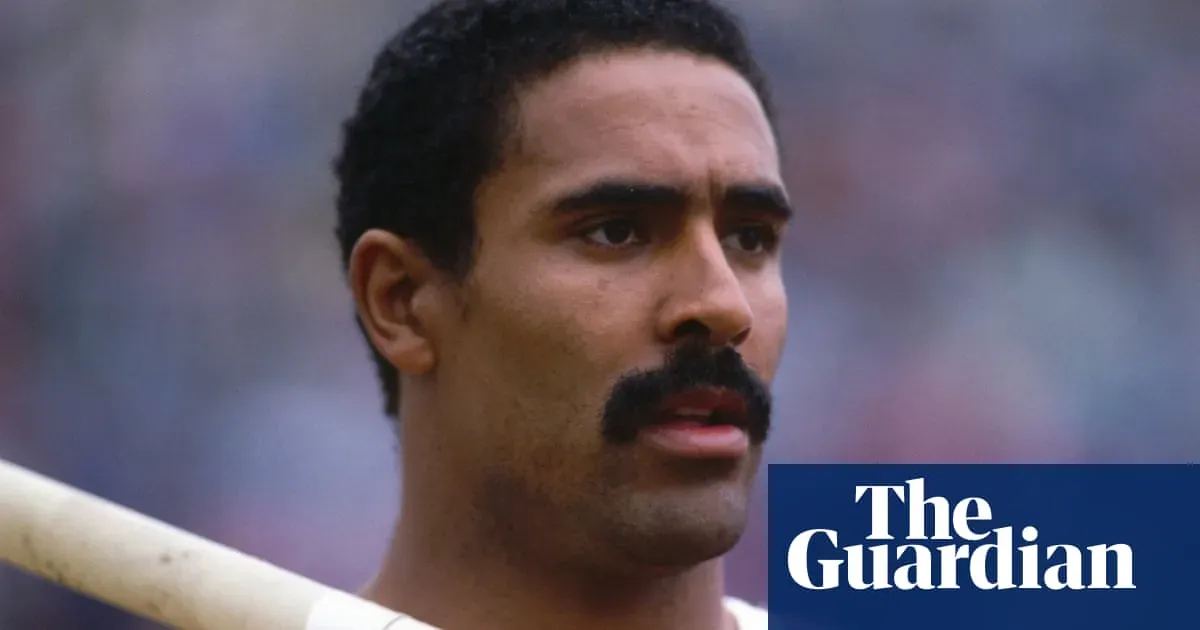
Daley Thompson, the double Olympic champion, has spoken out about his achievements and the lack of recognition he received in the form of a knighthood.
Thompson's remarkable career was marked by an unwavering dedication to his sport, with him training 20 times a week throughout the 1980s. This tireless work ethic enabled him to dominate the decathlon event, breaking the world record four times and remaining unbeaten for nine years.
One of the most enduring images of Thompson's career is that of him training on Christmas Day, a habit he adopted after learning that his German rival, Jürgen Hingsen, also trained on holidays. This level of commitment was unmatched by many of his contemporaries and helped to cement his status as one of the greatest athletes of all time.
Thompson's achievements were widely celebrated by the British public, with him being voted the BBC's Sports Personality of the Year in 1982. However, he remains one of only two male multi-event Olympic track and field champions who have not received a knighthood, alongside Sebastian Coe.
Despite his lack of recognition from the establishment, Thompson has remained humble and grounded throughout his life. He insists that a knighthood would not change his life in any significant way and is content with the rewards he has already achieved through his sport.
Thompson's attitude towards fame and recognition is perhaps best illustrated by his reaction to being asked about his lack of a knighthood. He says that it is "not within your control and therefore, does not worry him.
The controversy surrounding Thompson's second Olympic gold medal in 1984 may have contributed to the lack of recognition he received. However, he has never been one to dwell on such matters and has instead focused on his continued involvement in athletics.
Despite no longer being an active competitor, Thompson still trains regularly and maintains a strong connection to the sport that defined his life. His commitment to athletics is a testament to his enduring passion for the sport and his refusal to let go of the things that brought him so much success.
Thompson's decision to wear a T-shirt with a joke about Princess Anne has sparked controversy over his potential knighthood.
The backlash was swift and severe, but Thompson seems unfazed by it all. He reflects on those times, saying they were indeed different from today. Would I do it now? That is the question, he ponders before answering himself. No, of course I wouldn't.
Thompson also disputes the notion that Princess Anne was offended by his joke. The thing was she wasn't offended. She was fine with it. It's a faux outrage, he explains.
Despite this controversy, Thompson's remarkable accomplishments and dedication to his country remain unchanged. His life story is one of overcoming adversity, as a powerful documentary made clear two years ago.
Thompson's childhood was marked by hardship. His Scottish mother worked multiple jobs to provide for him, often relying on food banks for support. Tragedy struck when his Nigerian father was shot and killed at the age of 13.
Yet Thompson never allowed these challenges to derail his path. He continued to excel in athletics, driven by a passion that remains strong to this day.
In recent news, Thompson has achieved another milestone, becoming the first British athlete to hold a national record for 50 years. This achievement is all the more impressive considering it was set back in September 1976.
This record-breaking moment came when Thompson won a decathlon in Talence, France, surpassing Peter Gabbett's previous record by four points. So was this the moment he knew he would be great? Truthfully, no, he replies.
Thompson attributes his early success to a particular moment, his first decathlon at just 17 years old. He recalls waking up on the second day of competition with a newfound confidence in his abilities. I literally remember thinking: 'Oh man, you're going to be really good at this,' he says.
This experience was all the more significant given the lack of financial support for young athletes at that time. Thompson remembers receiving help from Tom McNab, who arranged for Adidas to send him some shoes. This gesture made a lasting impression on him, and he recalls thinking: Oh, they believe in me.
After achieving a remarkable academic record in A-Level biology, geography and general science, Thompson's athletic prowess began to make waves on the international stage.
At the Montreal Olympics, he may not have finished at the top of the podium, but his 18th-place finish marked a significant milestone in his career. Just two months later, Thompson set a new British record, further cementing his reputation as a rising star.
Despite his growing success, Thompson faced significant financial challenges early on in his career. As a decathlete, he was often overlooked and underpaid compared to other athletes. It wasn't until the release of Daley Thompson's Decathlon, a popular computer game, that his bank account began to swell.
The game's massive popularity brought Thompson a much-needed influx of cash, with sales exceeding one million copies worldwide. However, it also had an unintended consequence, the game was notoriously difficult and often resulted in broken joysticks and keyboards.
When asked about the game's notorious reputation for causing hardware destruction, Thompson laughed good-naturedly. You're the first to mention that," he said, chuckling. Literally, there hasn't been a day since 1984 when someone hasn't come up and said: 'You owe me a keyboard'.
Thompson's amusement is palpable as he reminisces about the game's impact on his life. He recalls receiving constant requests for compensation from fans who claimed their hardware had been damaged by playing the game.
In contrast to Thompson's gaming legacy, his friend Sebastian Coe has had less success in being immortalized in a video game. According to Thompson, this is because Coe was perceived as "boring.
Thompson's modest living arrangements are a reflection of his down-to-earth personality and priorities. Despite being one of the greatest athletes in history, he still resides in a small flat, far from the luxurious lifestyle often associated with international sports stars.
A photograph that has become synonymous with Thompson's dominance is Steve Powell's iconic image from the 1982 European Championships, where he stands triumphantly over his vanquished competitors. However, Thompson reveals that this image would never adorn his own walls, as he prefers to focus on the present and future rather than dwell on past achievements.
Thompson's approach to collecting memorabilia is also refreshingly humble. He has given away all of his gold medals and trophies to friends and training partners, leaving nothing for himself. This decision may raise eyebrows among those who have followed his illustrious career, but it speaks volumes about his character and values.
According to Thompson, his reluctance to cling to the past stems from a desire to stay relevant and engaged in the present moment. He believes that many people he knows struggle with this issue, becoming mired in nostalgia for past glories rather than embracing new challenges and opportunities.
In contrast, Thompson remains deeply focused on moving forward, always seeking out the next great challenge or competition. His mindset is characterized by a relentless drive to improve and adapt, which has served him so well throughout his illustrious career.
Despite this focus on the future, Thompson does occasionally find himself drawn back into conversations about his past achievements, particularly when discussing his legendary rivalry with German athlete Hingsen. The two athletes often meet up a few times a year, during which time Thompson likes to engage in good-natured banter with his old rival.
When comparing their respective performances over the years, it's striking to note that both Thompson and Hingsen possess virtually identical personal best scores across the decathlon events. Yet, despite Hingsen's impressive credentials, including two world records, he was never able to surpass Thompson when it truly mattered.
Thompson attributes his success in these high-pressure situations to a combination of physical ability and mental toughness. He believes that while both athletes may be similarly gifted, he consistently managed to perform at a higher level under the spotlight of competition.
In fact, Thompson has even confessed to employing clever mind games during competitions against Hingsen. By deliberately raising the bar in the high jump event or throwing the shot put further than necessary, he would often succeed in getting inside his rival's head and gaining an psychological edge.
Thompson's competitive spirit was not limited to his athletic pursuits. He would often engage in playful mind games with his rivals, trying to get inside their heads and gain a psychological edge. This included deliberately raising the bar in high jump events or throwing the shot put further than necessary.
However, Thompson wasn't alone in this behavior. His rival, Hingsen, had also been known to employ similar tactics. During the 1984 Olympics, Coe approached Hingsen while he was sitting on a bench with a towel around his neck and said, He's an animal, isn't he?" Hingsen responded by pulling the towel up and down in a nonchalant manner.
Thompson admits that he feels a bit bad for Hingsen. He believes that if it weren't for their epic decathlon battles, Hingsen would be considered one of Germany's best athletes. Instead, he was often subjected to ridicule from his teammates and fans.
Despite the intense rivalry between them, Thompson and Hingsen have maintained a close friendship over the years. In fact, Thompson values this friendship almost as much as the medals he won during his competitive days. He believes that having long-term friends brings a different kind of joy and is deeper than any athletic achievement.
Some people believe that Thompson's decathlon personal best score could have been even higher if he hadn't used the 1500m event as a victory procession. However, his time of 4 minutes and 20 seconds is still respectable, especially considering it was achieved during an era when athletes were not as focused on speed.
Thompson has continued to stay active in his post-athletic career. He worked as the fitness coach for Wimbledon's Crazy Gang during the mid-1990s, a team that included Robbie Earle and Mick Harford. During this time, he would often challenge his players to see if they could keep up with him on the track.
One notable example of Thompson's competitive spirit is when he trained his players in Battersea Park. He would push himself to stay ahead of them, even at an advanced age. His 1500m time was a benchmark for his players, and none of them were able to get within 20 seconds of it.
Even now, Thompson remains committed to his fitness routine. He works out four or five times a week and looks significantly younger than his years. On Saturday mornings, he can be found training a group of athletes in their 40s, 50s, and 60s at Battersea Park.
Thompson's enduring legacy is not just about his athletic achievements but also about the friendships he has formed along the way. He has managed to maintain close relationships with his former rivals, including Coe and Hingsen, which is a testament to his character and sportsmanship.
Daley Thompson's Saturday morning training sessions are a sight to behold, as he and his friends brave all weather conditions to get in a workout. The routine typically includes sit-ups, press-ups, and running up small hills, but the camaraderie is what makes it truly special.
On Christmas Day, the group gathers once again, this time climbing over the fence to join Thompson for an impromptu session. However, he insists on keeping his part of the workout within the confines of his home, instead opting to shout through the bars to keep everyone involved and engaged in the exercise routine.
Facts based on reporting originally published by The Guardian Sport.
You may republish this story, in full or in part, if you credit Noti Group and link to it (licence CC BY 4.0). Photos are not included.