






Billie Jean King Reflects on Life and Career at 82
At 82 years young, Billie Jean King remains competitive and continues to inspire with her passion for tennis.
Billie Jean King, the tennis legend who dominated the courts for decades, has been reflecting on her life's journey at an astonishing 82 years young. Despite her advanced age, she remains as competitive as ever and continues to inspire with her unwavering passion.
King's gratitude list is a daily ritual where she acknowledges the people who have contributed to her fulfilling life. Among them are her loving wife, Ilana Kloss, a decorated former tennis player herself, and Susan Williams, a classmate from King's fifth-grade days at Long Beach, California school. Their connection dates back to when King was just 11 years old.
It all started with Williams introducing King to the sport of tennis. "What's tennis? King had asked, and it was this encounter that sparked her interest in the game. With a background in sports encouraged by her parents from an early age, King was naturally drawn to activities like basketball and, eventually, tennis. Her brother, who later became a major league baseball pitcher, also received equal support for his athletic ambitions.
As soon as she tried playing tennis, King was hooked. She would often tell her parents about her dreams of becoming the world's No 1 player, a goal she ultimately achieved. Throughout her illustrious career, King accumulated an impressive collection of accolades, including 39 grand slam titles and 20 Wimbledon wins, a record that stands alongside Martina Navratilova's.
King's off-court achievements are equally noteworthy, particularly in her fight for equal prize money between men and women. Her leadership was instrumental in securing this milestone for female tennis players. A new documentary about her life, Give Me the Ball!, highlights these significant moments from King's career.
The film tells the story of the original 9, a group of pioneering female tennis players who founded the first major women's professional tennis tour in 1970. Led by King, they signed symbolic $1 contracts with World Tennis publisher Gladys Heldman to protest against the unequal prize money distribution. This bold move paved the way for future generations of women in tennis.
One pivotal year in King's life was 1973, which saw her face off against Bobby Riggs in the historic Battle of the Sexes exhibition match. King emerged victorious, but she admits that this time period was also marked by personal turmoil. Her internal struggle with her sexuality and strained marriage to Larry King were taking a toll on her emotional well-being.
The documentary provides an intimate look into King's life during this challenging period. She now identifies as a lesbian and has spoken candidly about her experiences in the film. Despite the difficulties she faced, King's determination and tenacity remain an inspiration to many.
As King continues to navigate her life at 82, one thing is clear: her legacy extends far beyond her impressive tennis career. Her unwavering commitment to equality and her unshakeable spirit have left a lasting impact on the world of sports and beyond.
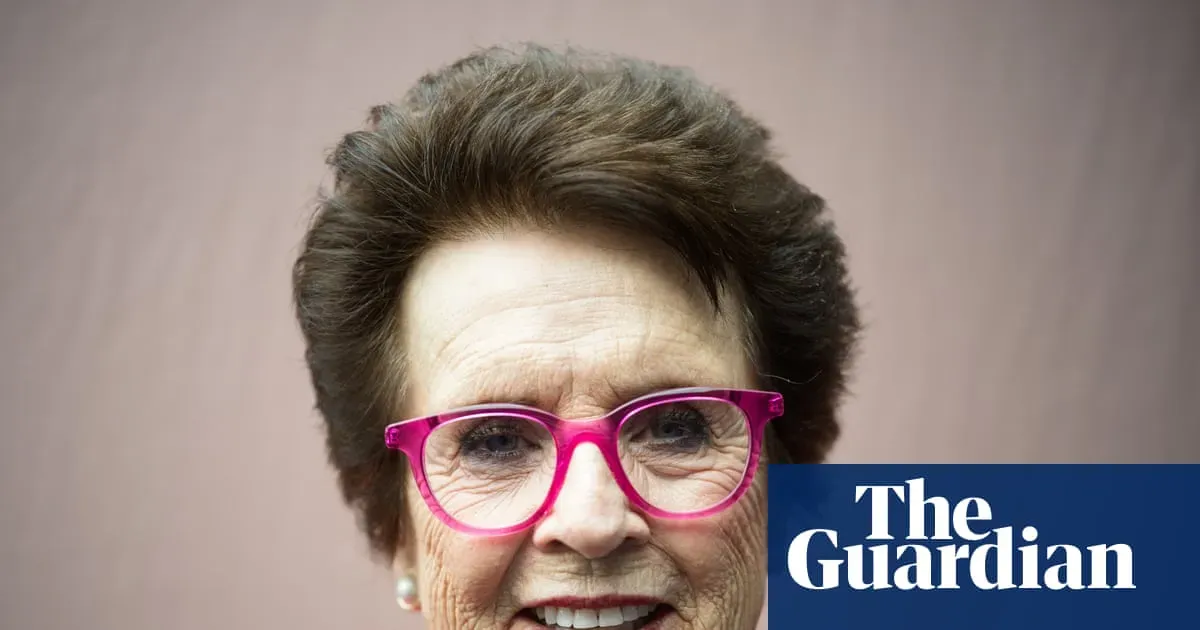
King bursts onto the video call in a vibrant hot pink jacket and matching glasses, radiating energy as we begin our conversation.
Her infectious enthusiasm is matched by her quick wit, as she reveals that Lucy, my name, is a favorite of hers - and also happens to be the name they chose for their dog. She chuckles good-naturedly at the thought, no doubt aware it's not every day someone gets their name mentioned in conversation.
King's style is understated yet elegant, with dark brown hair immaculately coiffed and pearls adorning her neck and ears. But despite this polished demeanor, she's also unafraid to show her playful side - a trait that has served her well over the years as she tackles various projects and pursuits.
As our conversation turns to more serious topics, King's tone shifts to reflect her authority on issues such as access to sport and the state of the US. Her words are laced with conviction, reflecting her deep commitment to these causes.
Growing up, King was known as the goody-two-shoes of her family - a label she has carried into adulthood. She reveals that she's never been one for lying or indulging in vices like drinking, even when faced with tempting situations.
King's early life was marked by a strong Christian upbringing, which included attending church with her family and learning valuable lessons from their pastor, the two-time Olympic pole-vaulter Bob Richards. However, as she grew older, King began to question organized religion - particularly its treatment of women as second-class citizens.
Despite no longer being actively involved in organized Christianity, King remains spiritual and continues to pray. She credits her faith with helping her navigate life's challenges, pointing to the incredible opportunities that have come her way - including the chance to play tennis alongside legends like Serena Williams.
King's story is a testament to the power of perseverance and determination. Despite facing numerous obstacles throughout her life, she has consistently found ways to push forward and make a lasting impact on the world around her.
King's legacy extends far beyond her impressive tennis career. In 1988, she took on a new role as an instructor at a tennis clinic attended by two young girls who would go on to become tennis superstars in their own right - the Williams sisters.
At just six years old, Serena's serve was already turning heads, with King praising its beauty and warning her not to let anyone change it. This early encouragement had a lasting impact on Serena's life and career, as she later reflected on the clinic's significance.
The footage from that clinic has only recently been made available to King, who was delighted to finally see the videos after all these years. However, one aspect of the footage caught her attention - her own weight at the time, which had ballooned due to medication for heart issues.
King has spoken publicly about her struggles with binge-eating disorder, which she believes stemmed from her discomfort with her sexuality. In recent years, she's found some relief through small doses of a GLP-1 weight loss medication that helps quiet intrusive thoughts around eating.
While King acknowledges the importance of taking care of one's health and body, she's also critical of our culture's obsession with body image. Women have always been taught they're supposed to look a certain way, she says, when in reality most people are just fine as they are - and that goes for men too.
King is known for her boundless energy and curiosity, often interrupting interviews to ask follow-up questions about the person being interviewed. When reminded that it's time to focus on her own story, she laughs and attributes this trait to her insatiable appetite for learning.
Her passion for knowledge has driven King to pursue new challenges throughout her life. Last year, she returned to studying history - a subject she dropped out of in 1964 - and graduated earlier this year. This determination is just one example of how King thrives under pressure.
Despite the many demands on her time, King remains committed to exploring new interests and learning from others. Her willingness to ask questions and seek knowledge has earned her a reputation as someone who always asks too many questions, but she sees it as an essential part of growing and staying engaged with the world around her.
King's drive for self-improvement extends far beyond her academic pursuits, reflecting a broader commitment to living life on her own terms. As she looks back on her remarkable journey so far, one thing is clear: there's still much more to come from this inspiring individual.
The documentary Give Me the Ball! was a deliberate attempt by Billie Jean King to avoid too much control over its content.
King believes that when athletes and entertainers have significant input into documentaries about them, the final product often falls short of its potential.
The film's makers didn't shy away from sensitive topics, including King's abortion in 1971. She had the procedure because she wasn't sure what would happen with her relationship at the time.
King's decision to terminate the pregnancy was made public the following year without her consent. Her name appeared on a list of high-profile women who had abortions in Ms magazine, which she hadn't agreed to be included in.
The aftermath of King's abortion being revealed was marred by another controversy, the end of her secret relationship with Los Angeles hairdresser Marilyn Barnett. Barnett sued King for a share of her property and earnings, threatening to expose their love letters if her demands weren't met.
King suspects that Barnett and her law firm were trying to blackmail her into handing over money rather than risk the story of their relationship becoming public. They knew how tough it was for King and her partner at the time to keep their relationship under wraps.
Barnett's lawsuit included claims that King had been untruthful about her sexuality, which would have damaged King's reputation further if made public. However, King refused to give in to Barnett's demands.
In fact, King thought she should stay quiet for the sake of her career and the future of tennis, but ultimately decided to tell the truth.
King credits her parents with instilling in her the courage to be honest about herself.
King acknowledges that her relationship with Larry was not all bad, citing the strong bond they shared as one reason she struggled to accept her true feelings for women.
She attributes this delayed self-discovery in part to her intense affection for Larry, which made it difficult for her to consider alternative relationships.
Before meeting Larry, King had a brief experience with another woman while at university, but she didn't give much thought to the possibility of being attracted to women beyond that encounter.
King suggests that people can be categorized as either seekers" or "soughts in romantic relationships, and she identifies herself as a sought, meaning others typically initiate contact with her.
This classification may seem at odds with King's generally assertive personality, but it reflects the dynamic of her relationships, where others often take the lead in pursuing her.
When King started dating Kloss over four decades ago, she knew immediately that Kloss was her life partner, despite still being married to Larry at the time.
King had initially asked for a divorce from Larry in 1969, but he didn't agree until 1987, when they finally parted ways.
In a touching gesture, King says Larry apologized before his passing this year, and she feels grateful for the closure they were able to achieve.
As a long-time advocate for minority groups, Billie Jean King expresses deep concern for those facing challenges, particularly people of colour and the transgender community who are having it really rough right now".
King's views on inclusive sports policies suggest that she is open to finding solutions, even if they may not be easy to implement. Her hope is that a way can be found to include trans individuals in elite sports without causing undue difficulties.
Despite her strong support for LGBTQ+ rights, King has been criticized by some fans for her willingness to engage with Saudi Arabia, where same-sex relationships are punishable by death. However, she maintains that engagement can sometimes lead to positive change.
Facts based on reporting originally published by The Guardian Sport.
You may republish this story, in full or in part, if you credit Noti Group and link to it (licence CC BY 4.0). Photos are not included.