







Arc Ceases Operations Leaving Users in Search of Alternative Browser Solutions
The demise of Arc has led some users to switch to the Zen Browser as an alternative solution.
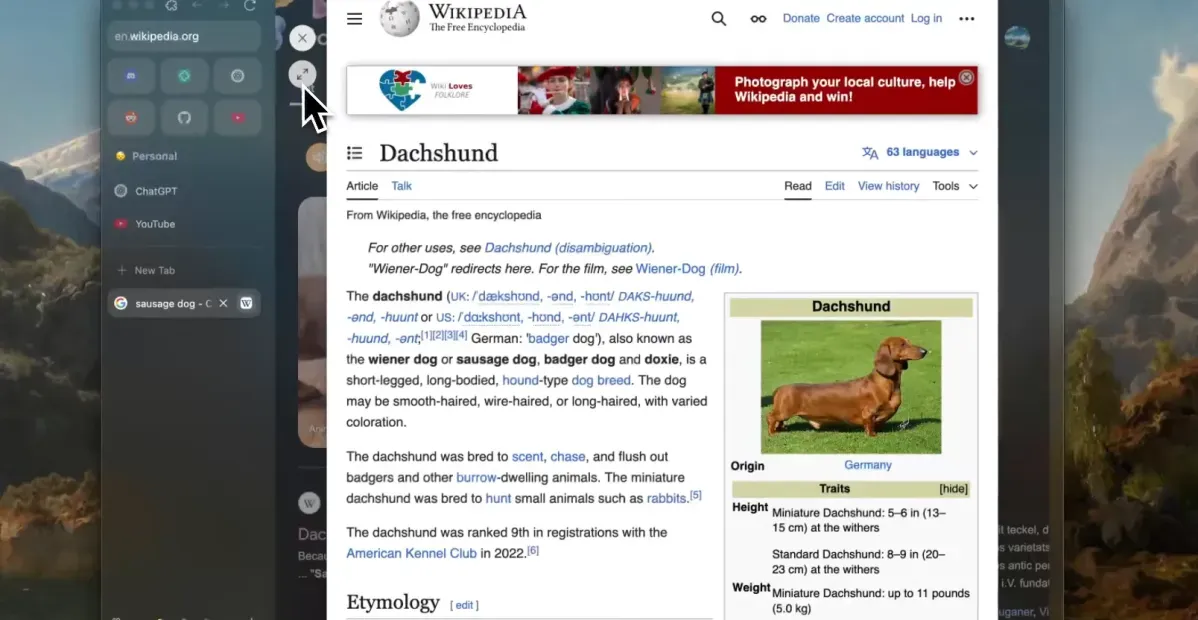
A popular browser's demise has left some users searching for an alternative solution. The news that Arc will officially cease to exist has been met with disappointment from those who had grown accustomed to its unique approach to browser design.
For one user, the loss of Arc was not a significant blow as they had already switched to Zen Browser several months prior. They claim that Zen offers everything needed in an alternative package and have found it to be a more than suitable replacement for Arc.
One of the key features of Zen is its similarity to Arc's interface. It has adopted many of the same design elements, including pinned sites, a tab bar on the left, and customizable mod capabilities. This visual similarity makes it easy for users to adjust to Zen without having to relearn how to navigate a new browser.
Zen's approach to user experience is notable in its lack of reliance on artificial intelligence (AI) and machine learning algorithms. Unlike some other browsers that have an AI-powered assistant running in the background, Zen focuses solely on providing a web browsing service without collecting or analyzing user data for personalization purposes.
The developers behind Zen emphasize their commitment to creating a browser that prioritizes user privacy above all else. With its minimalist approach and feature-rich design, Zen is positioning itself as a viable alternative to Arc and other browsers that have adopted more invasive AI-driven features.
The Zen browser is committed to prioritizing user experience over data collection, as evident in its straightforward mission statement.
This commitment to transparency resonates with users who value their online privacy, especially those who have grown wary of browsers that seem to exploit their personal data for profit.
Zen's open-source nature and reliance on volunteer contributions set it apart from commercial browser projects like Arc, which has faced criticism for its data-driven approach.
One key advantage of Zen is its flexibility when it comes to extensions - users can install not only Zen Mods but also Firefox add-ons, offering a wider range of customization options.
Zen's user interface is also designed with productivity in mind, featuring features such as links that open in a temporary "glance" view and a floating bar for launching new tabs or switching between existing ones.
One major limitation of Zen is its inability to play DRM-protected video content at this time, which means users cannot access popular streaming services such as Netflix and Spotify within the browser.
This restriction is due to the fact that Zen has yet to obtain a Widevine license from Google, a necessary step for supporting digital rights management. In the meantime, users who need to watch videos or listen to music will have to switch to other browsers like Chrome, which is not an ideal solution but works nonetheless.
Another area where Zen falls short is in its implementation of web MIDI support, which is currently lacking compared to Firefox's capabilities. As a result, users may find themselves toggling between Chrome and Zen depending on their specific needs, which can be inconvenient.
Despite these limitations, Zen has made significant strides since its early days and now offers a clean and intuitive interface that is well-suited for productivity tasks. Overall, while it may not offer the same level of features as some other browsers, Zen's strengths make it an attractive option for those looking for a streamlined browsing experience.
Facts based on reporting originally published by The Verge.
You may republish this story, in full or in part, if you credit Noti Group and link to it (licence CC BY 4.0). Photos are not included.