





Apple Updates Entry-Level MacBook Pro with M6 Chip but Lacks Design Upgrades
This year's update brings improved performance with Apple's new M6 chip, but the design itself remains largely unchanged.
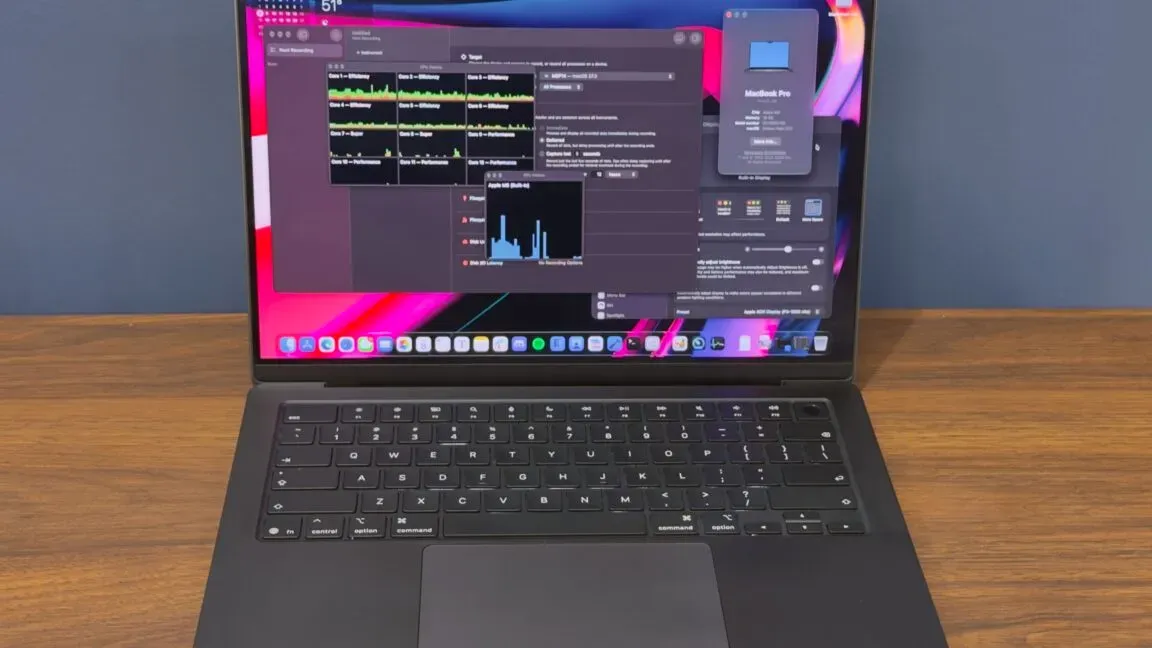
Apple's entry-level 14-inch MacBook Pro has long been stuck in an awkward position between the budget-friendly MacBook Air and the high-end models.
The laptop's design and features have always trailed behind its more expensive counterparts, even when it comes to the latest processor technology.
For example, last year's M5 refresh brought significant upgrades to the entry-level model, but still left it lagging in terms of specs like RAM and storage compared to the top-of-the-line MacBook Pros.
This year's update is a mixed bag - on one hand, it features Apple's new M6 chip, which promises improved performance.
However, the design itself remains largely unchanged from 2021, with no significant upgrades or innovations to speak of.
In contrast, the high-end "PROLED XDR" MacBook Pros have received numerous updates and refinements over the past year, including a sleeker design and cutting-edge display technology.
The entry-level model's starting price of $1,999 is objectively very high, especially considering it still lacks many of the features that make the higher-end models so compelling.
When compared to previous years' models, this year's entry-level MacBook Pro is actually more expensive than its predecessors, despite not offering as much in terms of upgrades or innovation.
The entry-level MacBook Pro still has its appeal, despite being more expensive than previous years' models. For those who want a high-refresh-rate display or the unique nano-texture finish, it remains the cheapest option from Apple.
One of the standout features of this laptop is its keyboard and trackpad, which remain excellent. They offer a comfortable typing experience and precise cursor control, making them a joy to use.
In addition to these essential components, the MacBook Pro also boasts a range of ports that set it apart from other laptops. On the right side, you'll find an SD card reader, a Thunderbolt 4 port, and an HDMI port, providing plenty of options for connecting peripherals and displays.
The left side of the laptop is home to MagSafe, two more Thunderbolt ports, and a headphone jack, offering even more flexibility when it comes to connectivity. While this may not be revolutionary, it's still a welcome feature that sets the MacBook Pro apart from other Apple laptops.
Compared to the M5 MacBook Pro, there are no significant changes to report on the design front. However, for those who may have missed it earlier, let's take a brief look at what makes this laptop different from the MacBook Air.
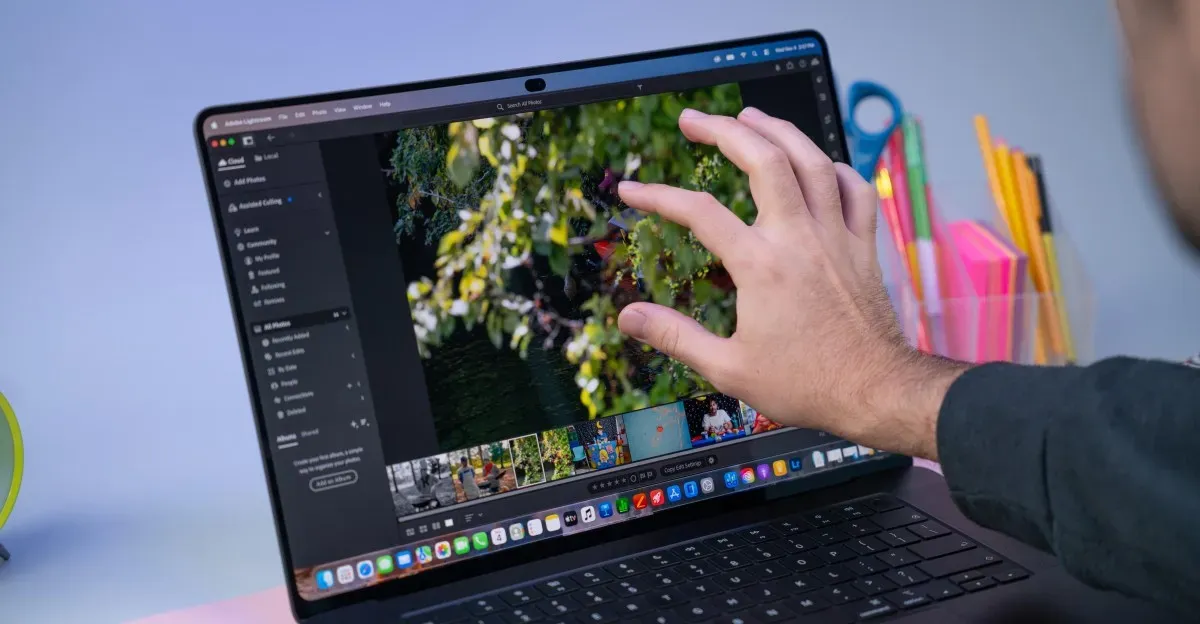
The current design of the MacBook Pro still looks and feels good, especially when paired with a nano-texture display. It's worth noting that it's thicker and heavier than both the 13- and 15-inch MacBook Air, but its added ports make up for some of these differences.
In terms of overall build quality, the MacBook Pro holds its own against other Apple laptops. Its thickness and weight are noticeable, but they're also a testament to its robust construction and feature set.
The MacBook Pro's design has been tweaked to accommodate various user needs. For those who rely on USB-C chargers, it is convenient that they can plug the laptop in from either side for charging purposes.
The keyboard and trackpad of the MacBook Pro are comparable to those found in the MacBook Air. However, a closer examination reveals that the Pro's typing experience feels slightly crisper and firmer than its counterpart.
One notable aspect of the MacBook Pro is its screen size, measuring 14.2 inches. This places it between the 13.6-inch and 15.3-inch displays found in other models. In practical terms, though, it seems closer to the smaller 13-inch option.
The display boasts several upgrades over the standard IPS laptop screens used in the MacBook Air. These include a mini LED panel with local dimming support for improved contrast and lower black levels. Additionally, it has a higher resolution, maximum SDR brightness of 1,000 nits, and HDR brightness of up to 1,600 nits.
While the screen is no longer at the forefront of Apple's technology offerings, it remains quite impressive nonetheless. It serves as a major selling point for the base MacBook Pro model, with its M6 chip being another significant advantage, although the MacBook Air will likely receive this upgrade in due course.
The use of OLED screens in flagship laptops by Apple may signal a shift towards trickle-down technology improvements across all models. This trend is evident in how older iPhone models eventually inherited features from their Pro counterparts.
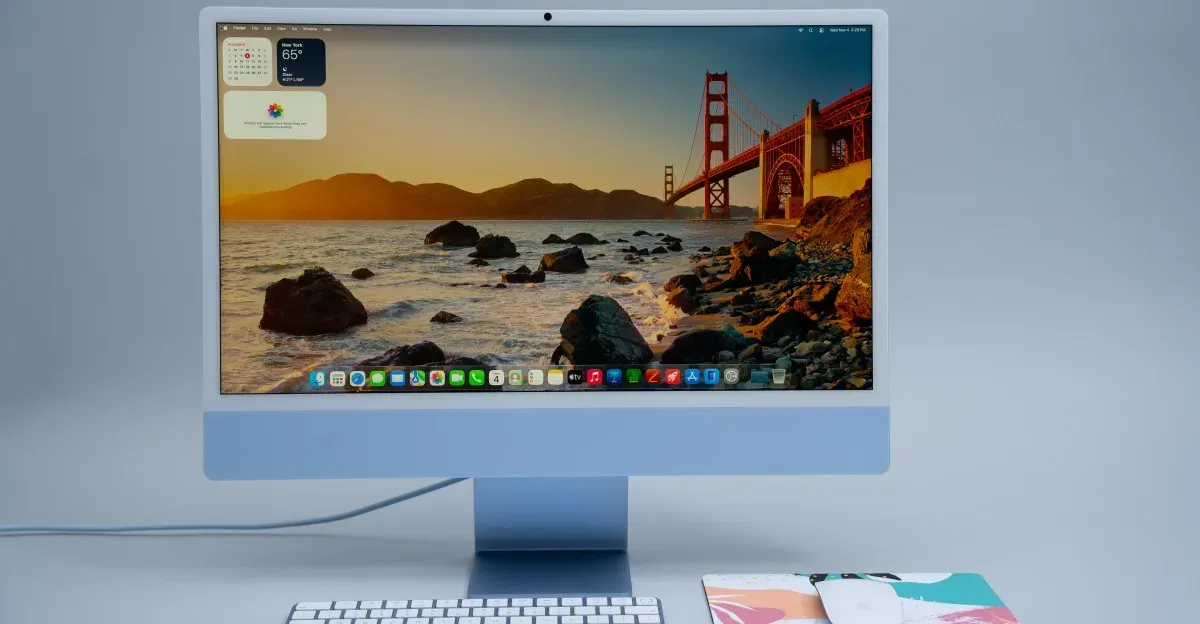
Apple's M6 processor performs similarly in the MacBook Pro as it did in other devices, such as the Mac mini and iMac, where it made its debut a couple of months ago.
The M6 chip's architecture has undergone significant changes compared to its predecessors. Gone are the four high-performance CPU cores and six high-efficiency CPU cores of the M4 and M5; in their place is a new configuration that includes two top-performance super cores, four performance cores, and six high-efficiency cores.
This change results in a total of 12 CPU cores, up from eight on the M5. The graphics processing unit (GPU) has also seen an increase in core count, now boasting 12 cores as opposed to the previous maximum of 10. Furthermore, the Neural Engine NPU has been upgraded with double the number of cores, reaching a total of 32.
The upgraded chip is expected to provide improved performance for tasks that rely heavily on the NPU. However, it's worth noting that RAM will remain a limiting factor in models that run well on an M6 chip. The increased core count and memory bandwidth should make a noticeable difference in these areas.
RAM configurations have remained unchanged from previous generations, with 16GB as the base option and upgrade options available for 24GB and 32GB. However, there is a notable distinction between the different RAM configurations when it comes to memory bandwidth.
For systems equipped with 16GB of RAM, memory bandwidth is capped at 153 GB/s, mirroring the M5's performance in this area. In contrast, systems with 24GB or 32GB of RAM enjoy increased memory bandwidth of up to 170 GB/s.
This disparity becomes apparent when examining benchmark charts for the MacBook Pro review unit. The system shipped with 16GB of RAM, which is less than the 24GB used in the M6 Mac mini. As a result, the MacBook Pro has access to approximately 90 percent of the memory bandwidth available on the Mac mini.
The M6 chip still offers significant performance improvements over its predecessor, the M5. Compared to last year's model, this year's 16GB version delivers around 7 percent and 15 percent better single- and multi-core CPU performance and between 20 and 30 percent better GPU performance in various tests.
The M6 MacBook Pro's performance upgrades are significant when compared to its predecessor, the M3 model. The new chip offers a substantial 30 percent boost in single-core CPU performance and between 40 and 60 percent faster multi-core CPU and graphics performance.
This means that users who have older MacBooks, such as those with M1 or M2 processors, will experience a noticeable improvement in day-to-day use. However, for those who already own an M4 or M5 MacBook Pro, the upgrade may not be as dramatic.
The fact that the basic MacBook Pro is equipped with an M6-generation chip while the higher-end models stick with the M5 processor creates some interesting performance dynamics. While the M5 Pro excels in multi-threaded CPU work due to its higher core count, the M6 still boasts the best single-core CPU performance and a larger Neural Engine.
As we wait for Apple to update other MacBooks to the M6 chip, the MacBook Pro is likely to remain the faster system, especially for sustained workloads. This is partly because it features active cooling fans, unlike the fanless MacBook Air which tends to throttle its performance more quickly to prevent overheating.
In terms of power consumption, recent updates have improved Apple's built-in powermetrics tool, allowing users to accurately measure their M6 MacBooks' energy usage. The good news is that the M6 is not only faster than its predecessor but also just as power-efficient, consuming the same amount of power under load.
The MacBook Pro's design has been updated relatively recently, with the 2021-era refresh arriving in 2023 on the M3 model. Given this history, it's possible that Apple will take another two years to introduce more exciting features like an OLED touchscreen to this particular laptop line.
Despite the lack of cutting-edge technology, the M6 MacBook Pro is still a solid upgrade for those who need a powerful and efficient machine for day-to-day tasks. However, users who crave the latest and greatest may find themselves waiting until future models arrive with more innovative features.
The new M6 MacBook Pro is an intriguing device, but it falls short in some key areas. Despite being a major upgrade, it still lacks the exciting features that many users crave. The OLED touchscreens, which were introduced on higher-end models last year, have yet to trickle down to lower price points, making the non-OLED versions seem somewhat redundant.
The M6 MacBook Pro's performance is respectable, but not spectacular, and its price tag reflects this. Compared to the 13- or 15-inch MacBook Air, this laptop offers more ports and a better screen, but at a significant cost premium. If you don't need the mandatory 1TB storage allotment, it's hard to justify the extra expense.
The ongoing RAM and storage shortages have had a significant impact on the tech industry, and Apple is no exception. This has disrupted normal technological progress, making it difficult for companies to innovate and release new products as planned. As a result, the M6 MacBook Pro feels like an awkwardly positioned product in the market.
In conclusion, while the M6 MacBook Pro is not a bad laptop, its limitations and high price make it a less appealing option than other MacBooks on the market.
Facts based on reporting originally published by Ars Technica.
You may republish this story, in full or in part, if you credit Noti Group and link to it (licence CC BY 4.0). Photos are not included.