






Air strike kills at least 72 gold mine workers in northern Sudan
An alleged air strike by the Egyptian military has killed at least 72 gold mine workers in the North Wadi area of Jabal al-Uqaydat.
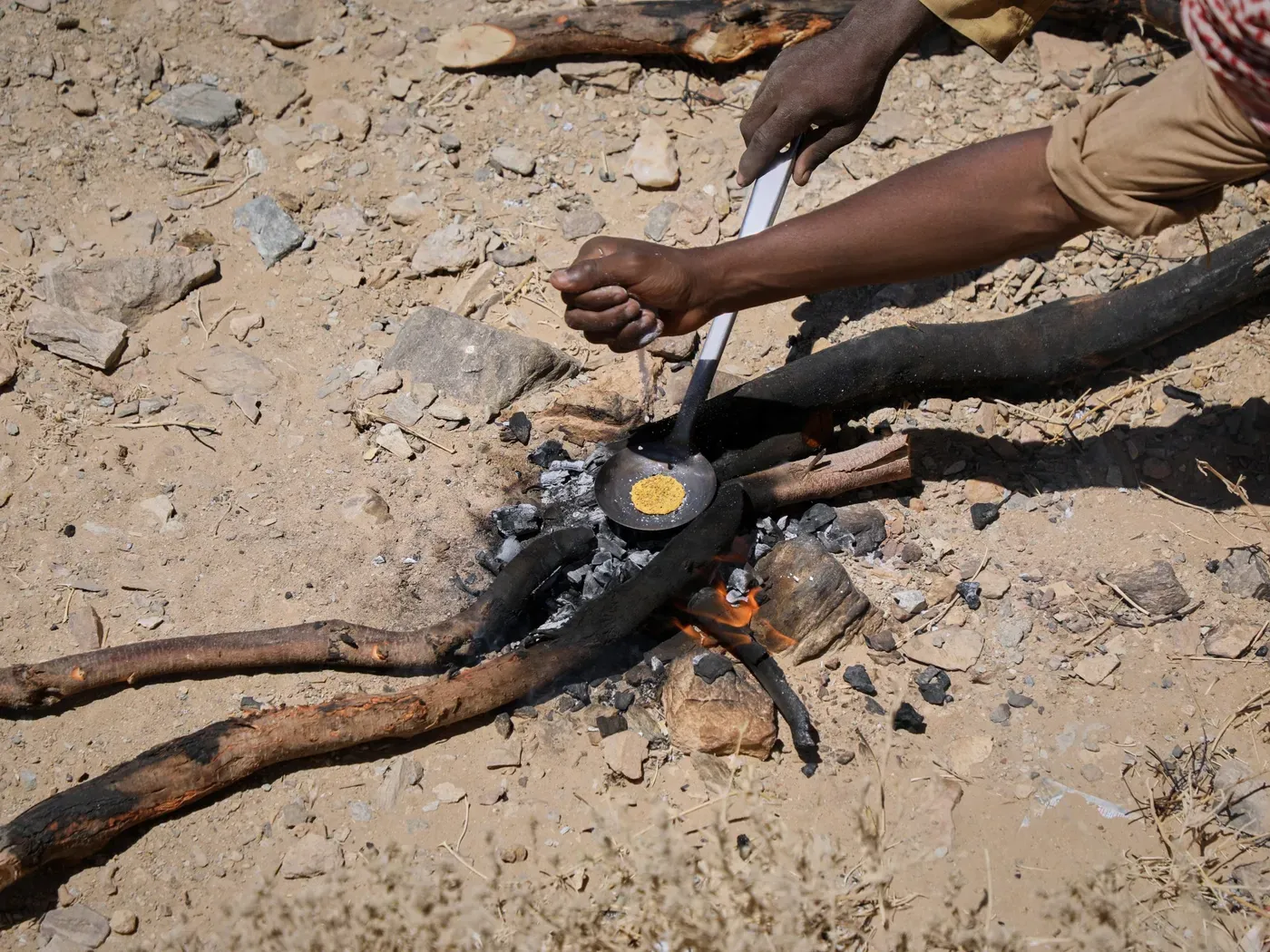
At least 72 gold mine workers have been killed in an alleged air strike on a mining site in northern Sudan, highlighting the severe security vacuum along the country's border with Egypt.
The incident occurred in the North Wadi area of Jabal al-Uqaydat, a mountainous region that forms part of the border between Sudan and Egypt. The Khartoum-based rights group Emergency Lawyers has accused the Egyptian military of targeting civilian miners in the strike.
Images shared by rights monitors appear to show chaotic scenes at the site, with bodies wrapped in funeral shrouds. The pictures convey the devastating impact of the alleged air strike on the mining community.
The border region between Sudan and Egypt has a long history of tensions that continue to this day. In 1899, the British and Egyptian governments designated the 22nd parallel north as the dividing boundary between the two countries on maps.
The absence of physical demarcation along this line has left the area open to dispute and lawlessness, exacerbated by its rich gold reserves. The situation has been described by experts as one of "historical negligence" that still persists today.
The situation on the Egypt-Sudan border remains volatile, with recent air strikes targeting artisan gold mines a stark reminder of the ongoing security concerns in the region.
In June, another gold mine in the Jabal al-Uqaydat region was hit by drones and artillery, resulting in loss of life. The Egyptian army claimed its operation took place within Egyptian territory, and 223 people were detained as part of the crackdown.
Egyptian security forces have been conducting sweeps along the border to combat what they perceive as illicit activities, including migration, drug smuggling, and mining. This operation is just one aspect of a broader effort to secure the border area.
The border tensions between Egypt and Sudan are rooted in historical disputes that date back to the colonial era. A 1899 agreement between Britain and Egypt defined the borders, but subsequent administrative decrees created ambiguity over control of certain areas.
A prime example of this dispute is the Halaib Triangle, a vast region on the Red Sea coast where Egyptian and Sudanese claims overlap. The triangle's status has been contested for over a century due to conflicting colonial-era maps, which have yet to be resolved.
The Bisharin tribe has long called the disputed triangle home, benefiting from its fertile lands and rich mineral deposits that include uranium, granite, copper, and gold.
Following clashes between Egyptian and Sudanese militaries on the border in the 1990s, Sudanese forces withdrew from the area in 2000. Since then, Cairo's control over the territory has been effective, despite the ongoing dispute over its status.
The current conflict in Sudan, which began in April 2023, has exacerbated tensions between Egypt and Sudan. The war pits the Sudanese Armed Forces (SAF) against the Rapid Support Forces (RSF), with both sides allegedly receiving support from external parties.
The devastating effects of the civil war have been felt across Sudan, where poverty has skyrocketed and economic collapse has led to a surge in unregulated gold mining activities on the border. Many desperate individuals are now turning to these hazardous methods due to the lack of central authority and lawlessness that pervades the region.
Experts like Osama Ahmed Eidrous believe that foreign powers have extended the conflict by backing rival factions, with Egypt's involvement being particularly suspect. According to Eidrous, Sudan is merely a battleground for larger regional interests rather than an internal civil war.
The recent air strikes on a gold mine in Sudan have highlighted the growing insecurity along the Egypt-Sudan border.
According to experts, the miners who were killed in the attacks posed no threat to neighboring countries, including Egypt. The workers were solely focused on extracting gold from the mine and had not been involved in any armed clashes or conflicts with either government.
The second attack on the mine, which resulted in the deaths of 85 people, has sparked outrage among locals, who feel that the central government's inability to control its borders is a major contributor to the ongoing instability in Sudan.
Facts based on reporting originally published by Al Jazeera.
You may republish this story, in full or in part, if you credit Noti Group and link to it (licence CC BY 4.0). Photos are not included.