






US Federal Judge Dismisses Donald Trump's $10 Billion Lawsuit Against The Wall Street Journal
A US federal judge has dismissed President Donald Trump's massive lawsuit against The Wall Street Journal, ruling that the suit was baseless and lacked merit.
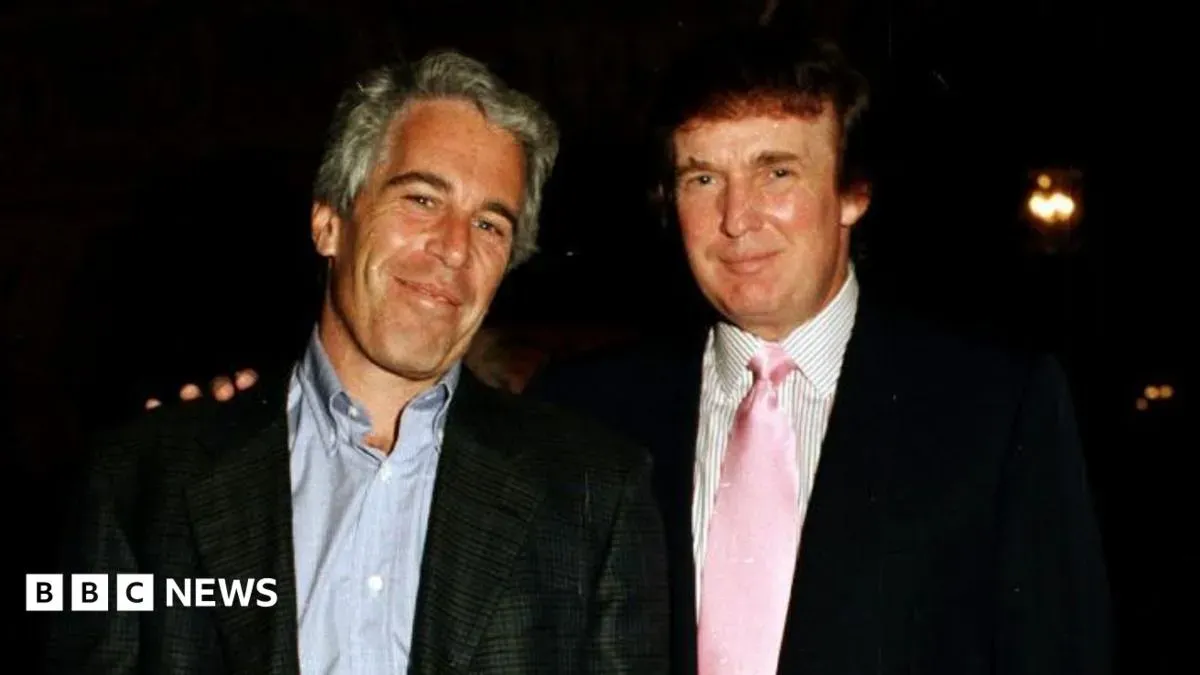
A US federal judge has dismissed President Donald Trump's massive lawsuit against The Wall Street Journal, ruling that the suit was baseless and lacked merit. This major development in a high-profile case came after Judge Darrin Gayles threw out the defamation lawsuit with prejudice, meaning it cannot be refilled.
The lawsuit, worth $10 billion, targeted Dow Jones, the parent company of The Wall Street Journal, and its leader Rupert Murdoch. Trump had sued them over an article published last year about a letter allegedly written by him to Jeffrey Epstein in 2003 as part of a birthday book for the financier. The letter included suggestive language and a drawing of a woman's body.
Trump has consistently denied writing or signing the letter, despite it bearing his name. This denial is at the center of the controversy, with Trump claiming that someone else must have written the letter using his name. However, this explanation was not enough to save the lawsuit from being dismissed by Judge Gayles.
The Wall Street Journal's story about Epstein's 50th birthday book and the alleged letter was a major topic of discussion over the summer, particularly as the Trump administration faced intense bipartisan criticism for its handling of documents related to Epstein. The judge's ruling has now brought an end to this particular lawsuit, but the case is likely to continue in some form.
The court's decision to dismiss Trump's lawsuit against the Wall Street Journal has brought an end to this particular case, but it is likely that the matter will continue in some form.
In his 20-page ruling, Judge Gayles acknowledged the newspaper's thorough and meticulous investigation into the story, describing it as a "thoughtful and detailed effort. He also noted that Trump's legal team struggled to identify any significant flaws in the paper's work, instead attempting to manufacture grounds for their argument. The judge's assessment suggests that the defendants had a strong foundation for their reporting.
To prevail in this case, Trump's lawyers would have needed to prove that the newspaper made defamatory statements with actual malice, a high bar to meet under libel laws. This requires demonstrating that the defendant either knew the statement was false or acted with reckless disregard for its truthfulness.
The judge highlighted that Trump's team failed to provide sufficient evidence of actual malice on the part of the defendants, which significantly undermines their case. The lawsuit claimed that the newspaper fabricated a story by featuring Trump's signature at the bottom of a letter obtained and released by them, which Trump alleged was fake.
The judge's decision in the lawsuit has been widely criticized by legal experts who argue that it would have had far-reaching implications for press freedom.
According to the Wall Street Journal investigation, the letter at the center of the controversy featured a crude drawing of a naked woman, alongside a typewritten message and a joking reference to enigmas never age".
The judge's ruling effectively upholds the principle that journalists can publish allegations against public figures without being liable for defamation.
Facts based on reporting originally published by BBC News World.
You may republish this story, in full or in part, if you credit Noti Group and link to it (licence CC BY 4.0). Photos are not included.