






SpaceX Shifts Focus Towards AI Compute Power Amid Mars Ambitions
The company plans to roll out up to 10 GW of computing capacity in 2027 while downplaying its long-term ambitions to send humans to Mars.
SpaceX is shifting its focus towards providing massive amounts of compute power for artificial intelligence applications, as revealed during an earnings call on Tuesday afternoon. The company's officials outlined plans to roll out up to 10 GW of computing capacity in 2027, all while downplaying the importance of their long-term ambitions to send humans to Mars.
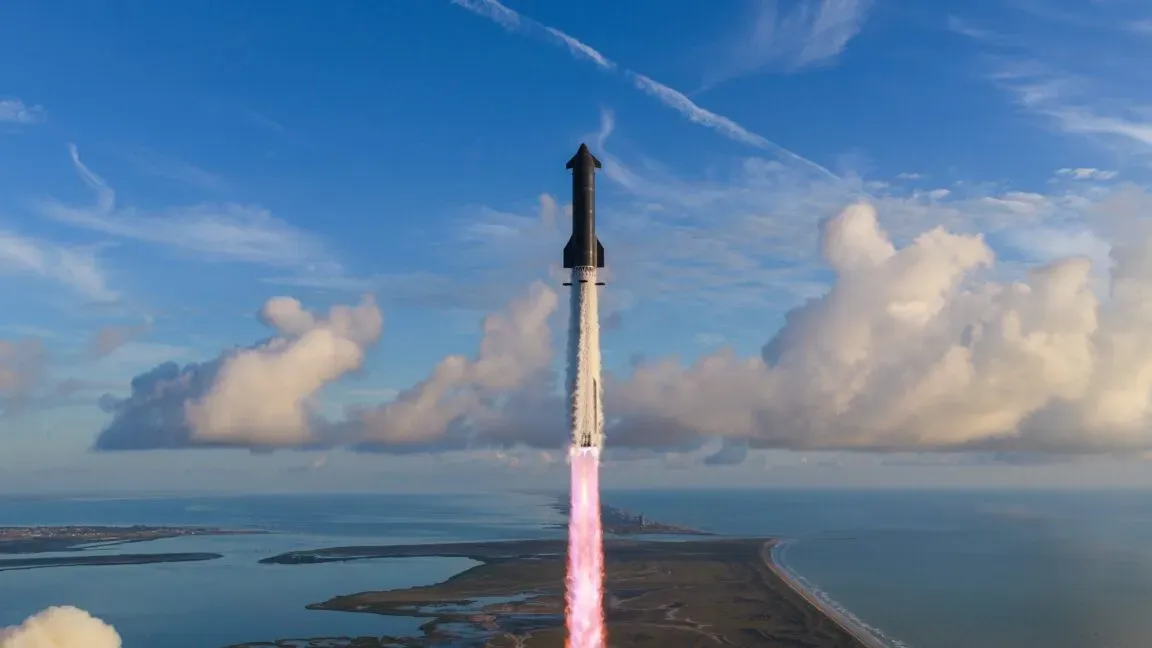
The Starship vehicle, initially intended to provide data services from space through its "Starmind constellation, still relies on a functioning rocket. Despite this, SpaceX has been gathering valuable data from recent test flights, including the 14th test flight of the massive Starship rocket, which took place just over three weeks ago.
The latest test flight was largely successful, but it did experience some issues with the Raptor rocket engine. Nonetheless, SpaceX officials believe they have enough information to attempt a significant feat on the next flight: catching both the Super Heavy first stage and the Starship upper stage in mid-air.
SpaceX's president and chief operating officer, Gwynne Shotwell, was present during the earnings call, where she discussed performance targets for the Starship vehicle. While details about these targets were not shared, it is clear that the company is working towards a significant milestone with its next flight.
The success of this catch would be a crucial step in SpaceX's efforts to increase the frequency of its launches and testing cadence. If achieved, it could pave the way for more rapid development and deployment of the Starship vehicle.
SpaceX is gearing up for its 15th test flight of the Starship vehicle, which is currently targeted for November at the company's launch site in South Texas, known as Starbase.
Regulatory hurdles are one of the main challenges that SpaceX needs to overcome before it can successfully attempt a tower catch and return to launch site. The Starship vehicle must be able to safely land over land, including northern Mexico, which is a complex task.
The company has made significant progress in engaging with regulatory bodies, particularly the FAA, and Shotwell expressed confidence that the license for Flight 15 will include return to launch site and tower catch capabilities for both stages of the Starship vehicle.
As SpaceX moves forward, it plans to attempt to refly a Starship upper stage early next year. This is an important step towards achieving rapid development and deployment of the Starship vehicle.
The company also aims to complete a long-delayed refueling test of Starship in 2027, which will involve transferring propellant between two Starships in low-Earth orbit.
SpaceX is prioritizing reaching a high flight cadence for its Starship program and pushing the boundaries of vehicle reuse to enable it. This effort aims to make launch more frequent and cost-effective by reusing the same spacecraft multiple times.
According to Elon Musk, SpaceX's CEO, the company expects Starship to reach a weekly flight cadence during the first half of 2027 and twice-weekly flights by the second half of the year. However, achieving this goal will depend on how much Starship can be reused without needing significant refurbishment between each flight.
Musk has outlined his vision for rapid reusability, where rockets are launched, landed, and refueled in a way that's comparable to commercial airliners. While this goal is ambitious, it's worth noting that no orbital rocket has achieved complete reusability before, so SpaceX's engineering team will face significant challenges.
To achieve its goals, SpaceX will focus on launching its own payloads with the Starship rocket in 2027, including Shotwell-mentioned Starlink V3 satellites. These are the second generation of mobile" satellites that provide direct-to-cell connectivity, as well as Starmind data center prototypes.
The company's plans for 2027 do not include addressing the controversy surrounding throttled Starlink capabilities for Ukraine in its war with Russia, which was a topic left unmentioned during the recent earnings call. By focusing on its own payloads and pushing reusability boundaries, SpaceX aims to increase launch efficiency and reduce costs.
Facts based on reporting originally published by Ars Technica.
You may republish this story, in full or in part, if you credit Noti Group and link to it (licence CC BY 4.0). Photos are not included.