






Meta Releases Frontier Model Muse Wonder with Improved AI Capabilities
Meta has released its first frontier model, a significant milestone in the company's pursuit of artificial intelligence. The new model, called Muse Wonder, marks a departure from earlier...
Meta has released its first frontier model, a significant milestone in the company's pursuit of artificial intelligence. The new model, called Muse Wonder, marks a departure from earlier attempts like Muse Spark, which prioritized low latency over raw processing power.
Muse Wonder and its larger variant, Muse Wonder Full, boast higher benchmark scores than their predecessors, suggesting they are capable of handling more complex tasks with greater ease. According to internal testing, the new models' performance rivals that of other leading AI systems, including Fable 5.1 and GPT-6 Astra.
Meta's Superintelligence Lab is touting the release as a major breakthrough, describing it as "the next step on our scaling ladder" towards achieving personal superintelligence. The company's blog post highlights the significance of this development, which represents a significant leap forward in AI capabilities.
The new models will be available through Meta's Model API, with pricing set at $4 per million input tokens and $20 per million output tokens, comparable to that of GPT-6 Sol or Opus 5.5.
Meta's new Muse Wonder model has been designed to retain and synthesize information given by users over a long period of time, a property known as "active memory. This capability is crucial for personal assistants that need to perform tasks continuously. The company has emphasized the importance of active memory in its latest model release. It enables these models to recall relevant information even after days or weeks have passed.
Meta has tested Muse Wonder's performance on the MemoryBench benchmark, which assesses continual learning and memory construction frameworks. According to the company's results, Muse Wonder outperforms other state-of-the-art models such as Fable, Opus, and Astra in this regard. This indicates that the new model is better equipped to handle complex tasks that require long-term memory retention.
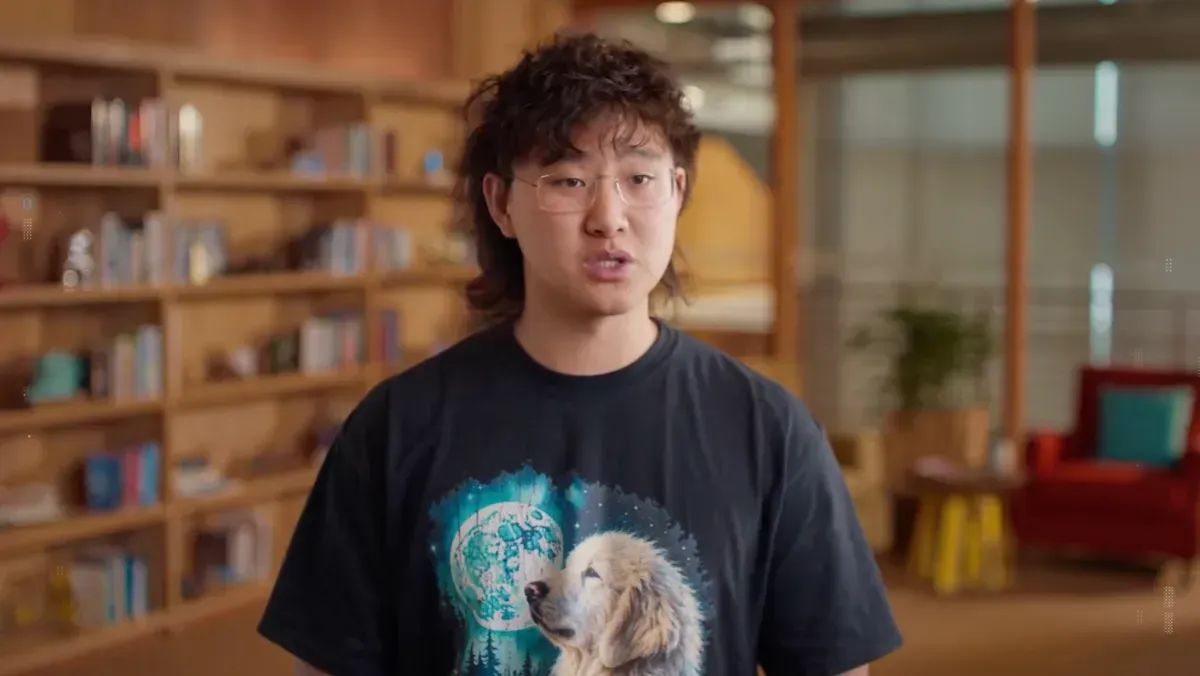
Research scientist Kavya Kopparapu highlighted the significance of active memory in a video accompanying the launch of Muse Wonder. We put a tremendous amount of effort into making sure your model can remember what's important to you over days, weeks, months, and beyond," she said. This emphasis on long-term memory retention reflects Meta's goal of developing personal assistants that can perform tasks effectively over an extended period.
Muse Wonder is the first state-of-the-art model release from Meta since its AI efforts were restructured by Scale AI founder Alexandr Wang last August. The company has released other models, including Muse Spark and the lightweight Muse agent, but has avoided releasing high-end models like this one until now.
Meta has finally released its first high-end brain-computer interface (BCI) model, Muse Wonder. This advanced device is designed to read brain signals with greater precision and accuracy than previous models, enabling users to control digital devices with their minds.
The release of Muse Wonder marks a significant milestone for Meta's BCI technology, which has been in development for several years. The company has released other models, including the lightweight Muse agent, but has avoided releasing high-end models like this one until now.
Muse Wonder is expected to be priced at a premium due to its advanced features and capabilities. This could make it more accessible to researchers and developers who require high-precision brain-computer interfaces for their work.
The release of Muse Wonder is seen as a major step forward in the development of BCI technology, which has the potential to revolutionize the way people interact with digital devices.
Facts based on reporting originally published by TechCrunch.
You may republish this story, in full or in part, if you credit Noti Group and link to it (licence CC BY 4.0). Photos are not included.