





Federal Communications Commission Chairman Brendan Carr Issues Warning on Airing Fake Polls
Brendan Carr has warned broadcasters against airing fake polls without proper context.
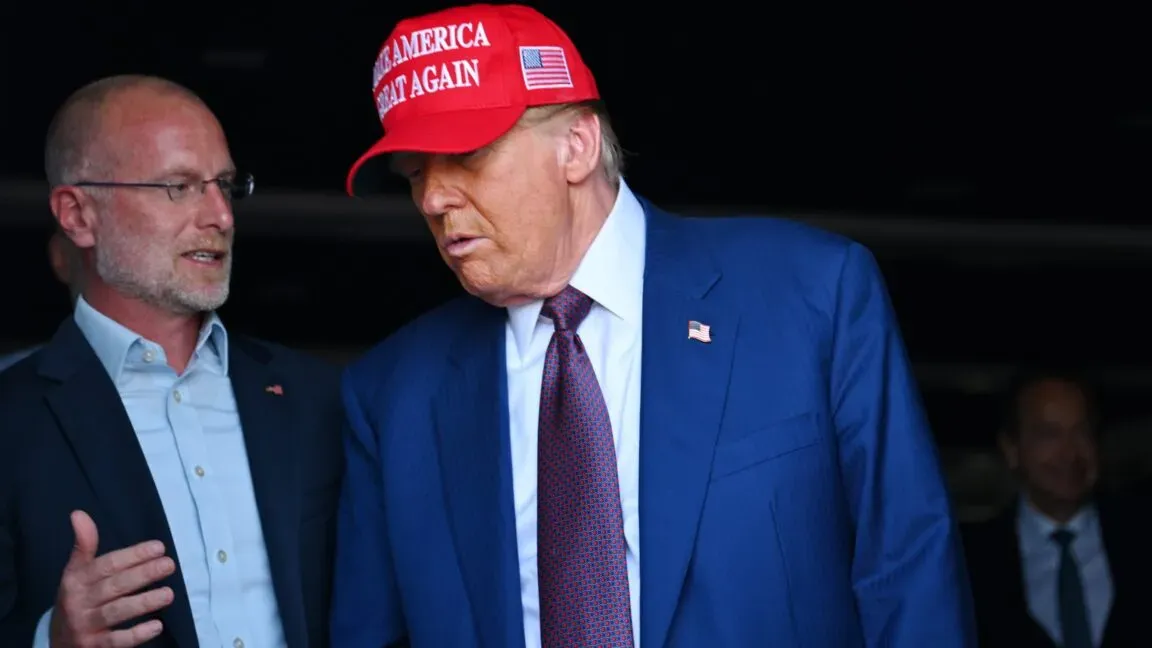
Federal Communications Commission Chairman Brendan Carr issued a warning to broadcasters today regarding the airing of "fake polls. This move comes as part of President Trump's ongoing criticism of the news media for allegedly presenting inaccurate or misleading election polls.
Carr's post on X emphasized that many journalists and broadcasters have been amplifying or airing these polls without properly informing their audiences about their lack of scientific basis. He advised broadcasters to avoid engaging in news distortions by refraining from airing such polls, which would violate their regulatory obligations.
The warning also highlighted the importance of providing viewers with additional context and information about polls that have been covered. This is particularly relevant given recent incidents where polling outfits have been exposed as hoaxes. News outlets have reported on these cases, often providing the necessary context that Carr said is needed.
Carr's post did not specifically mention any fake polls or broadcasters that aired them, leaving room for interpretation and potentially serving a broader agenda. This vagueness may be seen as beneficial to his and Trump's ongoing efforts to address their grievances against the news media.
In August, President Trump called on the FCC to take action against an NBC journalist who commented on mixed results in election endorsements. Trump also expressed frustration with THE FAKE POLLS USED BY OUR CROOKED MEDIA, setting the stage for Carr's warning today and further fueling the debate about the role of poll reporting in the media.
FCC Chair Brendan Carr's latest warning to broadcasters suggests that he is intensifying his efforts to regulate media coverage of political polls. This move comes as no surprise given Carr's history of threatening broadcast licenses and launching investigations into news companies that have drawn the ire of President Trump.
A group of former FCC chairs and officials has condemned Carr's actions, describing them as an attempt to censor and chill the speech of broadcasters. The statement, attributed to Tom Wheeler, a Democrat, and Mark Fowler, a Republican, among others, emphasizes that good-faith reporting on public polls is not a violation of FCC rules.
The former chairs and officials pointed out that the FCC has no authority to dictate editorial decisions, including those related to reporting on fabricated political polling. They argue that broadcasters should be free to report on public polls without fear of retribution from the agency.
Carr's actions have sparked concerns about the role of the FCC in regulating media coverage of politics and the impact on freedom of speech. The debate surrounding poll reporting has been ongoing, with some arguing that it is essential for informed decision-making during elections.
The controversy surrounding poll reporting has taken a new turn, with an entity called Wedgewood Polls claiming to have intentionally published fabricated polling data. The aim of this experiment was reportedly to test whether media outlets and aggregators would report on unverified data without scrutinizing its source or methodology.
According to Wedgewood Polls, despite lacking any formal credentials or credible backing, their releases were still added to major polling aggregators such as The New York Times, FiftyPlusOne, and VoteHub. This has raised concerns about the vetting process of these platforms and the potential for misinformation to spread.
The experiment's findings suggest that Wedgewood Polls' fabricated data was indeed reported on by various media outlets, highlighting a worrying lack of scrutiny in the way polling information is disseminated. It remains unclear what implications this may have for public discourse during elections, where accurate poll reporting can play a crucial role.
As the debate around poll reporting continues, it appears that some entities are pushing the boundaries of what constitutes credible information. The consequences of such actions remain to be seen, but they certainly underscore the need for greater transparency and accountability in the way polling data is presented to the public.
The controversy surrounding Wedgewood Polls has taken a new turn as multiple poll aggregators come under scrutiny for their handling of the firm's data. The aggregators in question have claimed that they conducted thorough vetting procedures before including Wedgewood's polls in their results.
FiftyPlusOne, one of the aggregators involved, claims to have been preparing an expose on Wedgewood's alleged fraud when the pollster suddenly posted a statement admitting to fabricating data. The firm had previously stated that its data faced no scrutiny from news organizations.
The New York Times and VoteHub, two other prominent poll aggregators, also claim to have conducted some level of vetting before using Wedgewood's polls. However, their methods and findings are being questioned in light of Wedgewood's admission.
FiftyPlusOne has released a statement defending its actions, stating that it reached out to Wedgewood to confirm the firm's credentials and methodology. The aggregator claims to have been given two names - Jack Sims and Andrew Prater - which were later independently verified as legitimate polling industry professionals.
The fact that Wedgewood was able to operate for so long without being detected raises questions about the effectiveness of vetting procedures in place at these poll aggregators. It also highlights the need for greater transparency and accountability in the way polling data is presented to the public.
Wedgewood's collection of money from donors to conduct crowd-funded polls adds another layer of complexity to the situation, as does its sharing of raw survey data with FiftyPlusOne on October 15, 2026. This data has since been confirmed to be fraudulent.
The exact nature and extent of Wedgewood's fraud are still unclear, but it is evident that the firm's actions have had a significant impact on the public's perception of polling data and its reliability.
The controversy surrounding Wedgewood's polling data has led to a re-evaluation of its credibility and reliability.
VoteHub, a platform that aggregates and displays polling data, has taken steps to address concerns about Wedgewood's methods. According to VoteHub's Head of Data Science, Zachary Donnini, the firm had assigned Wedgewood a D grade" after reviewing their practices and included their polls on their website.
The New York Times has also updated its polling page with a statement regarding Wedgewood. The newspaper revealed that it had sent a series of questions to new pollsters, including those from Wedgewood, about their methodologies and funding sources. While Wedgewood responded to these inquiries, the NYT only used 15 of their polls in state and congressional-district races.
Nate Silver's polling site has also removed Wedgewood's data, citing concerns over its accuracy. Silver noted that Wedgewood's polls tended to be about 1 percentage point more favorable for Democrats than other polls. This move underscores the growing scrutiny of polling firms and their methods in the wake of several high-profile incidents of alleged misconduct.
Facts based on reporting originally published by Ars Technica.
You may republish this story, in full or in part, if you credit Noti Group and link to it (licence CC BY 4.0). Photos are not included.