




Champions League Sees Record-Breaking Number of Goals
The current Champions League format has delivered a record-breaking number of goals in its first season, averaging 4.16 per game.
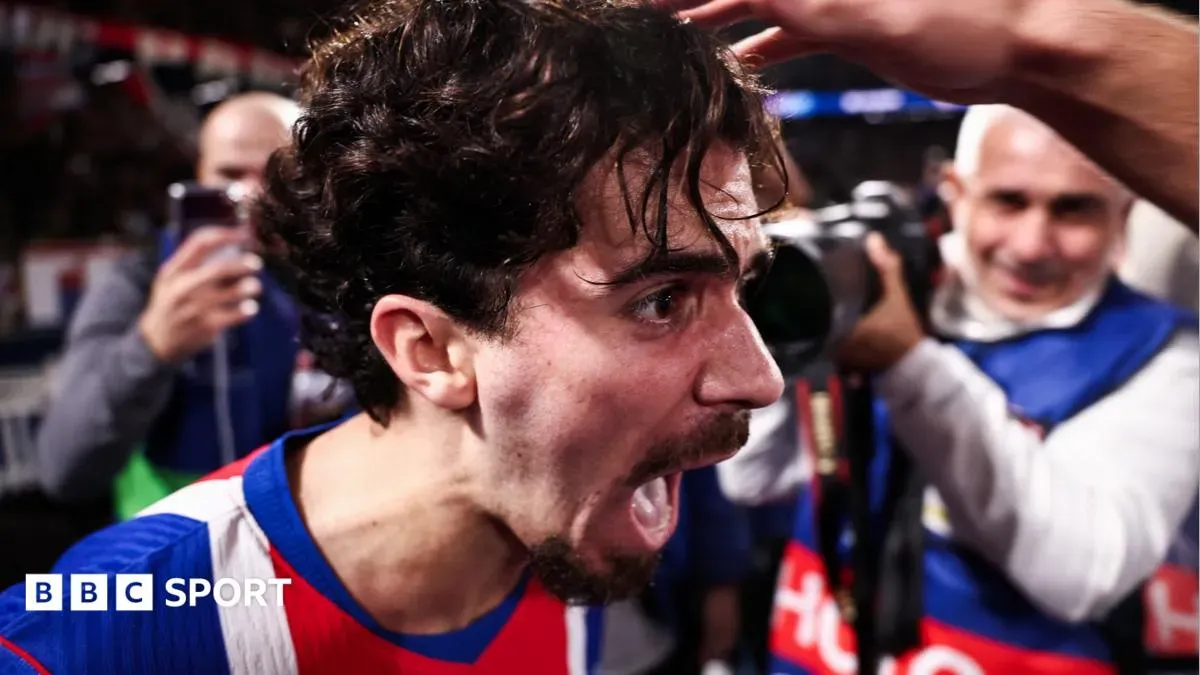
The current Champions League format has delivered a record-breaking number of goals in its first season, exceeding expectations in terms of entertainment value.
A total of 187 goals have been scored so far, averaging 4.16 per game - the highest rate in Champions League history. This surge in goal-scoring is part of an upward trend that began over the past two seasons.
Former Manchester United and England winger Ashley Young described the number of goals as "phenomenal, highlighting the clinical nature of attacking play. Former Liverpool defender Stephen Warnock also praised the volume of goals, calling it incredible.
The current rate of 4.16 goals per game is not only a record in the Champions League but also ranks third in European Cup history, behind only the 1959-60 and 1955-56 seasons which saw averages of 4.19 and 4.38 respectively.
The second round of matches in the Champions League has seen an unprecedented level of goal-scoring, with a record-breaking total of 78 goals scored across Tuesday and Wednesday last week.
This achievement surpasses even the high-scoring matchday one this season, which saw 69 goals, previously the second-highest tally since the introduction of the new league phase in 2024-25. The current goal-scoring frenzy is generating immense excitement among fans and sparking debate about its causes.
The revamped format of the Champions League, introduced last year, has been a subject of intense scrutiny, with many questioning whether it leads to more entertainment at the expense of quality. The changes were implemented in response to Uefa's plans announced in 2021.
The history of the Champions League is marked by significant format changes over the years, from its inception as a six-team invitational tournament in 1955-56 to its current configuration with a group stage followed by a knockout phase.
The revamped group stage of the Champions League has introduced a new level of unpredictability, with more teams competing in a 36-team league phase.
Each team now plays eight one-off fixtures instead of six games against three teams, resulting in a longer and potentially more exciting campaign for fans. The top two sides from each group previously qualified for the last 16, but this season's format changes have increased the number of qualifying spots to eight.
The knockout stages are still on the horizon, but now teams will be competing for those coveted spots through a different process. Those placed ninth to 24th in the league phase enter a two-legged play-off stage, while the bottom eight teams are eliminated from the competition altogether.
This new format has sparked debate about the level of jeopardy in the competition, with some arguing that it encourages teams to play more expansively and take risks on the pitch. With no real threat of elimination until after eight matches, teams may feel less pressure to secure wins.
As one football writer noted, The entertainment has gone up, although I'm not sure the quality has gone up."
The Champions League has seen an increase in entertainment value this season, but some fans are left wondering about the quality of play. This is partly due to the early elimination of several top teams, which means that matches often lack the tension and suspense that comes with a competitive contest.
However, despite the lack of jeopardy, the goal-scoring extravaganza has continued unabated, setting a new record for the competition. The entertainment factor has undoubtedly been boosted by this trend, but it remains to be seen whether it translates into improved play on the pitch.
Ultimately, while the Champions League's entertainment value has certainly increased, some fans may still question the overall quality of the game, and whether the emphasis on goalscoring is a positive development for the sport.
Facts based on reporting originally published by BBC Sport.
You may republish this story, in full or in part, if you credit Noti Group and link to it (licence CC BY 4.0). Photos are not included.