




Aaron Sorkin's The Social Reckoning Set for October Release
The film is a follow-up to Sorkin's highly anticipated The Social Network, coinciding with the Broadway revival of A Few Good Men.
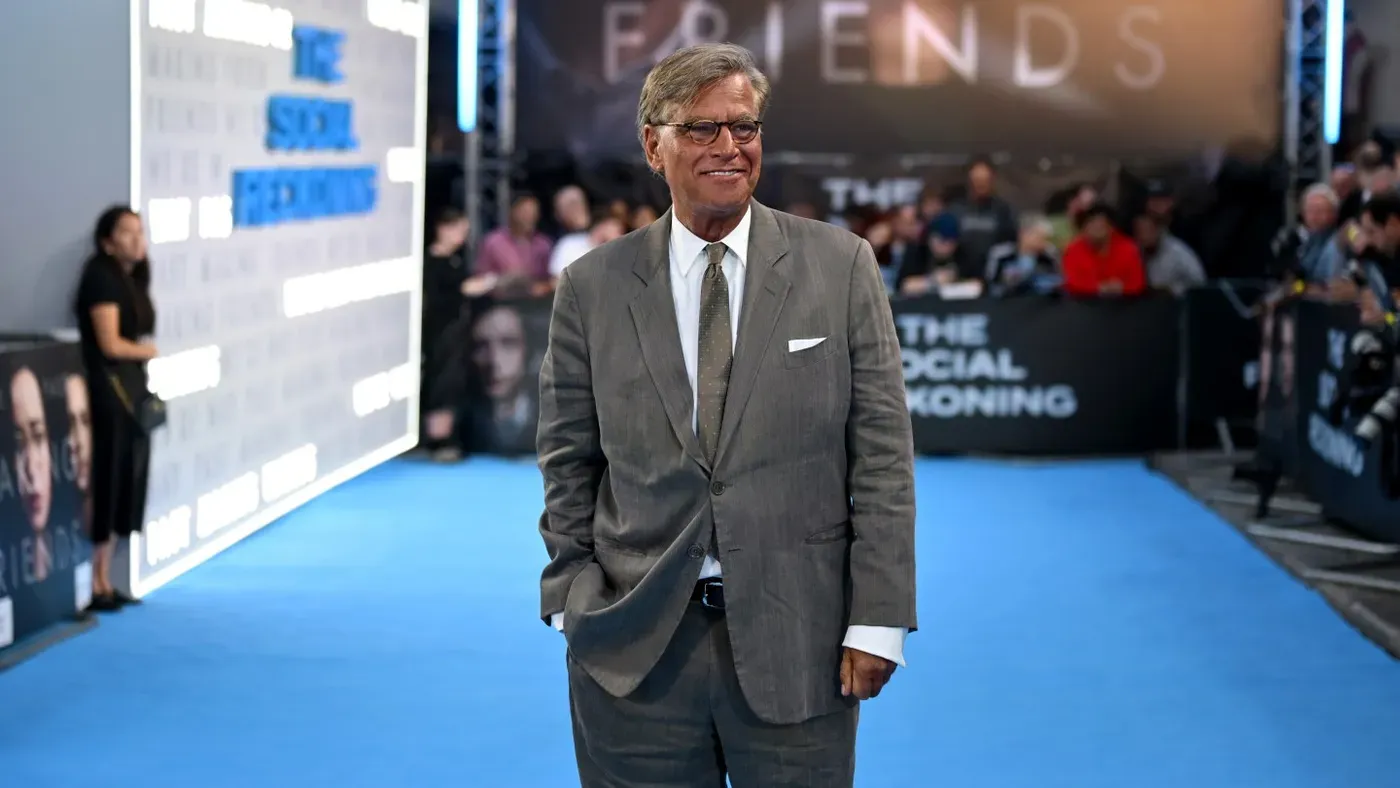
Aaron Sorkin's highly anticipated follow-up to The Social Network is set for release on October 9, coinciding with the start of the Broadway revival of A Few Good Men.
The theatrical release and simultaneous production of the play are a double-edged sword for Sorkin, who acknowledges the added pressure this brings. However, he seems to be taking it in stride, saying "it's a pretty glamorous problem to have" when discussing the back-to-back premieres.
Sorkin is revisiting A Few Good Men, a military court drama that originally premiered on Broadway over three decades ago. He penned the play while working as a theater bartender, using cocktail napkins as his writing surface. The production brings together familiar faces from the original show, including Bradley Whitford and Krysta Rodriguez.
The revival of A Few Good Men marks a return to Sorkin's roots in theater, where he launched his career with this very play. It is a testament to the enduring impact of his work and its ability to continue resonating with audiences today.
In preparation for The Social Reckoning, Sorkin has faced unique challenges due to the subject matter. He reveals that Sony required a high level of security around the film, limiting the number of people who have seen it so far.
The film tells the true story of Facebook whistleblower Frances Haugen and Wall Street Journal reporter Jeff Horwitz, with Mikey Madison and Jeremy White set to portray them in the movie. Despite the limited access to the film, Sorkin expresses confidence in its quality, saying he's "very proud of The Social Reckoning.
Sorkin's initial reluctance to write a follow-up to The Social Network was due in part to concerns about being typecast as a writer who churns out sequels, much like the infamous Jaws 2. However, he couldn't shake off the feeling that there was still more to explore within the story of Facebook's rise and fall.
The turning point came when Sorkin spent years researching and speaking with Haugen and Horwitz about their exposé on Meta's alleged mishandling of its platforms' impact on teenagers and misinformation. Their conversations sparked an idea in Sorkin, who began to see a story emerge from the shadows.
Sorkin has revealed that he asked Horwitz what triggered Haugen's transformation from devoted Facebook employee to whistleblower. The answer came when Horwitz mentioned that Haugen had a friend who was radicalized by the social media platform and she wanted to investigate further.
This pivotal moment allowed Sorkin to envision the first scene of his new film, which is always essential for him to start working on a project. He described it as an epic period where he faced writer's block, but this new idea reignited his passion and drive to write.
As Sorkin delves into the story, he draws parallels between his writing process and navigating through dark woods with a flashlight. The beam of light only illuminates what is directly ahead, but as one progresses, their vision expands, revealing more of the path.
Sorkin's eagerness to start working on this new project was palpable, especially considering his prolonged period of writer's block. His confidence in the story's potential is evident, and he seems undaunted by the pressure that comes with following up a critically acclaimed film like The Social Network.
Sorkin's Broadway revival of A Few Good Men is a departure from his current focus on The Social Network follow-up, but one that holds personal significance for him. This time around, he was approached by The Lincoln Center and Tony Award-winning director Michael Arden, which likely played a role in his decision to take on the project.
The play's themes of military justice and the consequences of following orders are particularly timely given the current political climate. Sorkin has noted that the revived production is an opportunity for him to revisit familiar material with fresh eyes. He has also expressed enthusiasm about being able to do a little polish on the original script.
Sorkin's initial experience writing A Few Good Men was marked by humble beginnings, as he penned the play while working as a bartender at the Palace Theater during the Broadway run of La Cage Aux Folles. This unusual setting likely influenced his creative process, and the plot was largely developed in short bursts between serving drinks to patrons.
Sorkin has spoken fondly about his memories of writing A Few Good Men, but also acknowledges that it's not a work he looks back on with great nostalgia. He humorously referred to it as looking at old high school yearbook pictures, a reminder that things often appear more impressive in hindsight than they actually were.
The play was inspired by a conversation Sorkin had with his sister, who was visiting Guantanamo Bay and dealing with the aftermath of a code red. While he did conduct further research on this case, the rest of the story is largely fictionalized. This blend of fact and fiction likely presented challenges for Sorkin as a writer.
The revival's focus on military justice and the consequences of following orders will undoubtedly provide an interesting contrast to The Social Network follow-up, which has been in development for some time.
The revival of A Few Good Men is set to bring a fresh perspective to the story, as Bradley Whitford takes on the role of Col. Jessup, the commanding officer at the center of the drama.
This marks a significant departure for Whitford, who has previously played the lead role of Kaffee in the original production, where he made his big break alongside Aaron Sorkin's work. The experience of playing Kaffee had a lasting impact on Whitford, who recalls standing backstage before his first performance and feeling overwhelmed by the gravity of the character's words.
In the revival, Whitford is now tasked with bringing Col. Jessup to life, a role that was famously portrayed by Jack Nicholson in the film adaptation. However, Whitford has chosen not to study Nicholson's iconic performance, instead developing his own interpretation of the character based on his experiences playing opposite several Jessups during the original production.
Whitford's take on Col. Jessup is expected to be a nuanced one, with the actor describing him as a complex figure who defies easy categorization. He notes that, in his mind, Jessup often takes on the characteristics of a Democrat who is about to trash the classroom, rather than the stereotypical Republican.
Whitford's portrayal of an antagonist role is not new, having appeared in shows such as The Handmaid's Tale and Get Out. However, he insists that this is not a deliberate choice, and that his ability to play complex characters is simply a skill that has developed over time.
When asked about how he approaches playing such dark roles, Whitford humorously notes that while he may struggle with everyday tasks like sending food back in a restaurant, he has no problem bringing monstrous characters to life on stage.
Sorkin has revealed that his approach to refining A Few Good Men before its preview involved making some adjustments to the dialogue and plot points to make them clearer for the audience.
This process allowed him to give the cast and crew the space they needed to delve deeper into their characters and explore the themes of the play without interference from the writer.
As rehearsals progressed, Sorkin emphasized that he wants the production team to view this iteration as a new play, rather than a rehashing of his previous work. This openness to changes and suggestions is reflected in his willingness to rewrite scenes if they're not working during previews.
The cast has spoken highly of Sorkin's collaborative approach, with Whitford recalling that he advised the actors to treat Sorkin like any other writer, rather than being intimidated by his reputation.
Sorkin's comments on his own writing style suggest that he draws inspiration from a romantic" idea about how institutions should function in American democracy. This vision is tempered by an acknowledgment of their complexities and flaws.
While the play's themes are likely to resonate with audiences given its timing, Sorkin hopes that viewers will also be entertained by the production itself, rather than just focusing on the message it conveys.
To create an engaging and thought-provoking theatrical experience, Aaron Sorkin emphasizes that audiences must consider the authority figures behind a particular action or decision. He highlights how individuals in positions of power, such as military personnel, tend to follow orders without questioning them.
Sorkin's approach underscores the importance of examining the motivations and intentions of those who hold influence over others.
Facts based on reporting originally published by The Hollywood Reporter.
You may republish this story, in full or in part, if you credit Noti Group and link to it (licence CC BY 4.0). Photos are not included.