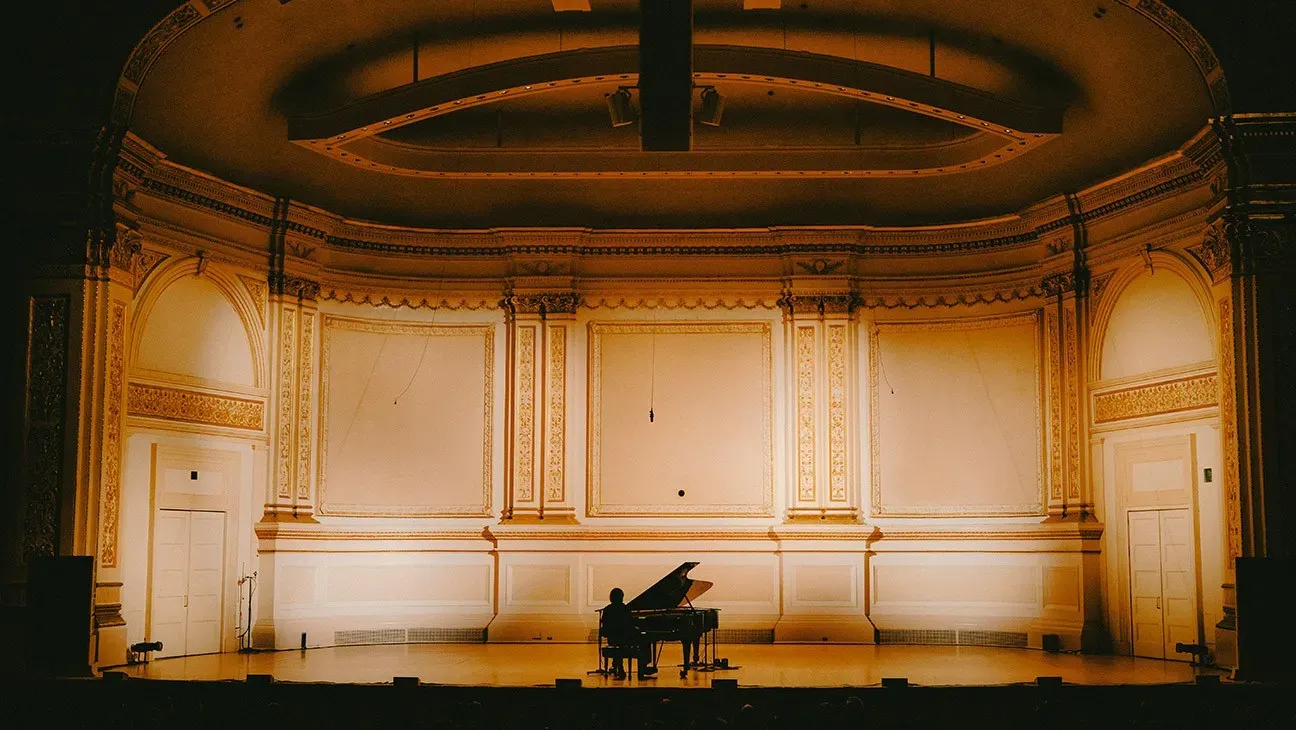







Wolf Biermann Documentary Released to Critical Acclaim
A new documentary film about Wolf Biermann, directed by Jens Meurer, offers a cinematic reflection on 20th-century history in Germany and Europe.
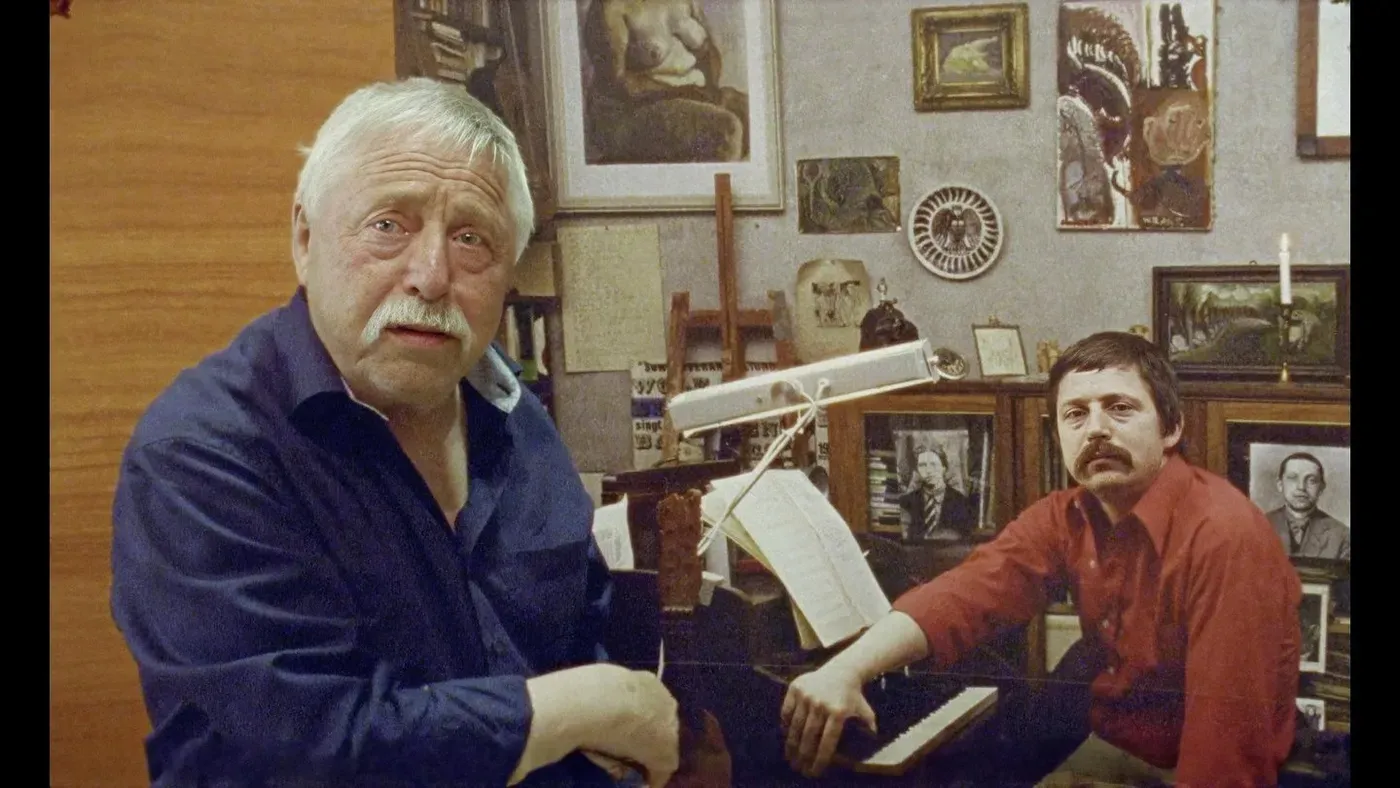
A new documentary film about Wolf Biermann, the outspoken German singer-songwriter and poet, has been released to critical acclaim. Directed by Jens Meurer, 'Biermann' offers a cinematic reflection on 20th-century history in Germany, Europe, and beyond.
Born in Hamburg in 1936, Biermann's life was marked by tragedy when his Jewish communist father was killed by the Nazis at Auschwitz. This experience had a profound impact on Biermann, shaping his desire to fight against injustice and promote socialism.
Biermann rose to prominence as a critical voice in East Germany, but his fearless lyrics and performances earned him the wrath of the regime. He was banned from performing in public for 12 years, forced instead to play concerts in his living room. Even after being allowed to perform abroad, Biermann faced further restrictions when he played a concert in West Germany.
The GDR regime's attempts to silence Biermann ultimately failed, and the singer-songwriter continued to speak out against injustice. His story is now told through 'Biermann', which features interviews with his contemporaries, including actor Armin Mueller-Stahl.
Mueller-Stahl praises Biermann's "fire of rebellion, but also acknowledges that he can be seen as a visible egomaniac. This complex portrayal is reflective of the multifaceted nature of Biermann's life and work.
Shot on 16mm film, 'Biermann' offers an intimate look at the singer-songwriter's everyday life, performances, and interactions with others. The documentary also features archive footage that provides a historical context for Biermann's experiences.
Throughout the documentary, Biermann himself narrates his story, sharing insights into his motivations and inspirations. His life has been marked by both triumphs and setbacks, but one constant is his commitment to speaking out against injustice.
The documentary film Biermann is set to screen at the 64th Vienna International Film Festival, running through November 3. The festival will showcase the film on October 26 and 27, following its recent world premiere at FilmFest Hamburg.
Majestic Filmverleih has acquired distribution rights for Germany, while Filmladen will handle releases in Austria. The documentary was produced by a collaborative effort between Instant Film, Zeitsprung Pictures, Clouds Hill, and zero fiction production.
The film's narrative is penned by Dirk Kämper, Meurer, and Pamela Biermann, who also appears in the documentary alongside her husband Wolf Biermann. Cinematography was handled by Sebastian Ganschow and Bernd Fischer, with editing credits going to Antje Lass, Zenon Kristen, and Grete Jentzen.
Meurer spoke to this publication about how Biermann's story transcends cultural boundaries, relating the songwriter's experiences to the Oscar-winning film The Lives of Others. He noted that the premise of the latter is based on Biermann's own situation, with his apartment being the most surveilled by the Stasi secret police in East Germany.
Meurer attributed the film's international appeal to its timely and universal themes. The original intention was to tell a long-form story about Biermann's life, but as production progressed, it became clear that the documentary is relevant to contemporary issues.
The film's message of standing up against power and speaking out for freedom resonates with audiences worldwide. Meurer emphasized that this is not just a German or European story, but one that transcends borders and speaks to people globally.
Biermann's commitment to expressing his opposition through humor and bravery makes him an inspiring figure, particularly in today's climate.
The documentary Biermann shines a light on the life and career of a German singer who used his music as a powerful tool to challenge the status quo during the country's tumultuous past.
One of the key takeaways from the film is the way Biermann's irreverent humor and unwavering commitment to speaking truth to power continue to resonate with audiences today, particularly in an era marked by divisive politics and growing intolerance for dissenting voices.
The documentary features a scene where Biermann returns to East Germany after the fall of the Berlin Wall and delivers a stark critique of his countrymen's failure to speak out against the oppressive regime, underscoring the uncomfortable truth that even in times of great change, there is often still much work to be done.
Biermann's unapologetic style has undoubtedly made him many enemies over the years, but it has also earned him a loyal following among those who appreciate his unwavering authenticity and willingness to challenge the powers that be.
In fact, Biermann's music continues to speak to multiple generations of Germans, with younger viewers discovering his work for the first time while older audiences are reminded of the significant impact he had on their own lives during a pivotal moment in history.
The comparison to Bob Dylan is apt, as writer Barbara Honigmann once described Biermann as the Bob Dylan of Germany due to his status as a leading voice for those seeking change and freedom from oppression during the 1970s.
Biermann's music was not just a reflection of his own experiences but also a powerful expression of the hopes and aspirations of an entire generation, with songs like Ermutigung (Encouragement) continuing to inspire audiences today.
The director of the documentary about Biermann, a German political singer, met him through an introduction arranged by someone who thought it was time for a new film about his life.
This person had been aware that there hadn't been a documentary about Biermann since 1982, despite numerous TV interviews. The director and Biermann quickly hit it off, discovering the depth of life in this 90-year-old man.
The director's approach to filmmaking is what initially caught Biermann's attention. He shoots on film, not for aesthetic reasons but because it allows him to get close to his subjects without intruding.
This method involves being present and engaged with people over an extended period, which was something Biermann appreciated about the director's work.
Filming took place over two years, allowing the director and Biermann to spend a lot of time together, both in front of and away from the camera. The director had to carefully choose when to capture certain moments on film.
The challenges faced by the director while making this documentary were significant due to the subject's age and life experiences.
The director of the documentary about Biermann's life has highlighted the complexity of his subject's experiences, having lived through five distinct periods of German history.
This unique perspective allows for a comprehensive exploration of Germany's past and its ongoing impact on the present.
Biermann's life is not only significant to Germany but also holds universal appeal, making it a story that transcends national boundaries.
His journey from Nazi Germany to the reunified country offers a fascinating insight into the country's transformation over the years.
The director emphasizes that Biermann's story is far more than just a German tale, but rather a testament to the human spirit and its ability to overcome adversity.
At 90 years old, Biermann has witnessed firsthand the atrocities of World War II and the subsequent division of Germany.
Despite these experiences, he exudes an unwavering optimism that serves as a beacon of hope in today's troubled world.
The director aims to capture this essence of positivity in his documentary, which sets it apart from other films that focus solely on the challenges faced by humanity.
Biermann's own words, such as Get fucking involved in your own life and in your own matters, serve as a powerful reminder of our agency and ability to make a difference.
The documentary Biermann features a striking moment where the subject discusses his old apartment, located in the midst of bustling trams. He nonchalantly incorporates the background noise into his recordings, claiming that the trams serve as an authentic accompaniment to his music.
This scene is just one example of how the film highlights the artist's ability to adapt and find creative solutions in the face of adversity. The documentary sheds light on a lesser-known chapter in German history, showcasing the unique challenges faced by artists during the country's divided past.
The director has also been working on a new project that explores the intersection of technology and art. This possible" project follows the character of Doc Kaps, an analogue enthusiast from Vienna who has dedicated his life to preserving traditional recording methods.
In this latest venture, Doc Kaps is collaborating with Teenage Engineering, a Swedish company known for its innovative approach to music production. Together, they aim to develop a new vinyl recording machine that prioritizes artistic expression over technological constraints, offering a refreshing alternative to the digital landscape.
Facts based on reporting originally published by The Hollywood Reporter.
You may republish this story, in full or in part, if you credit Noti Group and link to it (licence CC BY 4.0). Photos are not included.