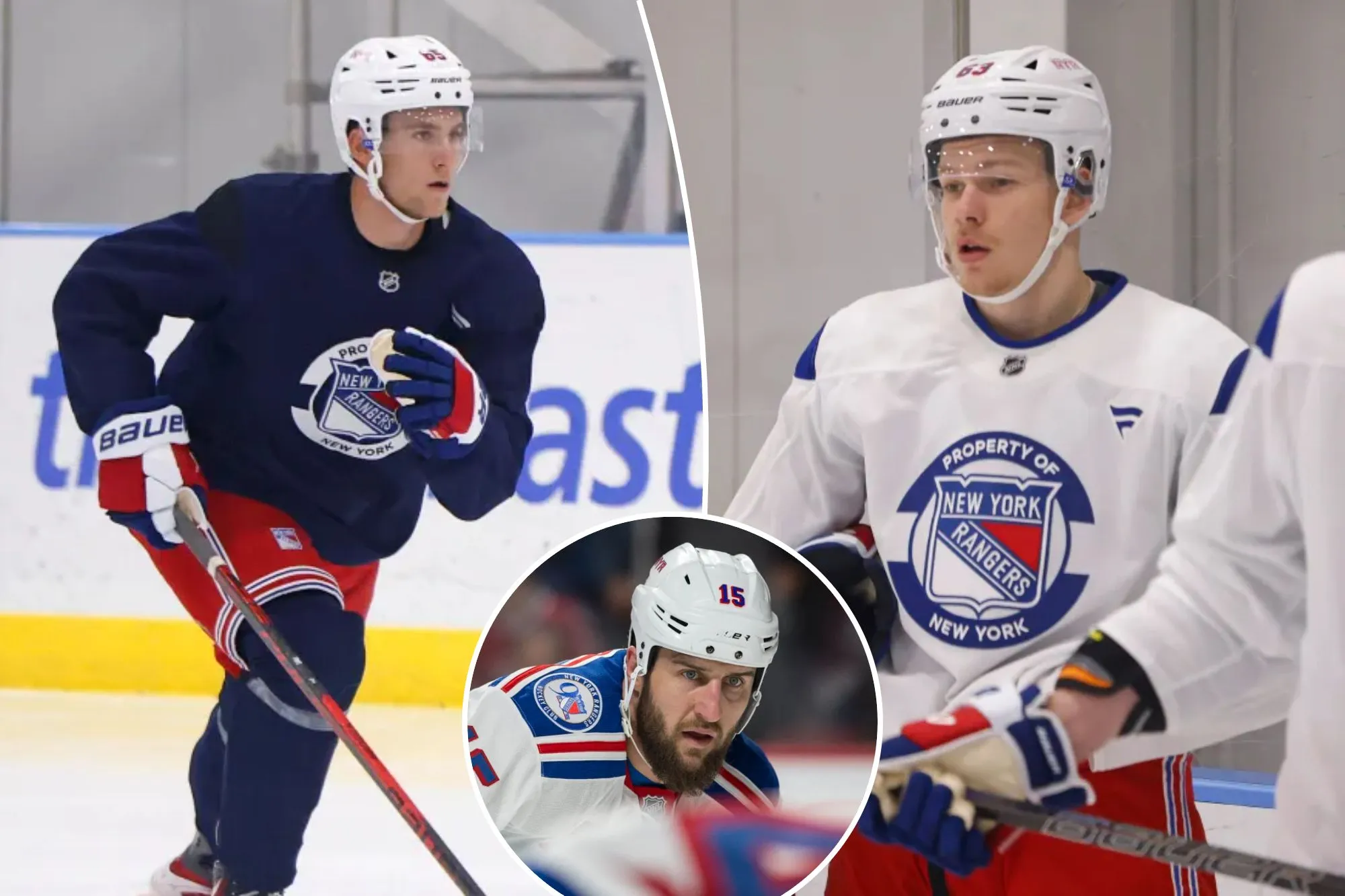
The backdrop throughout the morning before Tanner Glass’ first news conference as director of player development was fitting. A final day of the Rangers development camp had recently wrapped. Their prospects — from the top ones who will push for NHL spots this season to others who may be a couple of years away — had just filtered off the ice. Head coach Mike Sullivan had been in attendance for the Thursday session at the Tarrytown practice facility, too.
Glass, a Ranger from 2014-17 who skated in 527 NHL games, has been tasked with shaping the potential of those prospects and feeding them to Sullivan, ensuring that they turn into sustainable pieces at the next level, and preventing them from becoming the next flameouts and what-ifs.
The stakes are high as the Rangers retool, with an influx of prospects in exchange for veterans dealt away, but Glass isn’t fazed.
“I don’t think pressure’s the right word,” said Glass, who had been an assistant director for the last seven years. “At least, that’s not how I look at it. It’s exciting for us. When we get guys that are talented, it’s exciting.”
When Jed Ortmeyer left his director of player development role, president and general manager Chris Drury opted for an in-house promotion. Glass suddenly became a critical piece of their quest to become a contender again. He inherited the Rangers’ recent Achilles heel, with a need for at least some of these prospects to fit into their long-term plan.
The Rangers’ spotty development history looms as Glass’ tenure begins. Brennan Othmann was dumped to the Flames in March.
Brett Berard was flipped for defensive prospect William Trudeau.
Kaapo Kakko and Vitali Kravtsov both underwhelmed before getting traded in past seasons. Alexis Lafrenière hasn’t yet turned glimpses of high-end potential into consistency.
The Blueshirts have encountered success stories with Gabe Perreault and Noah Laba, but for the most part, they’ve stumbled.
Near the end of his playing career, when Glass ended up in the AHL, he thought he made an impact on the younger players. It became something he wanted to do after his playing days ended and prompted his shift toward player development. Initially, that was in an assistant director role with the Rangers before stepping into the main role in May.
So there Glass was Thursday, fielding questions about the collection of defensive talent on display at the prospect camp. There he was, getting asked about top forward prospect Cole Beaudoin — just acquired Wednesday in the Vincent Trocheck deal — and how it sounds like the Rangers “are getting a great player.” There he was, raving about No. 5 overall pick in last month’s draft Alberts Smits’ details that are “probably beyond his years.”
There’s Liam Greentree, the centerpiece of the return package in the Artemi Panarin trade back in February. There’s Jacob Battaglia, the prospect who arrived in March. There are defensemen E.J. Emery, Drew Fortescue and Smits, too. These are the names with whom Glass and his staff will become synonymous, the ones who could alter the Rangers’ development trajectory.
Ask Glass about something connected to prospects reaching the NHL or draft decisions, though, and he’ll deflect.
That’s not his job, he said as part of his answer on multiple occasions. He’s responsible for getting the most out of every prospect. Across the four-day development camp this week, that meant a focus on skills and operating in contested situations.
“The game’s getting faster all the time,” Glass said, “so there’s not a lot of space out there, so we’re trying to help the guys navigate those tight spaces and create chances and make plays in traffic. So that’s kind of the, I think from a skill perspective, something we tried to instill this week.”
This was the foundation: layers of individual attention and position-specific work, with the dividends following in future seasons when those prospects — after development camps and junior seasons and the first tastes of professional life — step into significant NHL roles.
That’s what the Rangers have been missing. And that’s what Glass will need to fix.
“It’s a great honor to be doing this,” Glass said, “and I feel very fortunate and excited about going forward.”
[Notigroup Newsroom in collaboration with other media outlets, with information from the following sources]