







Pioneering Scientist Explores Nature of Fatherhood through Research on Oxytocin Levels
Sarah Blaffer Hrdy conducted an experiment to see if oxytocin levels would increase in men who cared for their grandchildren, with her husband Dan participating.
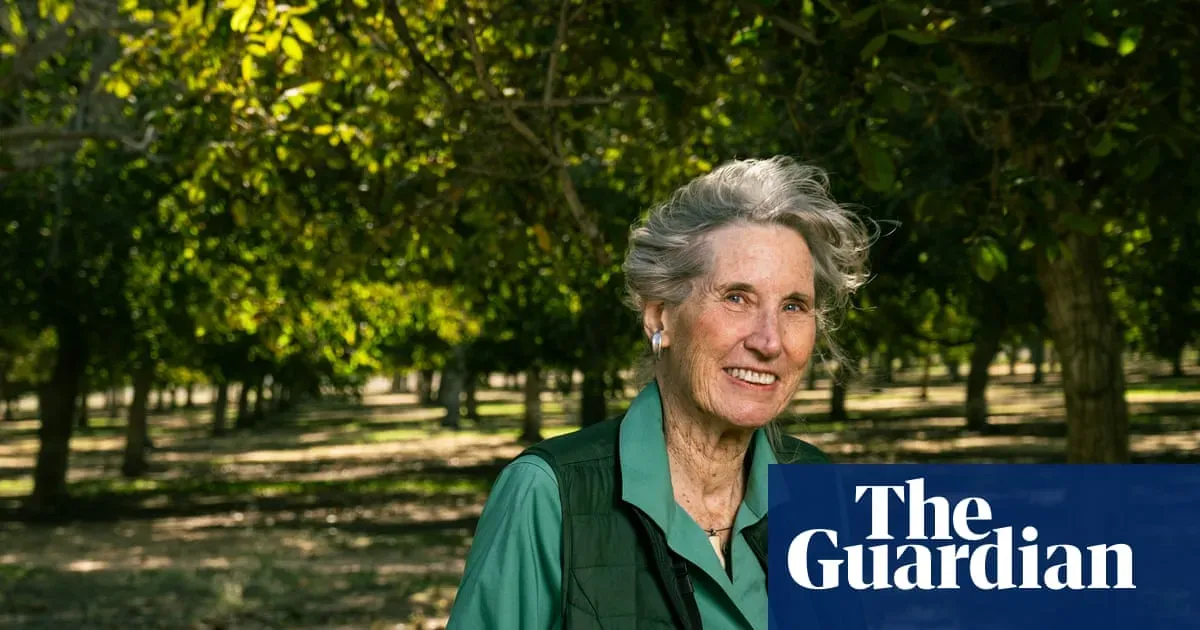
A pioneering scientist has turned her attention from rewriting the story of evolution to exploring the nature of fatherhood in an effort to create a more peaceful world.
After becoming a grandparent herself, Sarah Blaffer Hrdy conducted an experiment to see if oxytocin levels would increase in men who cared for their grandchildren. She asked her husband Dan to spend hours cuddling their newborn and recorded a significant jump in his oxytocin levels, similar to what she experienced as a new mother.
The study's results were groundbreaking: this was the first time anyone had demonstrated an increase in oxytocin levels among doting grandparents. Hrdy is proud of the findings, which challenge traditional notions of masculinity and paternal care.
In her latest book, Father Time: A Natural History of Men and Babies, Hrdy explores the phenomenon of men taking on a nurturing role with their children. What she's discovered is that these men are not just exhibiting maternal-like behavior but also experiencing physical changes similar to those seen in mothers.
Researchers have found that fathers who care for babies show lower levels of testosterone, mirroring findings in other mammals and bird species. This suggests that paternal care has an evolutionary basis, with certain neural circuits being activated in the brains of men who take on a caregiving role.
As an evolutionary biologist, Hrdy is fascinated by these discoveries. She believes that the activation of these capacities could lead to a more peaceful world over time. Her hope is that by promoting paternal care and challenging traditional notions of masculinity, we can create a society less prone to conflict.
Hrdy's findings have implications for how we view masculinity and fatherhood. In a country where 40% of men elected a leader who brags about never changing a diaper, her research offers a radical new perspective on what it means to be a man.
Neuroscientists have found that the brains of men who are primary carers show activation in neural circuits associated with emotional regulation and social bonding. This suggests that paternal care is not just a learned behavior but an innate capacity shared across species.
Hrdy's work on women and monkeys has been a significant departure from traditional evolutionary theory.
She earned her PhD in anthropology at Harvard in the 1970s, an era when scientists were still grappling with the male bias that pervaded their field.
Evolutionary theory is foundational to biology, making Hrdy's challenge to its underlying assumptions all the more important.
Despite her groundbreaking work, Hrdy never achieved the same level of recognition as some of her science-writing counterparts.
Charles Darwin proposed that sexual selection was primarily driven by male-male competition for mates, a notion that has been widely influential in the field.
However, this idea also introduced a sexist asymmetry, implying that males faced pressures from which females were exempt, while females had agency only as passive choosers of their mates.
Hrdy's work challenges this perspective, highlighting the importance of female selection and choice in shaping evolutionary outcomes.
As an 80-year-old grandmother with a Texas accent, Hrdy brings a unique perspective to her research, one that is shaped by her own experiences growing up in a patriarchal environment.
She recalls being attracted to the topic of male infanticide because it highlighted the degree of control exercised by males over females and their offspring.
Hrdy's initial hypothesis suggested that habitat pressures and overpopulation were driving infanticidal behavior among certain species. However, as she observed the langur monkeys, a different pattern emerged. The infants being killed were not by their fathers but by males who had recently joined their troop.
A striking aspect of this behavior was that after an infant was killed, its mother would often engage in sexual activity with the killer male. This led Hrdy to deduce that both males and females were seeking to advance their own interests through these actions. Males were eliminating the offspring of rival males to increase their chances of reproducing themselves.
Meanwhile, females had a difficult time defending against the aggressors due to their smaller size. As a result, they often found themselves in a precarious position, forced to choose between protecting their infants or risking further aggression by refusing to mate with the killer male. In some cases, this led females to adopt adaptive behaviors such as mating with multiple males.
This strategy allowed them to reduce the risk of losing their offspring, as the killer males would be less likely to attack an infant that could potentially be their own. Hrdy's observations also revealed instances where older, lower-status females demonstrated remarkable resilience in defending their infants against invading males.
One particularly striking encounter involved a wounded baby being wrested back from the jaws of an attacker by its grandmother-like caregiver. This event supported the "grandmother hypothesis, which proposes that post-menopausal females have been selected to provide support and care for younger kin, extending their lifespan beyond reproductive years.
This concept is not unique to humans but has been observed in a handful of species, including our own. The broader implication of Hrdy's findings was that females are active agents with their own agendas, rather than simply passive vessels subject to the whims of males.
When she presented her research, however, Hrdy faced significant pushback from some colleagues. One senior figure reportedly walked out on her presentation, while others dismissed her ideas as radical or even crazy. Despite this initial backlash, Hrdy's work has since been vindicated by subsequent studies in over 50 species of non-human primates.
Infanticide by males under conditions predicted by Hrdy has indeed been reported in a wide range of animal species, including hippos, wolves, and lions. As evidence continues to accumulate, it is clear that her pioneering research has made a lasting impact on our understanding of social behavior and the complex dynamics at play within animal societies.
The concept of inclusive fitness, which suggests that relatives support each other's reproductive efforts, was a crucial aspect of this expansion on Darwin's theory.
This idea was also reflected in the grandmother hypothesis, where grandmothers play an essential role in helping their grandchildren reproduce, thereby increasing the chances of their own genetic lineage.
Other researchers were exploring similar ideas around the same time; Hrdy had even named her son after Nikolaas Tinbergen, a renowned scientist who won the Nobel prize in 1973 for his groundbreaking work on bird behavior.
However, it was E.O. Wilson who took this argument further by proposing that understanding human nature requires considering natural selection, thus merging the fields of biology and social sciences into a new discipline: sociobiology.
Critics fiercely opposed what they saw as a deterministic perspective that could be used to justify social hierarchies and prejudices; in 1978, protesters even went so far as to pour iced water over Wilson at an academic conference.
Some have speculated that professional envy played a significant role in the intense backlash against sociobiology, which made it challenging for researchers like Hrdy to secure employment opportunities.
When she finally received a job offer from the University of California, Davis, it was not because of her own research but rather because they wanted to hire her husband, who specialized in infectious diseases.
In her book The Woman That Never Evolved, Hrdy critiqued the notion that women are inherently less competitive and egotistical than men, arguing that this perspective undermines rather than supports equal rights for women.
The scientist's work on human evolution delves into diverse breeding systems found in animals such as gorillas and bonobos, highlighting their unique approaches to family structure. By studying these primates, she builds a bridge to understanding human behavior. Her research also examines the role of paternal care in titi monkeys, which are among the few primate species that exhibit monogamous pair-bonds.
Drawing on anthropological fieldwork with hunter-gatherers, the scientist's work explores complex topics such as infanticide and sex-selective abortion. She critiques feminist scholars who reject evolution on political grounds, warning against taking social progress for granted. This approach reflects her commitment to reproductive rights.
The scientist is known for referencing others' work in her stories, a practice that stems from her early experience with controversial research. By crediting her predecessors, she acknowledges the importance of acknowledging intellectual debts and preventing the erasure of women's ideas. Her generosity with credit has contributed to her reputation as a meticulous researcher.
A key influence on her work is Robert Trivers' research on parental behaviors shaped by reproductive roles. From Mary Jane West-Eberhard, she gained insights into the interplay between genes and environment, including human culture, which challenges the simplistic nature versus nurture dichotomy. Her work also draws on Jeanne Altmann's findings about female baboons as dual-career mothers.
Climate shifts and population collapse during the Pleistocene epoch made cooperation essential for survival. The scientist argues that this period drove selection for traits enabling male mammals to reproduce, mirroring the development of traits in females that allowed them to become pregnant and give birth. Her work highlights the importance of care in human evolution.
The researcher's account emphasizes that female mammals were not just passive recipients of reproductive genes but active participants who developed strategies to raise their young successfully. This perspective challenges traditional views of women as less competitive and egotistical than men, arguing instead for a more nuanced understanding of human behavior.
By examining the complexities of human evolution, the scientist's work offers a new framework for understanding social behavior. Her research highlights the importance of cooperation and care in shaping human societies, challenging simplistic notions of progress and development.
The scientist's own life experiences have influenced her approach to reproductive rights. She has spoken publicly about having an abortion in her 20s, emphasizing the importance of choice and autonomy in women's lives. This personal perspective informs her broader arguments about the need for social change and greater understanding of human evolution.
Infants who were favored by their caregivers evolved neural systems that allowed them to understand what others were thinking.
This unique ability to mind-read" is a crucial aspect of human behavior and communication, enabling us to cooperate in ways other animals cannot. In fact, our capacity for empathy is what sets us apart from the rest of the animal kingdom.
As a result of this ability, we are also more susceptible to indoctrination, where we adopt beliefs and values without questioning them.
Facts based on reporting originally published by The Guardian Life and Style.
You may republish this story, in full or in part, if you credit Noti Group and link to it (licence CC BY 4.0). Photos are not included.