






Clayface Tops $44 Million Production Budget at Global Box Office
The DC Studios movie Clayface has earned a respectable $46.5 million in its opening weekend, exceeding its production budget.
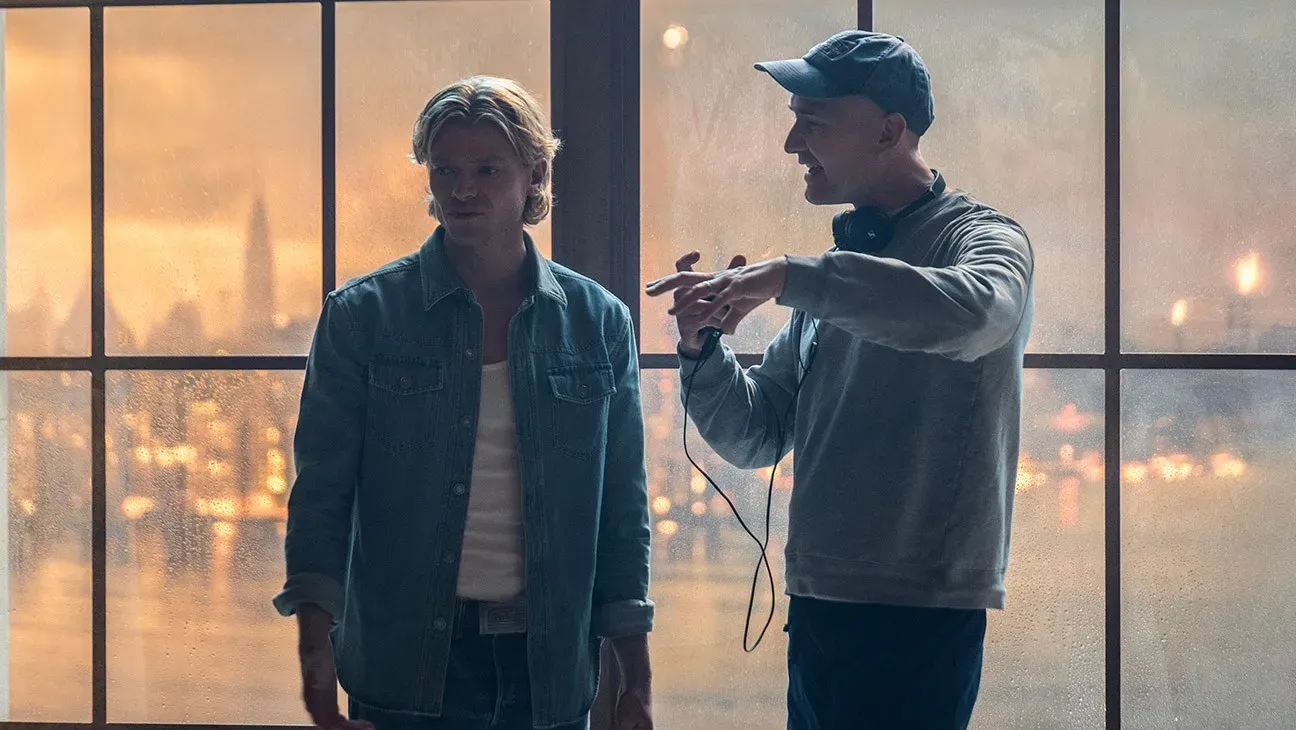
The DC Studios movie Clayface has defied expectations and topped its $44 million production budget at the global box office, earning a respectable $46.5 million in its opening weekend.
This significant milestone is accompanied by a Certified Fresh badge on Rotten Tomatoes, indicating that critics have generally praised the film. However, what's truly remarkable about Clayface's performance is its audience response, with a staggering 94 percent of verified moviegoers giving it their seal of approval.
The film has also earned an A- CinemaScore, a rare accolade for the horror genre, which typically receives lower marks from audiences. Director James Watkins must be thrilled to see his film receiving such widespread acclaim, especially given the challenges he faced during production.
Watkins' journey with Clayface began when he was approached by DC Studios bosses James Gunn and Peter Safran about helming the project. It's reported that a phrase coined by original screenwriter Mike Flanagan - describing the screenplay as "a tragedy in three acts - caught Watkins' attention and inspired his own pitch.
The idea of devolving a newly Oscar-nominated actor into a monstrous foe resonated with Gunn, who is no stranger to horror, and he reportedly even winced at some of Watkins' body-horror ideas. This reaction ultimately led to Watkins securing the job as director.
Watkins' background in creating tragic horror films should have prepared audiences for what's to come in Clayface. His breakout film, Eden Lake (2008), is a particularly bleak and devastating genre film that has had a lasting impact on the industry.
The film's tragic tone is not just limited to its narrative, as Watkins also reimagined another psychological horror-thriller, Speak No Evil (2022), for American audiences in 2024. His ability to craft such gut-wrenching endings should come as no surprise to those familiar with his work.
In a personal tragedy that occurred during post-production on Clayface, Watkins received news of his father's sudden passing without warning. Thankfully, Gunn and Safran gave him the space he needed to tend to his family's loss, showing empathy and understanding in a time of need.
The DC Studios co-chairs have demonstrated their commitment to supporting their team members through difficult times by extending similar kindness to Clayface producer Matt Reeves during a private family crisis earlier this year.
The film's storyline delves into Matt Hagen's struggles to cope with his disfigured face and loss of identity after being attacked by a mobster. This theme is relatable on a universal scale as it can stem from various circumstances such as physical ailments, technological disruptions or economic downturns.
Behind the scenes, lead actor Tom Rhys Harries was quietly dealing with a significant knee injury that could have jeopardized his career in this pivotal role. The production team remained unaware of the extent of his injury until he openly disclosed it while filming a scene where Matt flees a movie premiere and gets hit by a car.
The filmmakers had to adjust their approach to ensure Harries' safety without compromising the scene's impact. They opted for a more cautious method, taking into account his injury and the demands of the performance. This decision not only prioritized Harries' well-being but also added another layer of authenticity to the film.
The storyline revolves around Matt Hagen's desperate attempts to regain his former life through experimental treatment involving AI nanocells. The treatment shows initial promise in repairing damaged tissue, but its side effects become apparent whenever Hagen succumbs to negative thoughts and emotions. His face begins to change, reflecting his inner turmoil.
This internal conflict culminates at a movie premiere where Matt's new face starts to melt in front of his former agent and collaborators. The incident sends him back to Dr. Caitlyn Corr's lab, prompting him to take matters into his own hands by overdosing on the nanite treatment.
The consequences of this decision are severe as Matt transforms into a volatile shapeshifter whose preexisting lack of impulse control is further exacerbated by the nanos coursing through his veins. This turn of events highlights the risks associated with playing with forces beyond human control.
The film's exploration of identity and the dangers of unchecked emotions adds depth to its narrative, making it more engaging for audiences. The use of AI nanocells as a plot device raises questions about the ethics of scientific advancements and their potential consequences on humanity.
As the story unfolds, Matt Hagen's transformation into a shapeshifter serves as a cautionary tale about the dangers of letting emotions consume us. His journey highlights the importance of self-awareness and control in navigating the complexities of life.
The nightclub scene in Clayface is a pivotal moment where Matt's thirst for vengeance reaches its peak. This intense set piece was developed by James Watkins during the later stages of rewriting the script, which he worked on with Hossein Amini.
Watkins' goal was to give audiences a sense of satisfaction and catharsis through Matt's revenge tour before subverting their expectations in the end. He drew inspiration from classic films like Robin Hood" and "El Cid, where heroes storm the castle and exact justice.
The director wanted to capture the feeling of dark glee that comes with Matt's newfound powers, allowing the audience to revel in his payback. This was a deliberate choice, as Watkins felt it would be cathartic for viewers who had been invested in Matt's journey.
However, this moment of satisfaction is short-lived, as Matt's actions become increasingly unjustifiable. He targets those who wronged him, but also kills Detective John Borelli, despite the detective's efforts to secure justice for Matt through legal means.
Borelli was caught between a rock and a hard place, as Caitlyn's use of an untested procedure on Matt made it difficult for him to arrest the young man without implicating his fiancée. Watkins notes that Matt's decision to murder Borelli is not primarily driven by a desire to avoid criminal charges.
Instead, Matt has become obsessed with Dr. Caitlyn Matthews, who treated him using an untested procedure. This obsession has led to a reversal of the traditional Florence Nightingale effect, where caregivers are supposed to be nurturing and compassionate.
From Matt's perspective, his actions are explicable due to the influence of the nanobots in his system. Watkins notes that this doesn't mean audiences have to condone or like what Matt is doing, but rather understand that he is acting out of a combination of self-defense, love, and obsession.
As the situation spirals out of control, Watkins suggests that Matt is no longer fully in charge of his actions. The nanobots are taking over, driving him towards primal impulses that are difficult to resist. This raises questions about free will and personal responsibility in the face of technological advancements.
The experience of working within a cinematic universe can be daunting, but James Watkins had a remarkably smooth ride while helming Clayface.
Watkins credits the film's success to the collaborative spirit of its team, particularly James Gunn, who shared a glowing review on Instagram, calling it a pleasure to work with him.
Watkins' praise for his experience is genuine and not just lip service, as he acknowledges that working within an executive-controlled universe can be riddled with challenges and horror stories.
The director's enthusiasm for the project was evident from the start, when he first read Mike Flanagan's script, which he describes as a tragedy in three acts that required him to balance pathos with empathy for the character.
Watkins took a more nuanced approach to the story, pitching his own version of the film after reading Flanagan's draft, and the team supported him every step of the way.
The director is quick to deflect blame if anyone criticizes Clayface, insisting that any mistakes are on him alone, given the level of support he received from the team.
Watkins' personal life intersected with his professional one when his late father passed away suddenly during post-production, but James and Peter Safran were understanding and accommodating, allowing him time to grieve.
The team's kindness and consideration during a difficult period have left a lasting impression on Watkins, who values their humanity and professionalism.
The evolution of a film's script is a natural process that often continues even after cameras start rolling. It's not uncommon for filmmakers and actors to make changes on set, which can result in what some might consider a final rewrite" during the editing phase.
This approach was evident in the making of Clayface, where the director worked closely with the original scriptwriter to ensure that their vision remained intact despite any adjustments made along the way. By doing so, the film stayed true to its core concept while still allowing for some creative freedom.
According to a well-known director, one of their primary responsibilities is to make the audience fall in love with the story they're telling. However, each filmmaker brings their unique perspective to the project, which can sometimes result in differences of opinion on how to approach certain scenes or plot points.
As the production team worked on Clayface, they encountered practical challenges that required adjustments to be made to the script. This included decisions about set design and layout, as well as refining performances with the actors involved.
The development process for a film is often similar to that of other complex projects, such as novel writing or screenplay revisions. Even established classics like Chinatown underwent numerous iterations before reaching their final form.
The idea that a script is a static document is a misconception held by many people outside of the film industry. In reality, it's a living document that continues to evolve throughout the production process, influenced by factors such as budget constraints and creative input from various team members.
When working on a project like Clayface, the practical realities of set construction and location scouting can sometimes necessitate changes to the original script. This doesn't imply any criticism or dissatisfaction with the original work but rather an acknowledgment that some adjustments are necessary to bring the vision to life.
A torn ACL is a significant injury that can be difficult to manage during filming. However, it appears that director James Watkins was unaware of his lead actor's condition until it became apparent on set.
The incident occurred when Tom Rhys Harries' character was hit by a car in the film. It was at this point that Watkins noticed something was amiss and had a quiet word with the stuntman to assess the situation.
To minimize the risk of further injury, Watkins worked closely with the stunt team to adjust the car stunt sequence. The plan involved using a crash pad to get Harries' initial reaction, followed by overlapping it with a real car hitting a stunt double.
The adjustment allowed for a more controlled and safe approach to the stunt, ensuring that Harries did not exacerbate his injury. Despite this, he still managed to perform the jump and fall required for the scene.
Ultimately, Watkins' flexibility in adapting to the situation on set allowed for a smoother filming process, prioritizing both the actor's well-being and the integrity of the final product, resulting in a cinematic experience that meets its intended vision.
Facts based on reporting originally published by The Hollywood Reporter.
You may republish this story, in full or in part, if you credit Noti Group and link to it (licence CC BY 4.0). Photos are not included.